Zcash Price Jumps Another 13% – What Could Disrupt the Rally?
Key Takeaways
- •Zcash broke above $1,000 and hit an intraday high of $1,220 on September 6, trading near $1,165 for a 13.8% daily gain, though the breakout was unconfirmed as the daily candle remained open.
- •Immediate resistance sits between $1,200 and $1,220, while the first support zone spans $1,025 to $1,000, followed by $950–$930 and $850–$800.
- •At $1,165, ZEC traded approximately 87% above its 50-day simple moving average of $625, indicating significant extension from its longer-term trend.
- •August PPI and CPI data, due September 10 and 11 respectively, arrive before the Federal Reserve's September 15–16 meeting, and hotter inflation could pressure speculative assets.
- •ZEC futures open interest stood near $2.73 billion, up roughly 25% from $2.15 billion on September 4, with 24-hour futures volume of about $7.68 billion versus $755 million in spot volume.
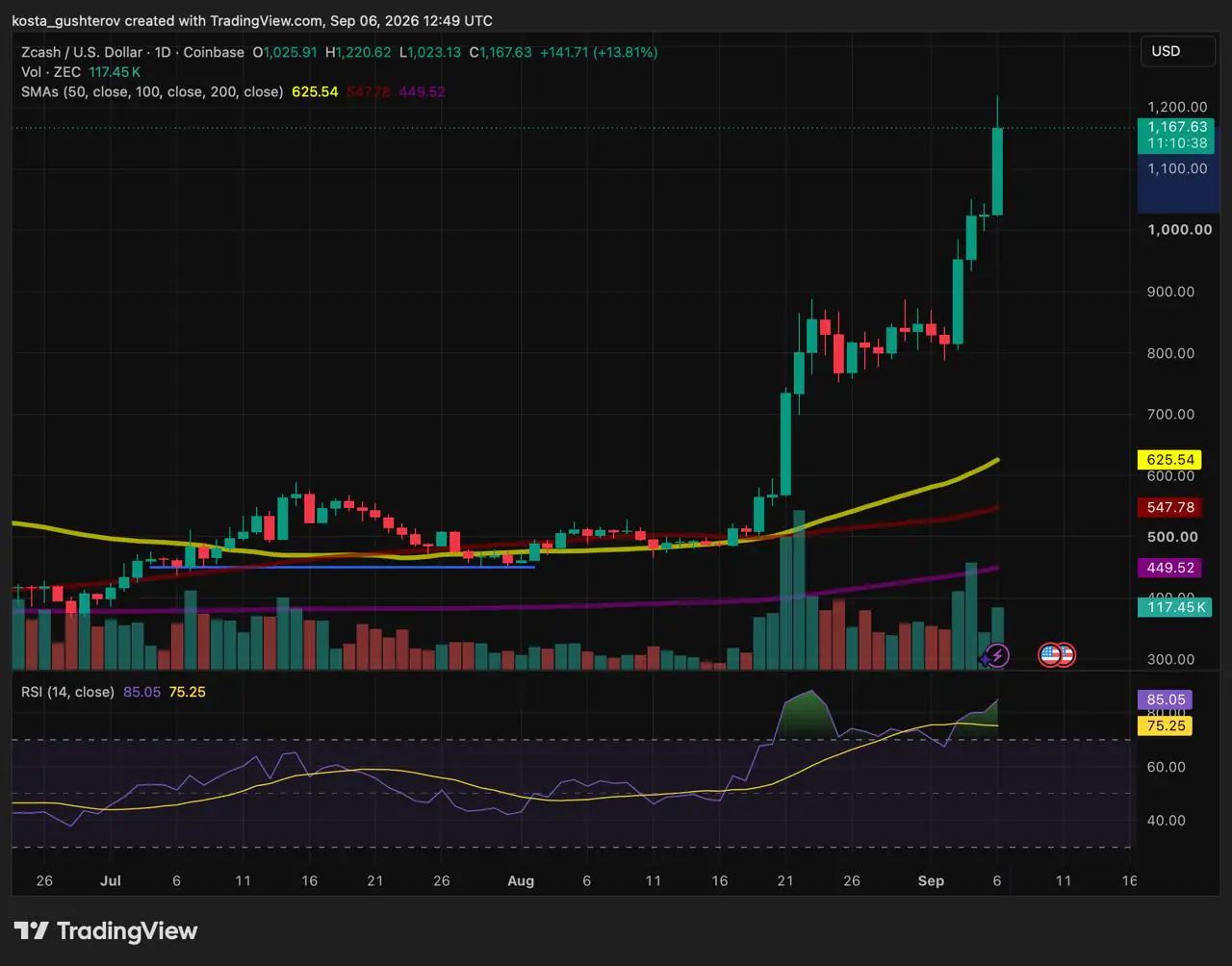
Zcash cleared the $1,000 level and pushed as high as $1,220 on September 6, extending a rally that began earlier in the week, but the move remained unconfirmed as the daily candle stayed open and U.S. inflation data loomed ahead of the Federal Reserve's September meeting.
Zcash clears $1,000 and reaches $1,220
According to TradingView's ZEC/USD daily chart on Coinbase, Zcash traded near $1,165 at 12:50 UTC on September 6, up 13.8% for the session. ZEC opened at $1,025 and traded between a low of $1,023 and a high of $1,220, an intraday range of approximately 19%.
Price had retreated about 4.3% from the high at the time of capture, indicating selling pressure above $1,200. Because the daily candle remained open, neither the rejection near $1,220 nor the breakout above $1,200 had been confirmed at the close.
The move follows the approximately 16% advance recorded on September 3, when ZEC was still approaching resistance near $952 and the psychological $1,000 threshold, as examined in an earlier analysis of the Zcash rally. Both levels have since been cleared.
Zcash is a privacy-focused cryptocurrency that uses zero-knowledge proofs, known as zk-SNARKs, to allow shielded transactions in which sender, recipient and amount are not visible on the public blockchain. It launched in 2016 and its native token, ZEC, trades on major exchanges such as Coinbase, whose data underpins the chart referenced in this analysis.
$1,000 is now the main support test
The session's high places immediate resistance between $1,200 and $1,220. An intraday move through that area can reverse before the daily close; finishing the session above it followed by a successful retest would indicate that demand persisted throughout the day.
The displayed three-month chart provides no recent resistance above $1,220, so it does not support a precise next target. The more useful references are the levels beneath the current price:
- $1,200–$1,220: Immediate resistance created by the latest intraday high.
- $1,025–$1,000: The first support area, covering the daily opening range and former resistance.
- $950–$930: The previous breakout stage if ZEC fails to remain above $1,000.
- $850–$800: The deeper base formed during the consolidation before the latest advance.
At $1,165, ZEC stood approximately 87% above its 50-day simple moving average of $625. The 100- and 200-day averages were even lower, near $547 and $449. Those averages describe the longer trend but sit too far below the market to identify near-term support. The recently traded zones between $930 and $1,025 provide more relevant information about where buyers previously entered.
U.S. trading returns after the holiday
The rally developed during a weekend preceding the U.S. Labor Day holiday. The NYSE calendar shows that American stock markets remained closed on Monday, September 7.
Crypto will continue trading, but U.S. equities and exchange-traded crypto products will not provide their usual cross-market signals until Tuesday. That session will show whether ZEC preserves its relative strength when U.S. cash-market trading resumes.
Bitcoin's direction also remains relevant. Holding above $1,000 during a broader crypto pullback would strengthen ZEC's performance relative to the market, while a simultaneous decline below $1,000 would indicate ZEC had not withstood a market-wide retreat.
Inflation data arrives before the Fed meeting
The Bureau of Labor Statistics calendar schedules the August Producer Price Index for September 10 and the Consumer Price Index for September 11. CPI will be the final major consumer-inflation reading before the Federal Reserve meets on September 15–16.
A hotter reading could raise market-implied rate expectations and Treasury yields, conditions that can reduce demand for speculative assets. A recent example followed the stronger-than-expected U.S. jobs report, when Bitcoin fell below $80,000 and Ethereum slipped under $2,500 as markets reassessed the likelihood of tighter Federal Reserve policy.
That reaction shows how a macroeconomic surprise can interrupt a crypto advance, although it does not mean CPI will produce the same result. Softer inflation could ease pressure on yields and rate expectations, while another upside surprise could weigh on the broader market as Zcash attempts to establish support above $1,000.
The Federal Reserve calendar marks the September meeting as one accompanied by updated economic projections. Markets will therefore receive both a policy decision and policymakers' revised forecasts for growth, inflation, unemployment and interest rates.
Futures positioning has expanded with the price
At the time of writing, CoinGlass showed approximately $7.68 billion in 24-hour ZEC futures volume and about $755 million in spot volume, meaning futures turnover was roughly 10 times larger than spot activity.
Open interest stood near $2.73 billion, compared with the $2.15 billion recorded in the September 4 analysis when ZEC was still approaching $1,000 — an increase of roughly 25%, although CoinGlass uses live and rolling data, so the difference should not be interpreted as an exact two-day inflow.
The combination of elevated open interest and futures turnover more than ten times spot volume increases the importance of monitoring liquidations. It does not predict the next move, but it shows that leveraged markets remain much more active than the underlying spot market.
The daily close will clarify the breakout
A daily close above $1,200 would show that ZEC held beyond the resistance encountered near its intraday high. A fall below $1,000 would instead weaken the breakout and return attention to $950–$930. Until the session ends, the $1,220 high remains provisional.
This article is provided for informational purposes only and does not constitute investment advice.
