Humanoid Robot Boom Drives Eightfold Surge in Cobot Shipments
Key Takeaways
- •Global cobot shipments to humanoid manufacturers are projected to rise from 5,000 units in 2025 to more than 43,000 in 2026, an increase of more than eightfold, according to Interact.
- •Humanoid developers are increasingly purchasing mature hardware from established suppliers rather than building all components in-house, as they concentrate on software and application development.
- •Suppliers of complete seven-axis cobot arms and manufacturers of joint actuators are identified as the primary beneficiaries of scaling humanoid production.
- •China is expected to supply the majority of cobots to humanoid makers due to its production hub status and supply-chain proximity, although the U.S. ban on Chinese-made robots and components introduced in July is pushing companies to diversify suppliers.
- •Interact Analysis estimates humanoid applications could contribute 10% to 30% of cobot vendors' revenues by 2030, with high-performance arms likely to face tighter supply while standardized hardware encounters price pressure.
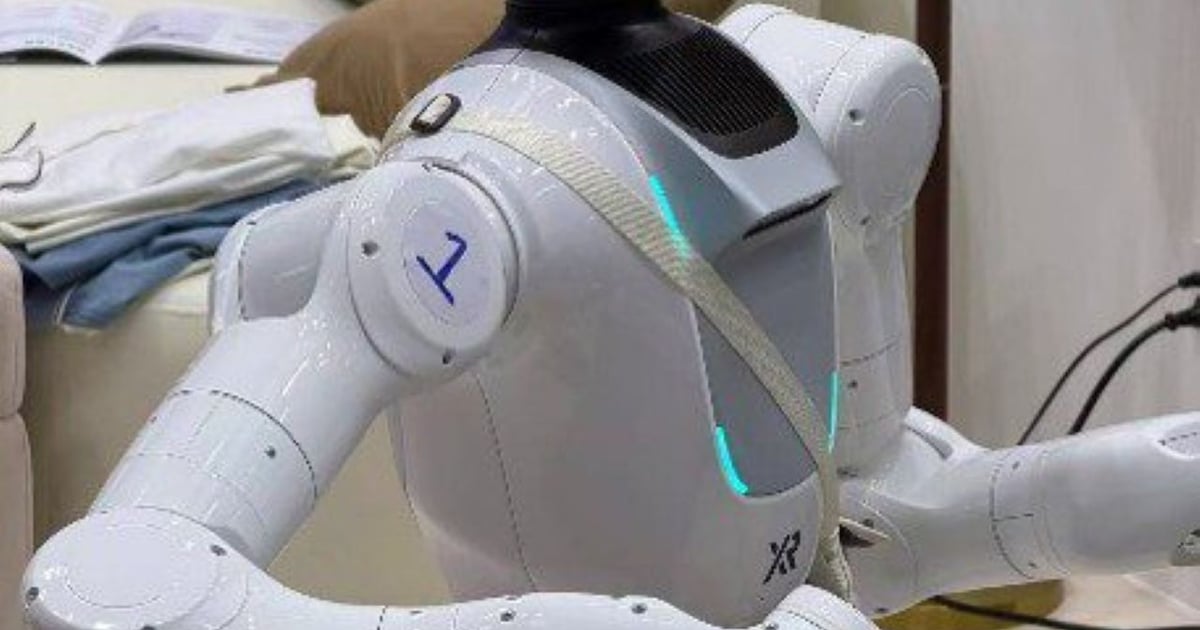
A ramp-up in humanoid robot production is creating a new source of demand for collaborative robot (cobot) hardware — arms designed to operate safely around people — with shipments to humanoid manufacturers expected to surge more than eightfold this year.
That is according to a report from Interact Analysis, a U.K.-based industrial automation and robotics market research firm with offices in the U.S. and China. The report found that global cobot shipments will jump from 5,000 units in 2025 to more than 43,000 in 2026, as developers increasingly turn to established hardware makers rather than building all components in-house. The projected jump is a measure of how quickly the humanoid sector is moving beyond prototype-stage development toward volume manufacturing.
“Many humanoid manufacturers are prioritizing software and application development, making it attractive to source mature hardware,” Mike Yang, a market analyst at Interact Analysis and one of the report's authors, told TechTarget AI and Emerging Technologies. “Demand for cobot arms is growing across factory and logistics applications, where reliability and repeatability are critical, as well as for rapidly scaling research and data-collection applications.”
According to Yang, the most direct beneficiaries of the trend are suppliers of complete cobot arms for humanoid robots and manufacturers of joint actuators. Seven-axis arms add a redundant seventh joint to the six-axis configuration standard on most industrial robot arms, giving the mechanism additional freedom of movement.
“Complete seven-axis arms offer humanoid OEMs mature force control, reliability and production-ready hardware, while actuator suppliers support customers pursuing in-house assembly,” he said. “The sourcing mix will vary, but both segments should benefit as humanoid production scales.”
China's Supply-Chain Advantage
China is expected to account for the majority of cobot supplies to humanoid manufacturers, owing both to the country's position as a hub of humanoid production and to the relative closeness of robot makers, cobot suppliers and component manufacturers.
“Proximity to the rapidly growing domestic humanoid market enables faster feedback, product iteration and transition from prototypes to volume production,” Yang said. “Manufacturing scale, intense competition and cost competitiveness further support rapid customization and expansion.”
While Chinese producers are expected to hold an early lead, suppliers elsewhere are also likely to benefit as the market expands, with geopolitical tensions and supply chain pressures prompting companies to diversify their supplier base — a dynamic reinforced by the U.S. ban on Chinese-made robots and robotics components introduced in July.
Humanoids Could Reshape the Cobot Market
While revenues from humanoid applications are expected to remain modest in the near term, Interact Analysis estimates they could eventually add 10% to 30% to cobot vendors' revenues by 2030.
The surge in humanoid demand could, Yang said, put pressure on suppliers of the most advanced arms. That could create a two-tier market, with high-performance humanoid arms facing longer lead times while more standardized hardware comes under increasing price pressure.
“We do not expect a broad-based capacity shortage across the cobot industry, but supply of proven, high-performance humanoid arms could become tighter as demand scales,” Yang said. “A relatively concentrated supplier base faces expansion pressure, although manufacturers are investing in capacity and new entrants are rapidly expanding the supply base, particularly in China.”
The result could be greater differentiation between suppliers as humanoid manufacturers move from prototypes to larger-scale production. The pace of capacity investment, the arrival of new entrants and the split between complete-arm sourcing and in-house actuator assembly will be key markers to watch as humanoid production scales.
Cobots vs. Humanoids
The growing overlap between cobots and humanoids has raised questions about how meaningfully the two markets can be separated. Bram Vanderborght, a robotics professor at Vrije Universiteit Brussel in Belgium and founder of European robotics startups CoEra and AILOS Robotics, said the industry should be cautious about treating the two as competing categories.
“I do not see why cobots and humanoids should compete,” he said. “A humanoid is robot arms that are mounted on a moving platform, which can be legged or wheeled.”
The more important distinction, he said, is between robots designed to operate safely around people and conventional industrial systems optimized for speed. Traditional cobots have generally operated at lower speeds to reduce the risk of injury in human environments, which can limit productivity compared with conventional industrial robots, Vanderborght noted.
“We need to kill the difference between fast but unsafe industrial arms, and slow but safe cobots,” he said.
Originally reported by Scarlett Evans for AI Business on September 16, 2026.

