Todd Blanche's 'Cringily Jokey' Rose Garden Briefing Slammed by Legal Analyst Elie Honig
Key Takeaways
- •Attorney General Todd Blanche, a former Manhattan federal prosecutor who previously served as President Trump's personal criminal defense attorney, held a press conference in the White House Rose Garden instead of the Justice Department's traditional headquarters venue.
- •CNN legal analyst Elie Honig said Blanche delivered overtly political remarks on matters outside the Justice Department's remit, including the congressional authorization of the war in Iran and new concerns about AI tied to the midterm elections.
- •Honig argued the Rose Garden setting breached decades of Justice Department separation norms, many of which were formalized after the Watergate scandal of the 1970s and maintained by attorneys general of both parties.
- •Honig criticized Blanche's response to reports that Trump's son received an expensive wedding gift from a Russian oligarch connected to Putin, noting Blanche declined to confirm or deny details while indicating he saw no basis for an investigation.
- •The critique aligns with Honig's earlier commentary, in which he questioned Blanche's commitment to restoring the department's independence and faulted its subpoenas of critical journalists as contrary to the April 2025 Justice Manual standard requiring such measures to be a last resort.
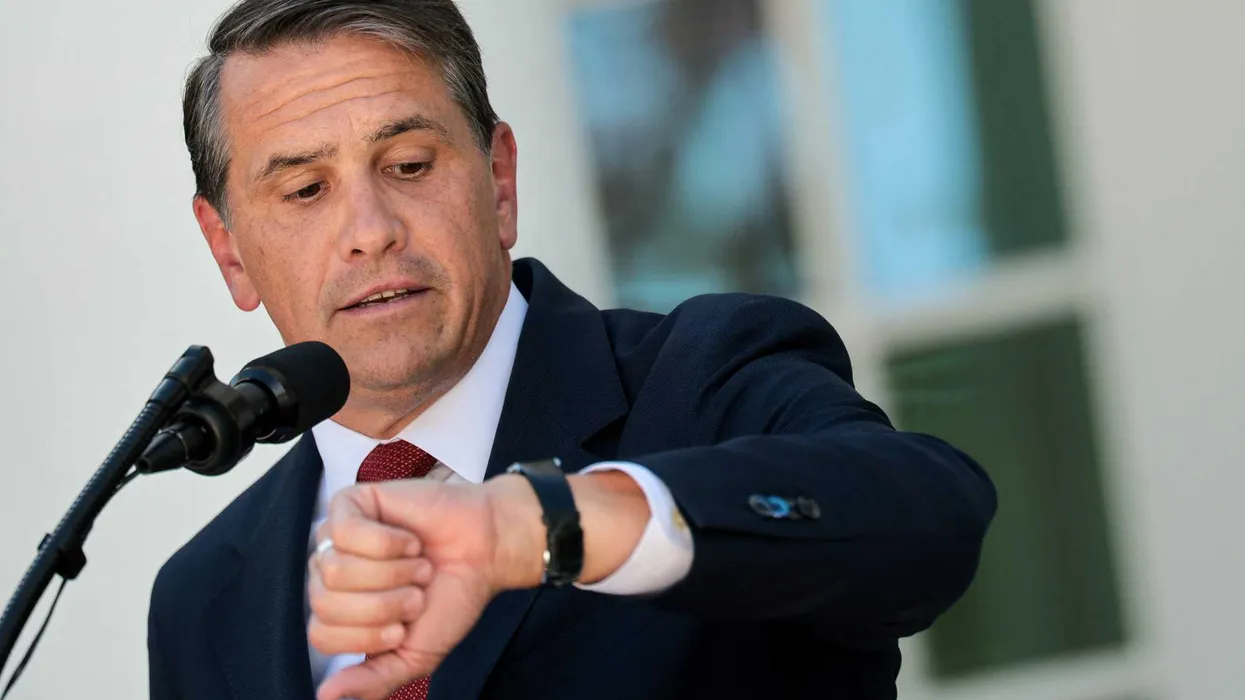
Attorney General Todd Blanche held an unorthodox press conference on Tuesday, and one prominent legal analyst said he spent it acting less like the nation's top law enforcement officer and more like President Donald Trump's press secretary.
Blanche — a former Manhattan federal prosecutor who later served as Trump's personal criminal defense attorney before Trump tapped him for Justice Department leadership — took questions in the White House Rose Garden, a striking choice of venue for a department whose attorneys general have traditionally held such briefings at its own headquarters.
The briefing drew a pointed critique from attorney and CNN legal analyst Elie Honig, who offered his assessment to anchor Boris Sanchez.
"Well, Boris, I'm not exactly sure what that was that we just saw," Honig said. "Was that the Attorney General of the United States? Was that someone trying to be the next press secretary to the White House? At times, Todd Blanche was AG-like. He was stern and serious in talking about law enforcement issues. At times, he went way out of the lane of an Attorney General and, as you said, talked about issues that have nothing to do with DOJ — whether the war in Iran was properly authorized by Congress, why there's suddenly new concern about AI, and whether that's tied to the midterms."
He added, "Those are overtly political opinions. At other times, he was awkwardly, cringily jokey, constantly cracking jokes about who's sweating, who has the microphone, and the bald guy. I've known Todd Blanche for a long time. I don't know what that shtick is that he just offered us."
For Honig, the setting and substance of the appearance cut against long-standing Justice Department norms. "But to the most important point here: attorneys general of both parties, going back decades, have done their utmost to keep a level of separation and independence from the White House. There have been policies; lawyers have pored over this. They've done everything they can to avoid even the appearance of the AG having anything to do with the political side of the White House. And here we have the Attorney General of the United States standing in the Rose Garden of the White House, giving not just a DOJ briefing, but an overtly political briefing as well," he said.
The norms Honig invoked are more than custom: many of the Justice Department's safeguards against political interference — including internal policies governing contacts between the department and the White House — took shape after thegate scandal of the 1970s, and they have been maintained by attorneys general of both parties ever since.
The former prosecutor also flagged Blanche's irritated response when he was asked about reports that Trump's son had received an expensive wedding gift from a Russian oligarch connected to Russian President Vladimir Putin. According to Honig, Blanche replied, "I'm not going to discuss any ongoing investigation. I'm not going to get into details. I'm not going to confirm or deny it."
"Yet when asked about that story, he was quite clear that he found there's no basis to investigate. At some point, I think he snapped at one of the reporters, 'Investigate what?' So interesting how he's very close-mouthed when he doesn't want to address something — he says, 'I'm not going there.' But when he wants to go there, he goes there," Honig said.
The criticism is consistent with Honig's earlier commentary on Trump's Justice Department. In August, he told CNN, "ordinarily, the first order of business would be restoring DOJ's political independence and restoring DOJ's credibility in the courts, but it doesn't seem that Blanche is super interested in either of those."
In July, he blasted the department for subpoenaing journalists who criticize the administration, telling CNN, "the Justice Department's own internal policy — most recently updated in April 2025, during the current Trump administration — exposes just how abusive the Times subpoenas are. The newly revised Justice Manual specifies that subpoenas should be served on journalists only as 'an extraordinary measure to be deployed as a last resort' in a case of 'substantial importance' to law enforcement or national security."
In June, Honig accurately predicted that Trump's attempt to overturn birthright citizenship would fail at the Supreme Court, arguing on CNN, "this all goes back to the 14th Amendment of the Constitution, ratified in 1868 after the end of the Civil War. That provision tells us that all persons born or naturalized in the United States and subject to the jurisdiction thereof are citizens of the United States. Over the past 158 years, we have understood that broadly — in our courts and Congress — to mean if you're born here, you're a citizen regardless of your parents' status."
For readers tracking where the department goes from here, the yardsticks are already on the record: the April 2025 Justice Manual standard governing subpoenas to journalists, and the separation-from-the-White-House norms that Honig argues Tuesday's appearance set aside.
Source: Alternet

