Howell Raines: Fatal Character Flaw Leaves Trump ‘Dwarfed’ by Past Presidents
Key Takeaways
- •Howell Raines, a veteran journalist who covered seven presidents and led The New York Times as executive editor from 2001 to 2003, published the opinion piece one day before Election Day in the 2026 midterm elections.
- •Raines contends that Trump lacks the dignity and calm under pressure that he says predecessors such as Richard Nixon and Ronald Reagan demonstrated.
- •The piece draws on James David Barber's 1972 book 'The Presidential Character,' which argued that presidents lose approval by insisting on failing courses of action despite abundant evidence of failure.
- •Raines cites Woodrow Wilson, Herbert Hoover, and Lyndon B. Johnson as historical examples of that pattern and applies it to Trump's 'so far winless conflict in Iran.'
- •He also argues that Trump's presumptive heirs, JD Vance and Marco Rubio, have demeaned themselves through Vance's memoir and Rubio's defense of policies on Iran, Cuba, and Venezuela.
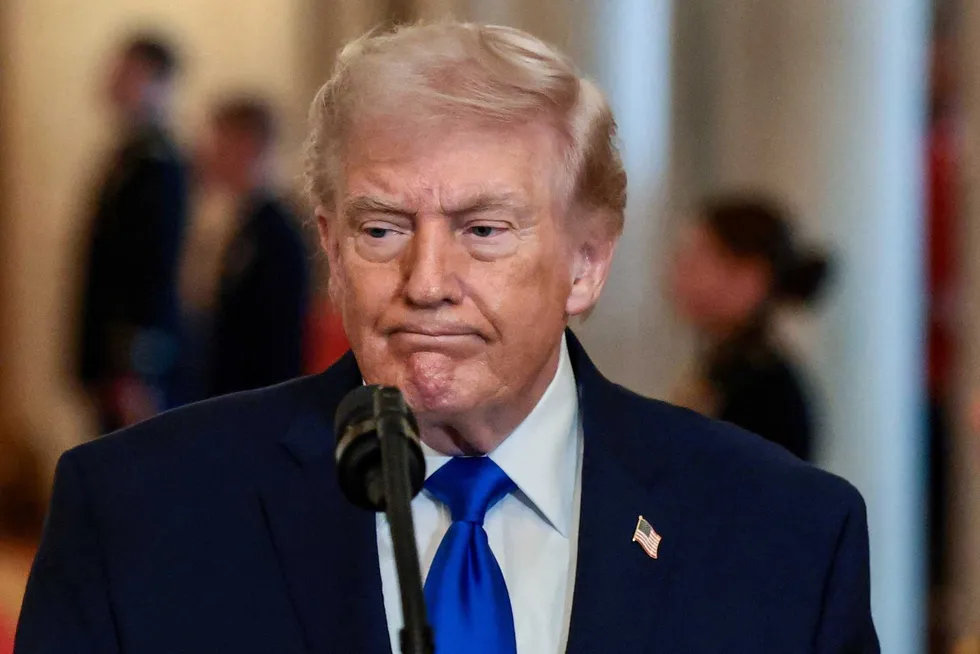
Veteran journalist Howell Raines, who covered seven presidents over the course of his career and served as executive editor of The New York Times from 2001 to 2003, argues that President Donald Trump is “dwarfed by his predecessors” in the White House. In Raines’s view, a single character flaw has exposed Trump as a lesser man than past presidents, even when their own “grandiose private failings” are taken into account.
Writing in a new opinion piece for the Times published Monday — one day before Election Day in the 2026 midterm elections — Raines contends that presidents “can’t hide their core traits over time,” and that Trump has thoroughly demonstrated a lack of the ability to remain dignified and calm in pressing situations — a quality his predecessors exemplified.
“President Trump is dwarfed by his predecessors. I can attest that even in disgrace, the private [Richard] Nixon had an aura of ravaged dignity that remained presidential in scale,” Raines detailed.
“By ending the Cold War, Reagan taught us the limits of prediction and the indispensable asset of a calm, balanced personality and, dare one say it in this environment, a kindly nature — something sorely lacking in Mr. Trump’s offenses against good taste and common-sense management.”
Raines also cited James David Barber’s book The Presidential Character and its “crystalline summation of what the presidency requires.” Barber, a Duke University political scientist who first published the book in 1972, produced one of the most influential frameworks in the study of the American presidency, and character-based judgments of commanders in chief have remained a recurring thread in political commentary ever since. Presidents, Raines explained, must be protectors of “the respectability — even religiosity — of the office,” providing citizens a sense of “reassurance,” “progress” and “idealism.”
He described Barber’s analysis as “morbidly prescient” in defining the playbook by which three presidents of benign intent — Woodrow Wilson, Herbert Hoover and Lyndon B. Johnson — brought about their own declines in approval, as Barber argued, through “narrow insistence on a failing course of action despite abundant evidence of the failure.” The three terms Raines invokes are standard historical reference points: Wilson’s League of Nations treaty went down to defeat in the Senate, Hoover’s presidency was engulfed by the Great Depression, and Johnson’s standing eroded under the weight of the Vietnam War. That pattern, Raines added, offers a perfect summation of “Mr. Trump’s decision to launch a so far winless conflict in Iran under the guidance of a madcap secretary of war.”
“The historical record will show that Mr. Trump fails to measure up, even allowing for the grandiose private failings of a Nixon or Bill Clinton,” Raines argued. “The videotaped highlights of Mr. Trump’s cabinet meetings could be marketed for reality television as ‘Spoiled Trust Fund Brats of New York.’ What we are witnessing on the ravaged White House grounds is a kind of low-rent yard sale devoted to racecars, wrestling and housebroken rockers. Even his presumptive heirs have demeaned themselves: JD Vance by cheapening the word ‘hillbilly’ in a book about his ersatz Appalachian upbringing, and Marco Rubio, the intellectual star of the cabinet, by defending nutty policies on Iran, Cuba and Venezuela.”

