Houthi Red Sea Attacks Heighten Fears of Wider Middle East Conflict and Deepening Global Economic Fallout
Key Takeaways
- •Yemen's Houthis claimed responsibility for missile strikes on two Saudi vessels in the Red Sea and say they turned back 10 additional ships, disrupting traffic through the strategic Bab El Mandeb Strait.
- •US Central Command has conducted air strikes against Iranian targets for 13 consecutive nights, yet Iran's Revolutionary Guard Corps maintains control of the Strait of Hormuz, through which roughly one-fifth of global oil consumption normally passes.
- •Saudi Arabia has partially mitigated the Strait of Hormuz closure by rerouting millions of barrels per day through its East-West Pipeline to the Red Sea terminal at Yanbu', but the Houthi threat now endangers that alternative route as well.
- •A newly announced deal allowing US firms to assist Saudi Arabia in developing a domestic civil nuclear program has raised concerns about a regional arms race, with Turkey and Egypt already expanding their own nuclear activities.
- •With both the Strait of Hormuz and the Bab El Mandeb Strait under threat, the only remaining maritime alternative is a costly detour around Africa via the Cape of Good Hope, adding roughly two weeks to typical Asia-Europe voyages.
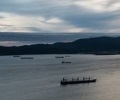
Yemen's Houthi fighters have claimed responsibility for attacking shipping in the Red Sea, a move that threatens to further escalate the already volatile security situation across the Middle East. By forcing vessels to turn back from the narrow Bab El Mandeb Strait, the Houthis have effectively threatened to choke off the primary maritime route connecting Europe and Asia — a passage that normally carries roughly 10% of global seaborne trade, including crude oil, refined fuels, grain, and containerised consumer goods.
The development comes as US-Iran military strikes continue for a 13th consecutive night, and as a newly announced deal to develop Saudi Arabia's domestic nuclear industry raises concerns about a potential regional arms race.
US-Iran Military Campaign Intensifies
For 13 straight nights, US Central Command (Centcom) has conducted air strikes against Iranian targets. In a statement issued Thursday night, Centcom said the strikes targeted "Iranian military command centers, drone storage facilities, communication networks, coastal surveillance sites, and maritime capabilities to further diminish the threat Iran poses to civilian mariners and commercial vessels transiting the Strait of Hormuz."
The Strait of Hormuz is the world's most critical oil transit chokepoint, normally handling about one-fifth of global oil consumption. Its effective closure by Iran has already removed a massive share of global energy supply from maritime commerce.
The Gulf Arab states, typically known for their relative stability and low-crime environment, now find themselves forced to contend with sustained attacks from Iran across the Persian Gulf. US President Donald Trump has vowed to "take care of the Houthis," though past efforts have failed, and analysts suggest that without a broader diplomatic deal, the current campaign is unlikely to succeed either.
Night after night of US airstrikes have so far failed to compel Iran's Revolutionary Guard Corps (IRGC) to relinquish control of the Strait of Hormuz. With each strike, the IRGC has retaliated against neighboring Arab states that host US military bases, apparently seeking to drive a wedge between those governments and Washington.
Houthi Threat Resurfaces in the Red Sea
The Iran-backed Houthis of Yemen have re-entered the conflict following an apparent breakdown of a 2022 ceasefire with neighboring Saudi Arabia. Two Saudi vessels were struck by missiles in the Red Sea this week, while the Houthis claim to have turned back 10 additional ships after warning vessels to avoid Saudi ports. The attacks have disrupted shipping through the strategic Bab El Mandeb Strait, which links the southern Red Sea to the Indian Ocean.
This new threat compounds the existing disruption to global energy and fertiliser supplies caused by Iran's effective closure of the Strait of Hormuz, adding a further obstacle to vital maritime trade with potentially far-reaching consequences for the global economy.
Saudi Arabia, which has sought to distance itself from the direct Iran-US conflict, has been largely spared the Iranian drone and ballistic missile attacks that have struck Bahrain, Kuwait, and Jordan this month. With the Strait of Hormuz closed, the kingdom has partially mitigated the impact on its oil exports by routing millions of barrels per day through the East-West Pipeline, which traverses the country from the oilfields of Eastern Province to the Red Sea export terminal at Yanbu' Al-Bahr.
From Yanbu', Saudi tankers have been able to ship oil in bulk to Asian customers by departing south past Yemen and through the Bab El Mandeb Strait into the open Indian Ocean. That alternative route is now in jeopardy while the Houthis continue threatening vessels passing along their coastline. The only remaining maritime alternative for vessels unable to transit either chokepoint is a costly detour around the southern tip of Africa via the Cape of Good Hope, which can add roughly two weeks to a typical Asia-Europe voyage and sharply increases fuel and insurance costs.
The Houthis: A Persistent Threat
The Houthis are a Shia tribal group originating from the far north of Yemen, centered around the city of Saada. In 2014, they capitalized on the instability of the Arab Spring protests to march south and seize the capital, Sanaa. They have since taken control of most of Yemen's populated areas, including the strategic port city of Hodeidah. The country's decade of war has produced what the United Nations has described as one of the world's largest and most protracted humanitarian crises, with millions dependent on food aid.
Saudi Arabia went to war against the Houthis in 2015 in support of the internationally recognized but ousted Yemeni government, seeking to prevent an Iranian-backed militia from establishing itself on its southern border. The Saudis expected their Western-supplied air force would quickly compel the Houthis to negotiate. However, the Houthis never capitulated, despite years of devastating airstrikes that caused heavy civilian casualties, and they remain firmly entrenched in power today.
From 2023 to 2025, the Houthis attacked what they described as Israeli-linked shipping in the Red Sea, asserting that the campaign was in solidarity with Palestinians in Gaza. They also fired advanced missiles at US and British warships attempting to interdict them. Similar to Iran's coastline along the Strait of Hormuz, Yemen's Red Sea coastal mountains offer an abundance of caves, tunnels, and concealed storage sites for munitions that can be rapidly deployed against maritime traffic. That earlier Houthi campaign forced a major diversion of global shipping, drove up shipping costs, and prompted military intervention by the US and UK to protect commercial vessels. There are now fears that a similar disruption could unfold again.
Regional Landscape and Nuclear Concerns
The broader regional picture is mixed. Iraq and Syria, both previously devastated by prolonged civil wars, are now comparatively peaceful and stable. The Gaza War is technically under a ceasefire, though Palestinians in Gaza continue to be killed in airstrikes, and Israeli settlements, considered illegal under international law, continue to expand across the occupied West Bank. Israel's conflict with Hezbollah in Lebanon remains on hold as the two sides continue negotiations.
Nevertheless, it is the Gulf and the Arabian Peninsula that are drawing the greatest concern from analysts at present. From an economic standpoint, every day that Gulf oil, gas, fertiliser, and other essential goods cannot transit the Strait of Hormuz adds pressure to global supply chains and, ultimately, consumer prices. A prolonged closure of the Bab El Mandeb Strait would compound those economic effects significantly.
On the military front, tensions escalated further with a deal announced on Wednesday that would allow US firms to assist Saudi Arabia in developing its own domestic civil nuclear power programme. While there is no indication that Riyadh intends to use this as a stepping stone toward building a nuclear weapon, there are concerns it could catalyze a regional arms race. Both Turkey and Egypt have already been stepping up their own nuclear activities in pursuit of deterrence and strategic protection.
The Middle East has experienced numerous spikes in violence throughout its recent history, and the current situation does not yet rank among the worst. However, taken together, the converging crises, without a lasting and comprehensive agreement between the US and Iran, could signal an extended period of instability for the region.
Source: BBC

