US Escalation Threat Raises Risks for Gulf and Red Sea Shipping
Key Takeaways
- •President Trump stated he was close to authorizing a military attack on Iran that could exceed the war's initial strikes, with US operations against Iranian targets ongoing for nearly two weeks.
- •Windward identified oil slicks from the Greek-owned tanker Kavomaleas and an unidentified AIS-dark vessel drifting toward Larak and Qeshm islands near the Strait of Hormuz.
- •Three Thai seafarers sued Precious Shipping in Bangkok alleging negligence after their vessel was ordered through Hormuz despite security warnings, an attack that killed three crew members.
- •Iran requested that the Houthis escalate maritime attacks if the US launches a larger military operation, while the group already claimed strikes on two Saudi tankers in the Red Sea.
- •A study published in Biological Invasions warns that organisms colonizing hundreds of idled ships in the Gulf could create a marine bioinvasion super-spreader event when vessels resume normal trading routes.
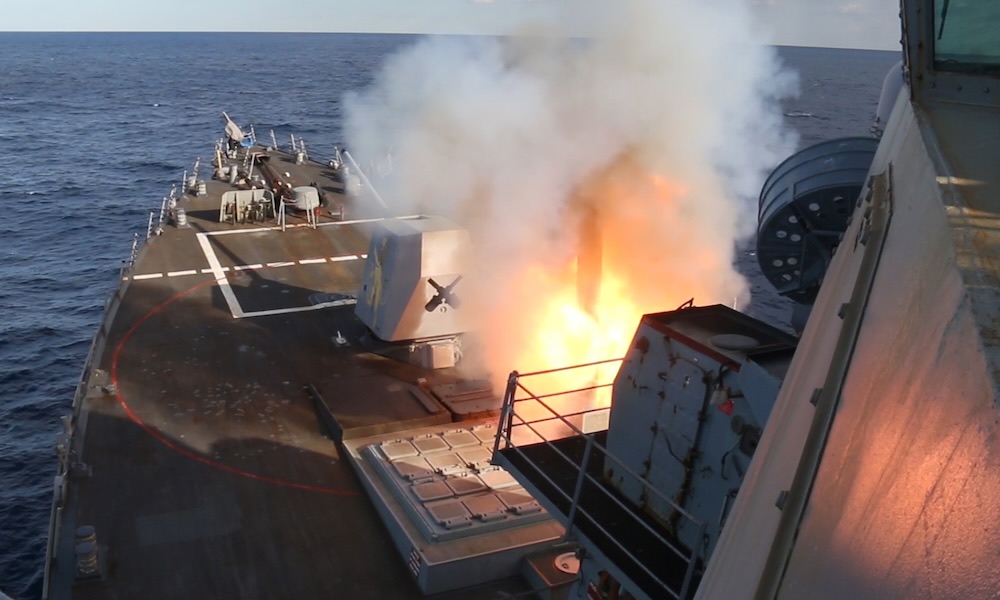
The shipping crisis spanning the Strait of Hormuz and the Red Sea entered a more dangerous phase on Friday, as Washington considered a major escalation against Iran, oil slicks spread toward two Gulf islands and the legal consequences of sending crews through active war zones began to emerge.
Washington was rife with conjecture that the Trump administration was preparing a much larger assault on Iran, potentially as early as Saturday. Some discussions went further, raising the possibility of an invasion, although no US official had publicly confirmed preparations for a ground campaign.
Donald Trump told Axios that he was “close” to deciding on a “massive attack” that could be larger than the opening strikes of the war. US operations against Iranian targets have continued for nearly two weeks, with the administration increasingly citing protection of commercial shipping as a justification for the campaign.
The US military has recently increased medical staffing in Europe, particularly at Landstuhl Regional Medical Center (LRMC) in Germany. More than 150 medical personnel have been deployed to LRMC, the primary overseas treatment facility for US troops wounded in combat across the Middle East, to handle potential casualties and support expanded operations.
Any increase in attacks on Iran is likely to be met with greater targeting of commercial vessels by both Tehran and its allies, the Houthis in Yemen. The Strait of Hormuz, through which roughly a fifth of global oil consumption routinely passes, remains one of the most strategically critical maritime chokepoints in the world.
Meanwhile, maritime intelligence company Windward has identified oil leaking from two tankers off Larak Island, near the northern side of the Strait of Hormuz.
One slick has been traced to the Greek-owned tanker Kavomaleas, which was hit during an Iranian Revolutionary Guard attack, abandoned and later towed into Iranian-controlled waters. Satellite imagery shows a substantial spill extending from the vessel.
A second leak is linked to an unidentified AIS-dark tanker that Windward believes has remained in the same area since May. Both slicks appear to be drifting toward Larak and Qeshm islands.
Trump has also proposed using frozen Iranian assets to compensate shipowners for damage to vessels and cargoes. “Any and all damages” would be paid from Iranian funds controlled by Washington, Trump wrote on Truth Social, without explaining the legal mechanism or identifying which assets would be used.
Iranian foreign minister Abbas Araghchi warned that confiscating sovereign assets to settle unrelated future claims would establish an “incendiary precedent”. He argued that normalising such seizures would leave no government’s reserves safe.
The human and legal fallout is already moving into court. Three Thai seafarers who survived the March 11 attack on the 30,197 dwt bulker Mayuree Naree have sued Precious Shipping, two affiliates and the ship’s master in Bangkok.
The claim alleges that the Thailand-flagged vessel was ordered through Hormuz despite Iranian warnings and a rapidly deteriorating security situation. Three crew members died, and the remaining 20 abandoned ship before being rescued by Oman.
Panithi Tumkaew, Noppadon Wongsuvan and Suradech Manpuen are seeking more than THB1m ($30,000) each, alleging negligence, labour violations and unfair dismissal. All three have reportedly been diagnosed with post-traumatic stress disorder.
Precious Shipping has said it complied with applicable laws, met its obligations and provided medical and psychological support. The first hearing is scheduled for September 28.
The crisis has again widened to the Red Sea, where the Houthis claimed attacks on the Saudi tankers Encelia and Layla earlier this week and threatened to intensify action against shipping linked to Saudi Arabia. Tehran has specifically asked the Houthis to increase their maritime campaign in the event of a larger US military attack on Iran, a development that could create a fraught weekend for vessels in and around the Red Sea.
International Maritime Organization secretary-general Arsenio Dominguez called the latest attacks in the Red Sea “indefensible”, warning that they endangered seafarers, threatened supply chains and risked further pollution.
“The Red Sea is a critical maritime corridor for international trade,” Dominguez said. “De-escalation is the only solution.”
A quieter threat is developing beneath hundreds of hulls that have been idled for months across the Gulf. A study in Biological Invasions warns that algae, barnacles, mussels and other organisms colonising those vessels could be carried worldwide when normal trade resumes, creating a marine bioinvasion “super-spreader” event.
The ships have remained stationary through peak warm-water growth periods, far beyond the 30-day threshold after which IMO guidance recommends biofouling intervention. Scientists called for hull inspections, cleaning and coordinated monitoring before departure. Once invasive species become established, researcher Carolyn Tepolt warned, they are extremely difficult or impossible to eradicate, turning the current shipping paralysis into a potential long-term ecological and economic problem.

