The U.S. Is Walking Into Iran’s Escalation Trap
Key Takeaways
- •The Strait of Hormuz is effectively closed to commercial traffic, threatening a route that has carried up to 30% of global oil and about 10% of LNG.
- •The Iran-backed Houthis announced a maritime blockade affecting Saudi ports and vessels using the Bab el-Mandeb Strait.
- •Many commercial ships have already turned back from the Bab el-Mandeb route, and oil prices have risen above US$100 per barrel.
- •OilPrice.com cites sources saying Iran is unlikely to concede to U.S. demands, leaving President Trump with limited options.
- •The article says limited U.S. troop landings to protect shipping would be vulnerable to siege, escalation, and Iranian resistance.
“I feel like a jackass caught in a Texas hailstorm -- I can’t run, I can’t hide and I can’t make it stop.” U.S. President Lyndon B. Johnson’s remark to aide Bill Moyers came after the sustained aerial bombing campaign in North Vietnam, codenamed Operation Rolling Thunder, failed to pressure the North Vietnamese leadership into peace talks and end the conflict that became the 19-year Vietnam War. Soon after, on 8 March 1965, Johnson authorized the deployment of 3,500 U.S. combat troops to South Vietnam on the advice of his military advisers, with the explicit mission of protecting the air base used for bombing raids against North Vietnam. That marked the first use of regular American soldiers in the country, beyond the military advisers already there. By the end of that year, nearly 200,000 U.S. troops were committed in-country, underscoring Johnson’s warning to National Security Advisor McGeorge Bundy: “It’s damn easy to get into a war, but it’s going to be awful hard to ever extricate yourself if you get in.”
The military advice at the time was that a war cannot be won with air power alone, a judgment that remains true in the historical record. More than 60 years later, and five months after the start of current U.S. President Donald Trump’s aerial bombing campaign, Operation Epic Fury, senior security sources in Washington and London told OilPrice.com that Trump faces a similar dilemma. One senior Washington-based source who works closely with the U.S. Treasury told OilPrice.com last week: “It’s pretty clear now that Iran won’t capitulate militarily, and they won’t give an inch on getting everything they asked for [in the 14-point memorandum of understanding for peace], because they see anything other than a surrender as a victory. So, Trump’s options are extremely limited now.”
The most immediate problem is the effective closure of the Strait of Hormuz, the world’s key energy transit route. Through the waterway, up to 30% of global oil and around 10% of liquefied natural gas (LNG) has historically been shipped. Despite optimistic statements from the White House and U.S. Central Command (CENTCOM) that the waterway “remains open,” and encouragement for ships to use a supposedly U.S.-secured southern corridor, global shipping companies see transit through the strait as a lethal gamble. For oil and LNG markets, that matters because even partial disruption in a route carrying such a large share of seaborne exports quickly ripples through tanker scheduling, insurance costs and refinery supply chains. As OilPrice.com has previously analyzed, workable alternatives for moving oil through other routes are at least two years away, and the temporary measures used to hold down oil prices are running out quickly.
According to a London-based senior energy security source who works closely with the U.S. administration, Trump’s political advisers underestimated the likelihood that Tehran would move to close the Strait of Hormuz if attacked. His military advisers did not, citing Iran’s response in 1983 during the Iran-Iraq War after France supplied Iraq with advanced Super Étendard fighter jets and Exocet anti-ship missiles, enabling Iraq to heavily target Iran’s main oil export infrastructure at Kharg Island. At the time, Iran’s government said that if Iraqi attacks crippled its ability to sell oil, it would retaliate by cutting off global energy supplies. Then-President Ali Khamenei backed that warning, saying that if Iran’s oil exports were reduced to zero: “The Persian Gulf will be closed altogether, and no one will be allowed to export oil from this region.”
As severe as the effective closure of the Strait of Hormuz already is, the situation is now worsening. Last week, the Iran-backed Houthis in Yemen announced a maritime blockade on Saudi Arabian ports and on ships using the Bab el-Mandeb Strait at the entrance to the Red Sea, after claiming that Saudi Arabia had targeted civilian infrastructure alongside military targets in strikes on Hodeida and Kamaran island. The Bab el-Mandeb is a 16-mile-wide waterway between Yemen and the coasts of Djibouti and Eritrea before it connects to the Red Sea. Historically, as much as 12% of global seaborne oil trade and about 8% of the world’s LNG has passed through it.
Although Houthi spokesman Mohammed Abdusalam said there is no closure of the Bab el-Mandeb Strait for the global fleet, the idea of a selective blockade is, in practice, illusory. The Houthis could effectively shut the strait overnight by the “accidental” sinking of a single very large crude carrier, whether through the “misidentification” of a vessel, a “malfunctioning” drone or missile, or a “drifting” sea mine, among other possible explanations. Even without that, the blockade of Saudi Arabia’s record 4 million barrels per day of crude exports through the East-West pipeline to the Red Sea port of Yanbu has eliminated Riyadh’s escape route from the blockaded Strait of Hormuz. The result for vessels from other countries has been immediate: many commercial ships aborted transits through the Bab el-Mandeb Strait and turned back, and oil prices again rose above US$100 per barrel.
“It’s difficult to believe that Iran’s not behind this [the Houthi actions against Saudi ports and ships] as a means to drawing the U.S. further into the conflict,” said the London-based source last week. “They know how important oil prices are to Trump, and they have been angling to get him to commit troops on the ground from day one of the conflict, and that’s why it’s so difficult for him to just walk away,” he added.
The pressure on Trump from further oil-price increases is both economic and political. Historical data show that a change of about US$10 per barrel in crude oil prices typically translates into a 25-30 cent change in the price of a gallon of gasoline. Every 1 cent increase in the average price of gasoline reduces consumer spending by more than US$1 billion per year, which weakens the economy. Politically, since 1896, the sitting U.S. president and his party have won re-election 11 times out of 11 when the economy was not in recession within two years of an upcoming election. By contrast, sitting presidents who entered a re-election campaign with the economy in recession have won only once in seven attempts. The same pattern applies to midterm elections. Although Trump cannot seek re-election, he will still want to avoid becoming a lame-duck president in his final two and a half years and may also be thinking about a Trump political dynasty that would depend on support from the Republican Party.
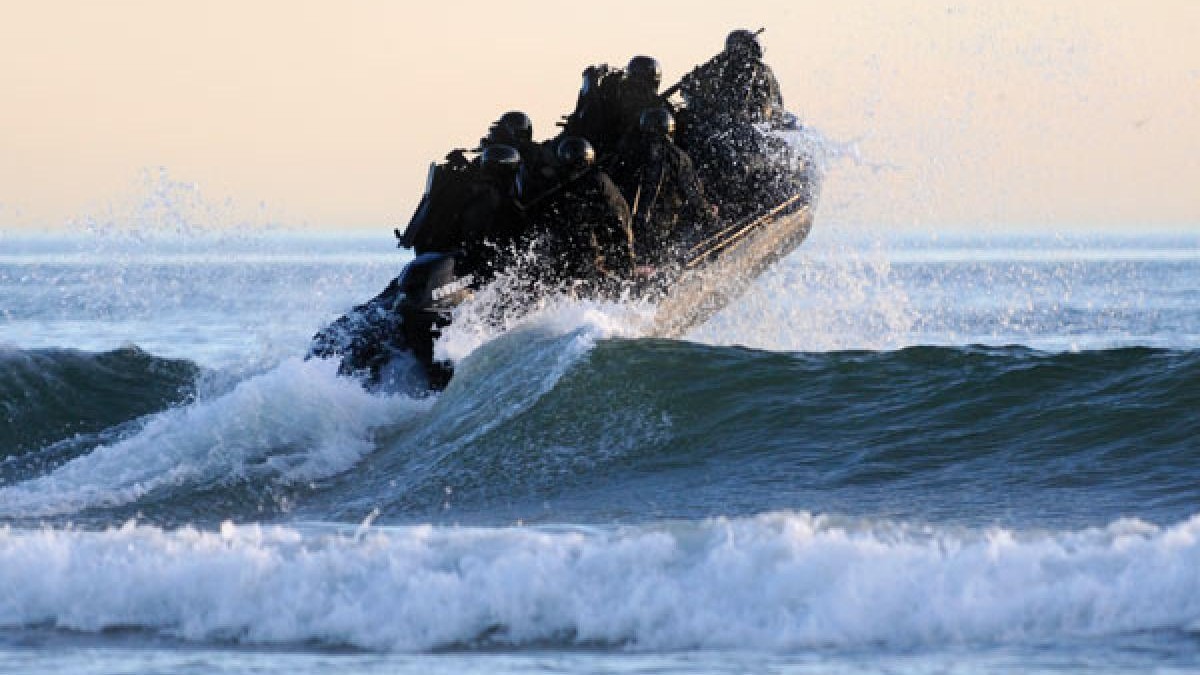
According to the Washington- and London-based sources speaking to OilPrice.com, previous Pentagon wargaming on Iran involving Trump apparently centered on “limited landings” of U.S. troops in key coastal areas around the Strait of Hormuz to secure uninterrupted shipping through the waterway. But as President Johnson discovered in 1965 -- and as many other leaders have found before and since -- there are three major problems with such a plan.
The first is that a standing foreign force in another country, regardless of size, can become easy prey for local forces to destroy through a siege and bombardment campaign. The French learned this at Dien Bien Phu during their own Vietnam war in 1954. Of the nearly 11,000 troops in place before the 56-day bombardment by North Vietnamese forces, around a third were killed, and the rest were captured after the French surrender. It has since become a textbook example of the catastrophe of “enclave theory” and the limits of air power.
The second problem is that limited troop deployments rarely remain limited. Even before drone technology dramatically reduced the safe rear area of a military position by extending the lethal front line, more troops would eventually be needed to defend the operating positions created by the initial landings.
The third problem is that such moves are often anticipated by the local enemy. That is clearly the case with Iran. In early April, Major General Amir Hatami, Commander-in-Chief of the Iranian Army, said: “In the event the enemy attempts a ground operation, no one should survive.”
By Simon Watkins for Oilprice.com
More Top Reads From Oilprice.com
- Saudi Crude Tanker Goes Dark to Slip Through Bab el-Mandeb
- Hormuz Tanker Crossings Sink to Lowest Level Since May as War Risk Spikes
- ADNOC Issues Seventh Crude Tender Since June Despite Hormuz, Red Sea Risks

