Hoban's Rise Gives Delta Air Lines More Leverage in Hanjin KAL Control Battle
Key Takeaways
- •Hoban Group and its affiliates held a combined 20.69 percent stake in Hanjin KAL as of Wednesday, narrowly surpassing the 20.58 percent held by Chairman Cho Won-tae and related parties by just 0.11 percentage points.
- •Cho agreed to purchase an additional 325,000 shares for 37.05 billion won ($27 million), a transaction that would raise his side's holding to 21.06 percent and return it to the largest-shareholder position.
- •Delta Air Lines owns 14.9 percent of Hanjin KAL and the Korea Development Bank holds 10.58 percent, making these outside shareholders pivotal because neither rival camp is close to a majority.
- •KDB said it has no immediate plans to sell its stake, positioning Delta, a long-standing strategic partner widely seen as supportive of Cho, as a key beneficiary with increased leverage over the airline's future.
- •The shareholder contest is unfolding ahead of Korean Air's planned integration of Asiana Airlines' operations on Dec. 17 and the merger of its low-cost carriers, making stable governance at Hanjin KAL increasingly critical.
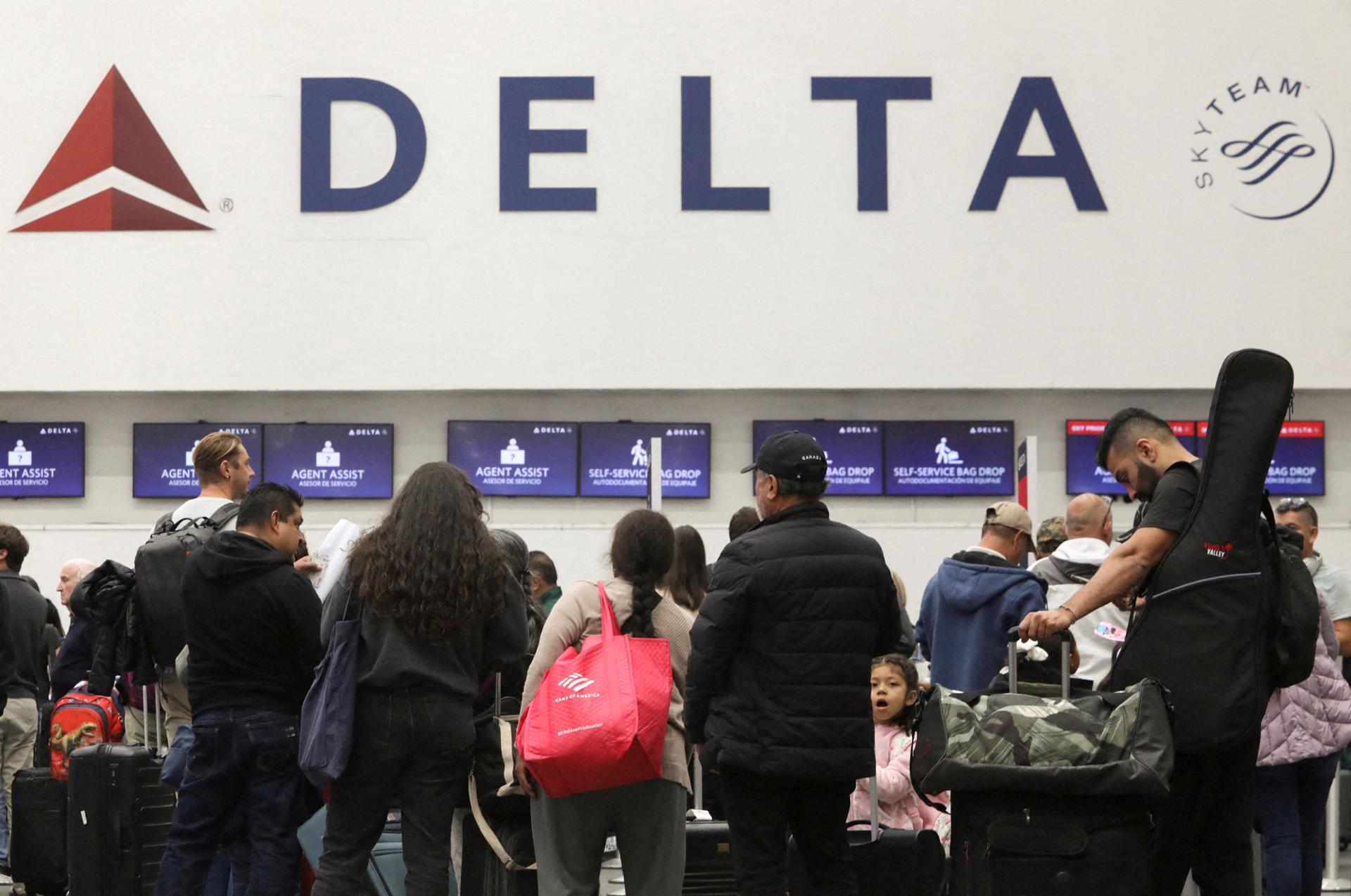
Hoban Group's rise as the largest shareholder of Hanjin KAL, the holding company of Korean Air, is giving Delta Air Lines greater leverage in the struggle for control of the airline group, just as Chairman Cho Won-tae fights to defend his position at the top. The U.S. carrier's 14.9 percent stake has become more valuable as Cho seeks to hold on to management.
As of Wednesday, Hoban and its affiliates held a combined 20.69 percent stake in Hanjin KAL, narrowly surpassing the 20.58 percent controlled by Cho and parties related to him — a gap of just 0.11 percentage points. Cho has since agreed to purchase an additional 325,000 shares for 37.05 billion won ($27 million), a transaction that would lift his side's holding to 21.06 percent and restore its standing as the company's largest shareholder.
The increasingly close race between the two rival camps has heightened the importance of major shareholders who sit outside both of them. With neither side anywhere near a majority, the balance between the two camps rests on holdings of exactly this size. Delta owns 14.9 percent of Hanjin KAL, while the state-run Korea Development Bank (KDB) holds 10.58 percent. Counted together with Cho's stake, the three parties account for roughly 46 percent of the holding company.
Because of its unique status as a public financial institution, KDB is generally set aside when any future deal involving Korean Air is considered. The state-run lender recently reiterated its position that it "does not have any immediate plans to sell its Hanjin KAL stake." That leaves Delta emerging as an unexpected beneficiary of the renewed power struggle between Cho and Hoban.
Delta has long been a strategic partner of Korean Air and is widely viewed as supportive of Cho's leadership. The two airlines operate a trans-Pacific joint venture and have maintained a close commercial relationship for years. Delta's sizable shareholding also makes it one of the most influential investors outside the Cho and Hoban camps.
As Hoban continues to build its position, Cho has a stronger incentive to keep Delta firmly on his side. That could hand the U.S. carrier greater leverage in future discussions involving its partnership with Korean Air, including commercial cooperation and the broader direction of the combined airline following the planned integration with Asiana Airlines, scheduled for Dec. 17.
The timing carries particular weight because Korean Air is entering a major restructuring period. The company plans to integrate Asiana's operations in December and to combine its low-cost carriers, a process that makes stable governance at Hanjin KAL increasingly important. The completion of Cho's additional share purchase and any further buying by Hoban are the immediate developments that could again reorder the shareholder table in the run-up to that restructuring.
Hoban has consistently maintained that its investment is for simple investment purposes and has not publicly announced any plan to take part in management. Industry officials, however, say the group's continued purchases of Hanjin KAL shares suggest otherwise.
For now, Delta appears to hold the strongest position among Hanjin KAL's outside strategic shareholders. Its 14.9 percent stake is large enough to matter in a control battle, while its long-standing commercial ties with Korean Air give the airline interests that reach well beyond a simple financial investment.
"For now, Delta Air Lines is unlikely to turn against Korean Air by selling its stake, but Cho will likely keep a close eye on how the landscape will change, as he needs to leave open all the scenarios to secure management rights in Hanjin KAL," an official from the industry said.
Officials from Delta Air Lines were unavailable for comment.
This article is a standardized English rewrite of a report first published by The Korea Times.

