Historian argues Trump's war machine 'consistently fails' as US reportedly plans new Iran offensive
Key Takeaways
- •Historian Dominic Erdozain wrote in a Monday essay for The i Paper that President Trump 'is losing the war in Iran' even though the White House refuses to admit it.
- •According to reports cited in the essay, the U.S. military is plotting a major new offensive against Iran that is supposedly set to commence after the midterm elections.
- •Erdozain pointed to Peter Bergen's audit of America's post-9/11 wars, which found the United States failed to bring peace, stability, or freedom to any country it attacked over 25 years, with more than 4.5 million deaths from direct and indirect effects.
- •He argued the problem predates Trump, citing Truman's 1945 atomic bomb unveiling and the Vietnam War, where bombing campaigns failed to break Hanoi's will and instead hardened its resolve before the 1973 U.S. withdrawal.
- •Combat veterans quoted in the essay, including retired Marine Lyle Jeremy Rubin, contend that acting as both a killer and a nation-builder is impossible, and that patrolling with machine guns ultimately creates more insurgents.
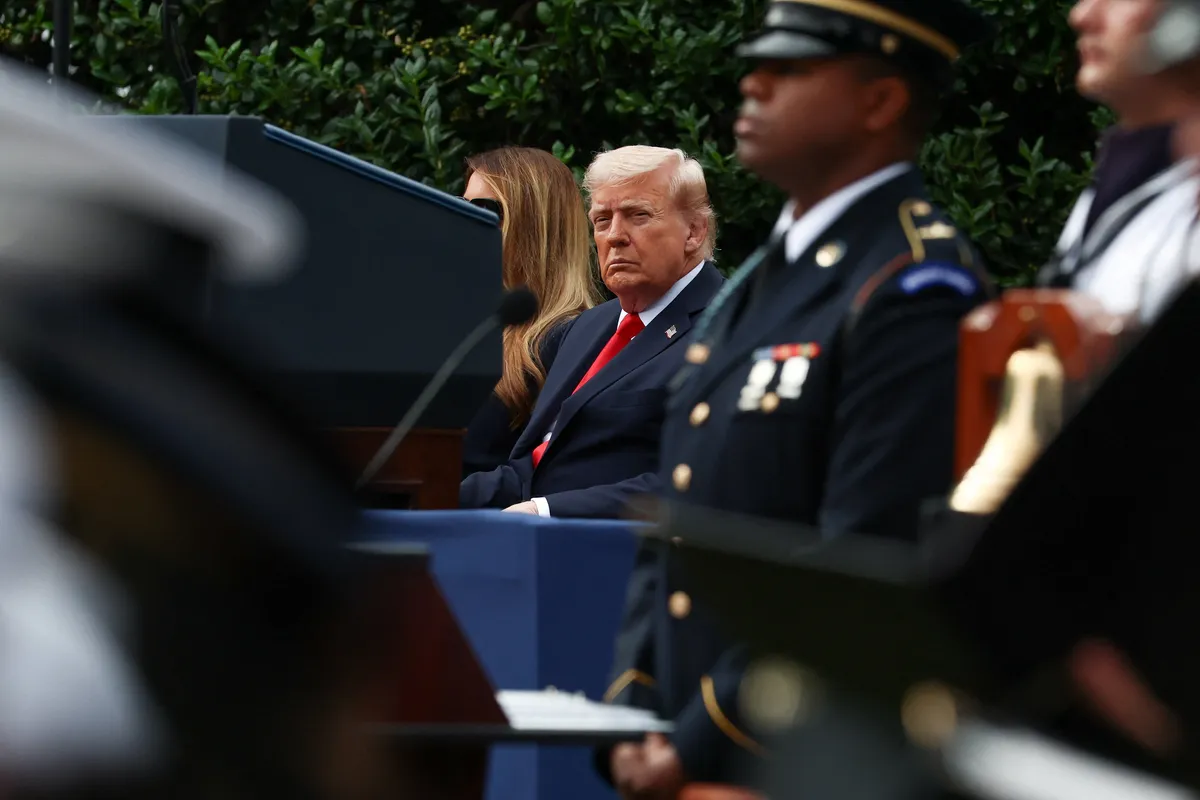
Historian Dominic Erdozain argues that President Donald Trump's military machine is faltering, contending in a new essay that the United States has "long misunderstood power" and confused superior weaponry with the ability to achieve strategic and political goals.
Writing for The i Paper, a U.K.-based national newspaper, on Monday morning, Erdozain — a historian whose work focuses on modern political history — argued that Trump "is losing the war in Iran," even if "the White House refuses to admit it." Despite the "floundering" effort, reports indicate that the U.S. military is nevertheless plotting a major new offensive against Iran, supposedly set to commence after the midterms, the nationwide congressional elections held midway through a president's term.
"Why has America thrown itself into another unwinnable conflict? Why does it invest more than a trillion dollars annually in a war machine that consistently fails in its chosen subject of 'security?'" Erdozain wrote. He pointed to security analyst Peter Bergen's "withering audit" of America's post-9/11 wars, including Afghanistan and Iraq, which found that the United States has failed to bring peace, stability, or freedom to any of the countries it has attacked in the past 25 years. In that account, the wars have instead inspired terrorism and blowback, causing the deaths of more than 4.5 million people from the direct and indirect effects of "these ill-thought crusades."
Erdozain emphasized that the problems besetting the U.S. military did not begin with Trump, even though his time as commander-in-chief has thoroughly embodied them.
"America has long misunderstood power, confusing the possession of superior weaponry with the ability to fulfill strategic and political goals," he explained. "From the earliest days of the puritans to the Christian nationalism now haunting the Pentagon, a powerful current of American thought has vastly overstated what can be achieved through the blunt instrument of war."
He added: "Ever since President Harry Truman unveiled the atomic bomb in 1945 with hollow certainty that 'our enemies' will never possess such a weapon, Americans had been dazzled by technology, which they cherished as a sign of their exceptional status, rather than see its limitations." The Soviet Union tested its own atomic bomb four years later, in 1949.
Erdozain cited the Vietnam War as a prime example of the limits of the U.S. military's blunt-force approach to warfighting, noting that bombing campaigns neither succeeded in "breaking Hanoi's will" nor "bringing Ho Chi Minh to the table," but instead "simply [hardened] their resolve." U.S. forces withdrew from the conflict in 1973, and Saigon fell two years later.
"It has fallen to combat veterans," he wrote, including retired Marine Lyle Jeremy Rubin, to state what should have been clear all along: "I don't see how you can be a killer and be a nation-builder at the same time." Another "jaded veteran," Erdozain noted, observed that it is difficult to win hearts and minds "by walking around with a machine gun" — ultimately, "you just create more insurgents."

