Are Labour Chancellors Really Still Blaming Liz Truss?
Key Takeaways
- •Healey's first major speech as Chancellor repeated Labour arguments previously made by Andy Burnham, focusing on the 'Truss penalty', public control, austerity and Brexit.
- •Julian Jessop argues no bond trader still blames Liz Truss for current UK borrowing costs, noting the 2022 mini-budget episode was four years ago and the Bank of England intervened at the time by buying long-dated gilts.
- •Jessop contends that 'public control' amounts to state ownership and direction, risking lower productivity, larger taxpayer subsidies and higher prices than in market-driven sectors.
- •The speech struck a more upbeat tone than Rachel Reeves's start as Chancellor, with Jessop noting improved business and consumer sentiment as Middle East crisis fallout proved milder than feared.
- •Jessop warns that Burnham and Healey appear set to double down on more spending, borrowing, regulation and tax, which he believes is unlikely to end well.
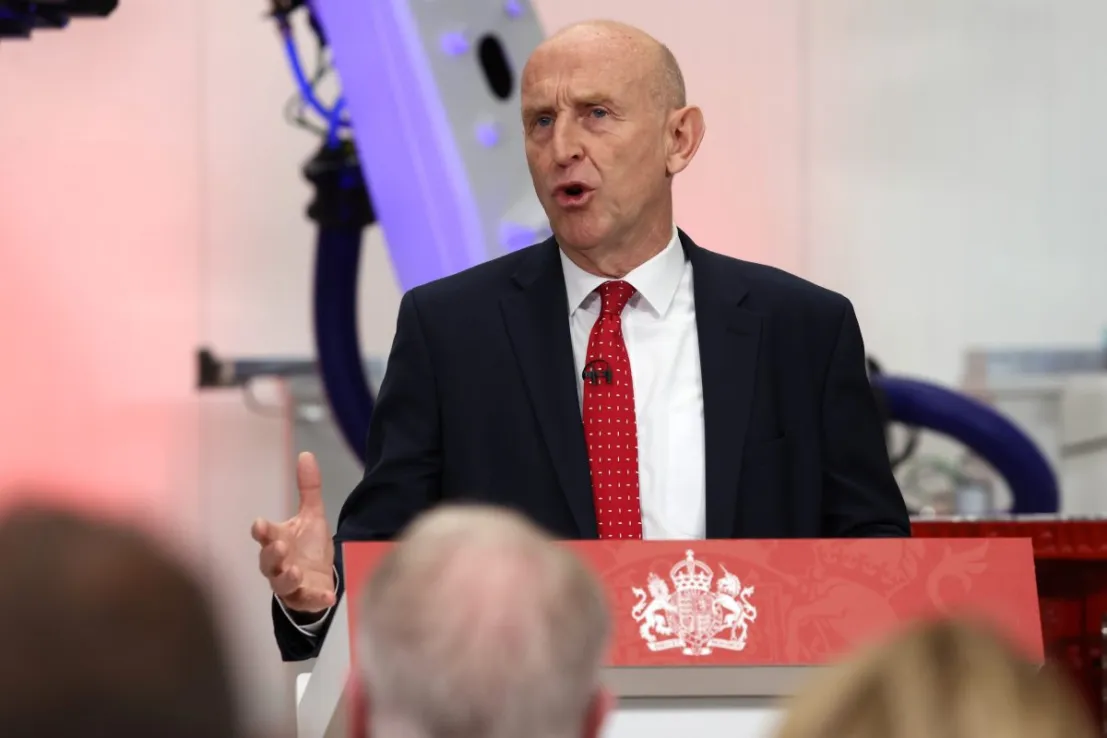
John Healey's first major speech as Chancellor repeated familiar Labour talking points: the harms of austerity, the virtues of the state and, inevitably, the villainy of Liz Truss, writes Julian Jessop.
John Healey's first major speech as Chancellor was expected to be heavy on political knockabout rather than serious economics – and it did not surprise. For the most part, he simply recycled the weak arguments Andy Burnham had made a week earlier. The setting matters: Healey has only recently moved into Number 11, and first speeches by new Chancellors are typically read by markets and Westminster alike for signals of fiscal direction.
Three points illustrate this.
The 'Truss penalty'
First, the claim that a "Truss penalty" still exists in the cost of UK government borrowing is both lazy and silly.
Even if one accepts Healey's view that the mini-budget – the package of unfunded tax cuts announced by the Truss government in September 2022 – was the main driver of the spike in gilt yields in 2022, setting aside global factors, the UK's greater exposure to the energy shock, and decisions taken by the Bank of England, that was four years ago. At the time, the yield spike was severe enough that the Bank of England intervened to buy long-dated gilts to stabilise the market, and Truss left office after roughly six weeks, but the episode has remained a fixture of political argument ever since.
I have yet to meet a single bond trader who still blames Liz Truss for today's problems. If anything, there is some recognition that politicians, including the Conservatives, have learned the lessons and will not repeat the same mistakes.
Meanwhile, the Labour government has already had two years to restore any fiscal credibility lost under the Tories. If Healey's predecessor has indeed rebuilt the foundations, why are UK yields still such an outlier?
Public control
Second, there was yet more loose talk about the benefits of increased "public control".
In reality, neither Burnham nor Healey actually means "public control". Markets can already deliver that – if you think of the "public" as customers and investors – supplemented by additional regulation where competition is weaker.
What they are really talking about is "state ownership" and "state direction". That means ministers with no business experience, and who are beholden to the trade unions, will be running companies and trying, once again, to pick winners.
It is also unclear how this is supposed to help with the cost of living. State ownership could simply result in lower productivity and larger taxpayer subsidies; someone still has to pay the bills.
More broadly, prices have risen far faster in sectors with heavy state intervention than in those where market forces operate more freely.
The government should instead focus on letting markets expand the supply of housing, energy, food and more, and stop increasing the burden of tax and regulation on businesses. Sound money matters too.
The austerity obsession
Third, Healey echoed Burnham's lines on "austerity" and Brexit. Attacking the spending restraint of the early 2010s is tone deaf at a time when markets are already worried about the new government's fiscal plans.
As for Brexit, it was merely a bump in the road compared with the much larger shocks that followed the vote to leave the EU – notably the UK's relatively high energy costs.
If Labour politicians genuinely want to blame a female Conservative Prime Minister for the UK's current difficulties, it would make more sense to point at Theresa May, who ushered in "net zero", rather than Liz Truss or Margaret Thatcher.
Not all bad
That said, John Healey's speech was not entirely negative. In particular, the upbeat tone stood in contrast to the doom and gloom when Rachel Reeves first took the helm.
There are indeed some signs that the UK economy is "turning the corner". This is largely because the fallout from the crisis in the Middle East has not been as bad as feared – at least not yet. But the mood among businesses and consumers has improved.
Unfortunately, more shocks are in the pipeline. The new Chancellor was right to give nothing away about the upcoming Budget. But Burnham and Healey now appear set to double down on the bad choices made by Starmer and Reeves: more spending, more borrowing, more regulation, and even more tax. This is unlikely to end well.
Julian Jessop is an independent economist.
