Big Oil’s $3,000-a-Second Gamble: Climate Disasters in Nepal and Gary, Indiana Show a Shared Crisis
Key Takeaways
- •A derecho with winds up to 110 mph struck Gary, Indiana, leaving tens of thousands without electricity for over two weeks and drawing World Central Kitchen to the area for the first time.
- •A glacial collapse near Mount Everest killed more than 1,000 people in Nepal's deadliest disaster in a decade, with over a thousand still missing.
- •Nepal contributes less than 0.1% of global greenhouse gas emissions and runs a grid that is 95% clean hydropower, yet bears disproportionate climate destruction.
- •Gary's steel mills emit 10 million metric tons of carbon annually but could switch to renewable-hydrogen and electric arc furnace technology, as demonstrated by Sweden's HYBRIT project, which delivered fossil-free steel in 2021.
- •The author attributes public inaction on climate change to psychological factors, including cognitive dissonance and the brain's weak response to slow-moving, abstract threats.
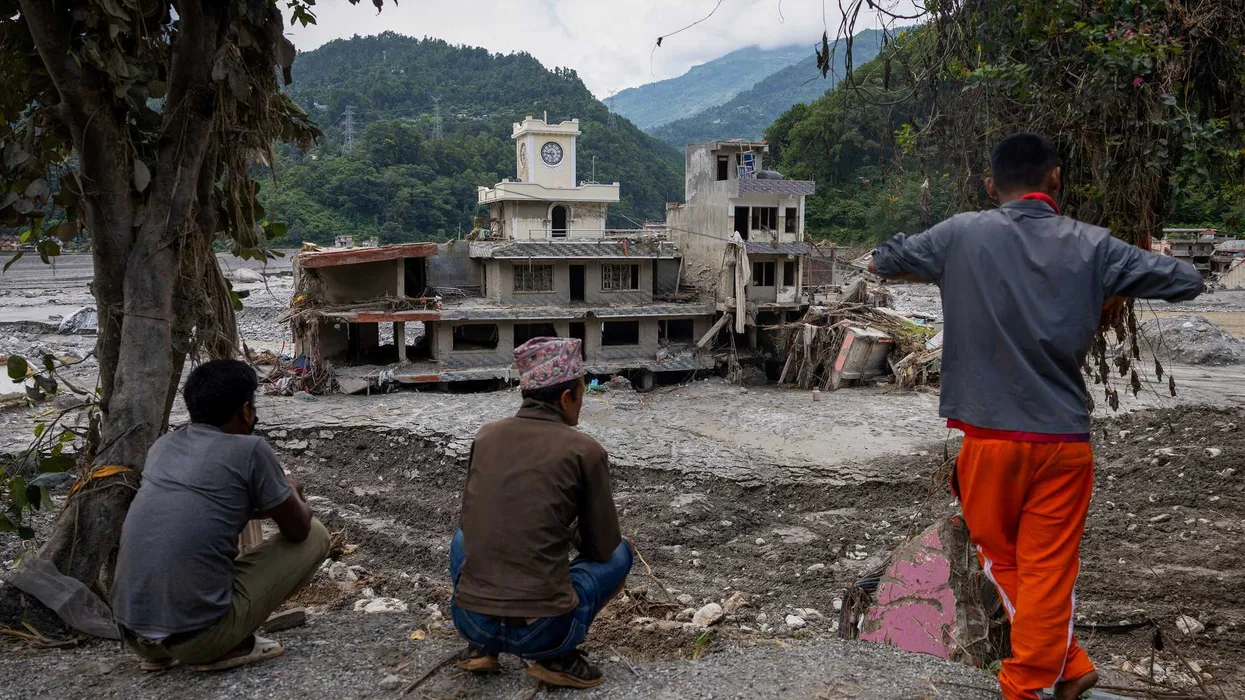
In the final weeks of August, a Himalayan valley and a post-industrial city in the American Midwest found tragic common ground. In Gary, Indiana, a powerful “derecho” — a fast-moving band of damaging thunderstorms — tore across Lake Michigan, producing straight-line winds as high as 110 mph. The widespread destruction left tens of thousands of people without electricity for more than two weeks, bringing global relief organizations such as World Central Kitchen to the area for the first time. In Nepal, an enormous 2,000-foot-wide chunk of glacier ice sheared off a mountain and plunged to the river 7,000 feet below, sweeping people off the mountainside and killing more than 1,000. The Nepal event was the country’s deadliest disaster in a decade, occurring near Mount Everest in a region where glacial melt has accelerated as temperatures in the Himalayas have risen faster than the global average — a trend scientists have documented for years and warn will make such glacial lake outburst floods more frequent.
Scientists agree that both catastrophes were caused by the rise in global temperatures.
Eight thousand miles apart and as historically and culturally distinct as two places can be, Nepal and Gary alike emerged as pawns in the same oligarchs’ game of chicken: Can Big Oil squeeze another decade of return on its sunk equipment costs before the planet’s post-industrial temperature rises by 3.6°F (2°C)? Scientists have warned since the 1970s that a 2°C increase would be the tipping point beyond which life on earth changes irreversibly — a threshold enshrined in the 2015 Paris Agreement as the limit the world should strive to stay well below — yet the game continues. Fossil fuel profits have kept soaring despite the warnings — now topping $3,000 a second — while the costs of climate change are projected to hit $38 trillion annually, a figure comparable to the annual research estimate published in Nature in 2024, which put average annual damages by mid-century at roughly that scale.
The people of Gary and Nepal, like millions living in Miami, New Orleans, Houston, Asheville, Jakarta, Delhi, Lagos, and thousands of other cities, towns, and rural communities worldwide, are sitting pawns in a deadly game they never signed up for. No one but industry titans, fossil fuel investors, and the politicians whose campaigns they bankrolled agreed to what is now happening.
Gary’s Steel Still Runs on Coal — but It Doesn’t Have To
The author formerly lived in Gary and, in the interest of full disclosure, ran for U.S. Congress in 2020, primarily to address climate change, and lost. Although Gary is known as a post-industrial steel mill town with an outsized carbon footprint, it is also home to rare and unexpected natural habitats and exceptional beauty. Its sand dunes, lagoons, and oak savannahs remain as pristine as they were when the Potawatomi and Miami tribes lived there.
That congressional run was built on climate urgency that most residents did not want to hear. Gary’s steel manufacturing relies on coke and coal to fuel its blast furnaces, churning out 10 million metric tons of carbon every year — but those furnaces could be converted to run on hydrogen produced via electrolysis powered by solar or wind, replacing coke as the reducing and heating agent. The steel could then be melted in an electric arc furnace (EAF). The process would produce water vapor instead of CO2 as a byproduct, sparing the lungs of steelworkers and the planet alike.
Renewable-hydrogen steel plants also benefit from price stability, since sunlight and wind are not subject to the volatility Trump is spreading throughout the Middle East. Early movers such as Sweden’s HYBRIT project and Boston Metal have demonstrated that as renewable electricity costs keep falling, green steel will become not just cleaner but genuinely cheaper to produce at scale. HYBRIT, a joint venture including steelmaker SSAB and utility Vattenfall, delivered the world’s first fossil-free steel to a commercial customer in 2021. That is especially true in regions with abundant solar or wind resources, and Gary is rich in both — vacant land for solar and onshore winds off Lake Michigan. The only downside of converting to green steelmaking, beyond an initial cost that would convert to profit within 10 years, would likely fall on the local utility monopoly known as NIPSCO.
India Still Burns Coal — Nepal Does Not
On the ledger of climate karma, Nepal is as close to innocent as any emerging nation can be. It contributes less than 0.1% of global greenhouse gas emissions while bearing a disproportionate share of climate destruction. Nepal’s power grid is 95% supplied by clean hydropower, supplemented by solar. Unlike neighboring India — the world’s third-worst contributor to climate change after China and the United States — Nepal operates no coal-fired power plants.
In Nepal, traditional biomass, including firewood and agricultural residue, provides over 60% of overall primary energy. Biomass is the primary energy source for residential purposes such as heating and cooking.
Despite the country’s clean-fuel efforts, renewed flooding still threatens Nepal. Scientists warn that debris and dammed-up river channels could burst any day without warning, with more than a thousand people still missing from the last event, including hundreds of foreign tourists.
Will We Keep Tuning Out the Obvious?
Every hurricane, flood, fire, disappearing habitat and river, and every sinking coastal region pushes Big Oil’s game of chicken toward its conclusion, one way or another. In the U.S., will the fossil-fuel-aligned Supreme Court majority allow corporations to keep destroying with no legal accountability? In India, will Prime Minister Modi keep speaking of climate justice even as his policies produce the opposite?
When the author’s climate-focused run for office ended, a Chicago Tribune Metro editor asked whether she wanted to write for them. Having continued writing climate policy papers, why not use them to try to do some good? The campaign taught her that while many Americans are somewhat concerned about climate change, most do not want to think about it. Six years, hundreds of columns, and a climate justice TED Talk later, an editor at a different national paper said climate change, as a topic, remains unpopular.
People tune out climate change because the human brain evolved to react to immediate, visible threats rather than slow-moving, abstract problems. That lack of personal urgency reframes it as a future problem, even as fossil-fuel-backed organizations blame “nature” for their own malfeasance. Contemplating the planet’s plight also triggers cognitive dissonance: it requires acknowledging uncomfortable truths about modern lifestyles, leading to psychological numbing and emotional shutdown rather than action.
Perhaps this psychological numbing is the earth’s kindness — her way of anesthetizing us while she reduces our numbers. And perhaps elevating a vindictive anti-science figure bent on destroying the planet, world peace, and the rule of law is simply nature’s way of thinning the herd.
Sabrina Haake is a political analyst and 25+ year federal trial attorney specializing in First and Fourteenth Amendment defense. She writes the free Substack, The Haake Take.
Source: Alternet
