Trump Doesn't Care if Republicans Suffer at the Polls, NYT Reporters Say
Key Takeaways
- •New York Times reporters Maggie Haberman and Jonathan Swan said Donald Trump is not worried about corruption allegations or political fallout as long as he personally benefits.
- •Trump chose not to tell Nvidia CEO Jensen Huang that China might be spying on him, fearing it would disrupt US-China trade negotiations and the artificial intelligence industry.
- •Since beginning his second term in January 2025, Trump has been linked to $377 billion in corruption and has increased his net worth by roughly $2 billion, much of it from cryptocurrency projects in which most investors lost everything.
- •The Trump family has pursued foreign policy business projects in countries including Kazakhstan and Albania, drawing comparisons to Republican criticism of Hunter Biden's profiting during his father's presidency.
- •The election is five days away, and every public poll cited in the interview showed Democrats very likely to take over the House and potentially the Senate as well.
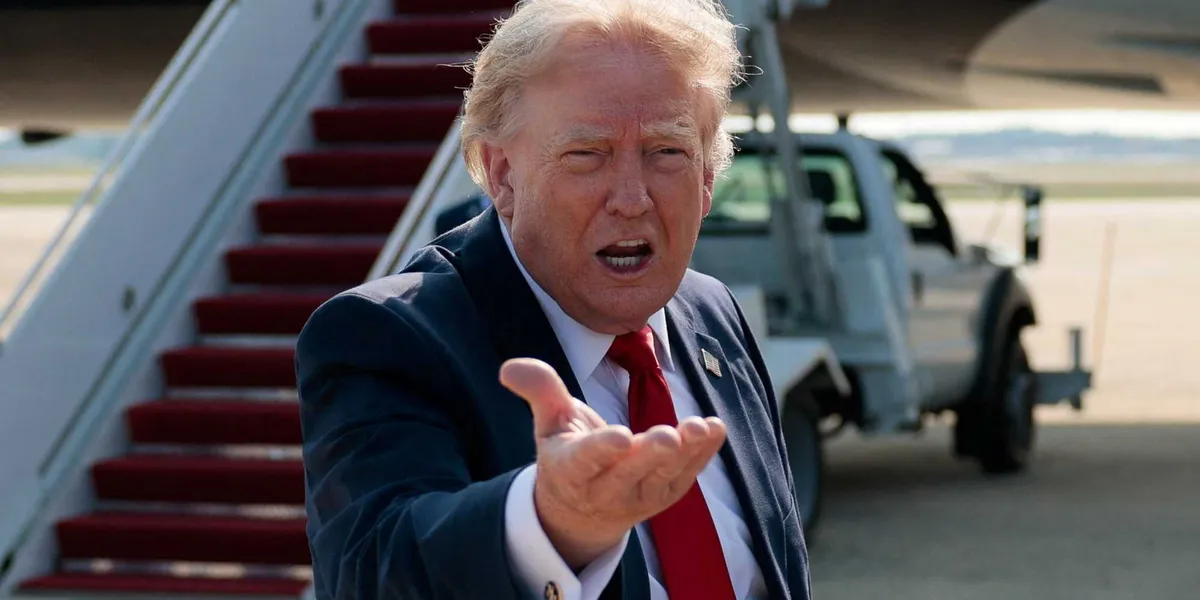
Two journalists who have documented President Donald Trump's inner workings in behind-the-scenes accounts offered a blunt explanation for his open corruption: he is indifferent to whether Americans are angered or his own party pays a price at the ballot box.
The assessment came from New York Times reporters Maggie Haberman and Jonathan Swan, who spoke Thursday with MS NOW anchor Nicolle Wallace, five days before an election in which, she noted, public polling consistently favors Democrats.
"Where are we?" Wallace asked. "We're five days out from an election where every single poll I've seen that's become public, whether it's commissioned by Democrats or Republicans, has Democrats very likely taking over the House, potentially the Senate as well."
She then asked: "Are they worried about the flagrant corruption, the pay-to-play, the mixing of business with foreign policy?" When Haberman and Swan sought clarification about who "they" referred to, and Wallace specified Trump and others in the White House, Swan replied: "If it's involving him, I don't think Donald Trump is worried, obviously."
"Because of immunity, or because he thinks it's not illegal?" Wallace asked.
Swan answered with an example of his own: "Donald Trump wants a cut."
Both reporters made clear that, from damage to American foreign policy to the domestic political fallout of the administration's conduct, Trump is unmoved as long as he personally benefits.
They cited the episode in which Trump chose not to tell Nvidia CEO Jensen Huang that China might be spying on him, out of fear it would disrupt US-China trade negotiations and the artificial intelligence industry — both involving businesses from which Trump is personally profiting. Nvidia's chips anchor much of the global AI buildout, placing the company at the intersection of the technology boom Trump wants to shield and the relationship with Beijing he has been reluctant to disturb.
"Trump more broadly sees Nvidia's success as completely connected to the success of the U.S. economy," Haberman said. "He doesn't want to do anything, as you played some tape, to disrupt the artificial intelligence boom, to disrupt their chip sales. He didn't want to do anything to disrupt his relationship with Xi Jinping and China. So there are no incentives, from Trump's perspective, to upset anything there. So he didn't act on that information."
The exchange aired as scrutiny of the president's business dealings has grown. Since taking office for his second term in January 2025, Trump has been linked to an unprecedented $377 billion in corruption. He has personally increased his net worth by roughly $2 billion, much of it from cryptocurrency projects in which the vast majority of his investors lost everything. The overt profiting by Trump and his family — which has pursued foreign policy projects ranging from Kazakhstan to Albania since he took office — is especially contentious given years of Republican criticism of Hunter Biden, son of former President Joe Biden, for profiting while his father held office.
"I made a big stink about Hunter Biden. We had to take a firm stance that this was wrong," Republican attorney Richard Painter, who served as the chief White House ethics lawyer under President George W. Bush, recently said. "Donald Trump, he's encouraging it. And it's 1,000 times worse than [what] Hunter Biden did."
With Election Day days away, the results will provide a near-term measure of the political costs Wallace described — and of whether they register with an administration the reporters characterized as indifferent to them.
The full interview is available on YouTube.

