Justice Neil Gorsuch's Shift Illustrates the Politicization of the Supreme Court, Slate Editors Argue
Key Takeaways
- •A Slate analysis contends Justice Neil Gorsuch's recent rulings show his once-independent textualism has been overtaken by political alignment during Trump's second term.
- •Gorsuch joined conservatives in July in allowing states to ban trans athletes from sports, narrowing the discrimination reasoning of his own 2020 Bostock opinion.
- •In the birthright citizenship case, the administration's challenge to over 120 years of precedent failed only 5-4, with Gorsuch signing Justice Clarence Thomas's dissent.
- •Gorsuch occupies the seat left open after Republicans declined to hold hearings on Merrick Garland's nomination for most of 2016, citing the election year.
- •Slate's Mark Joseph Stern argues Gorsuch is heavily influenced by senior conservative colleagues Clarence Thomas and Samuel Alito.
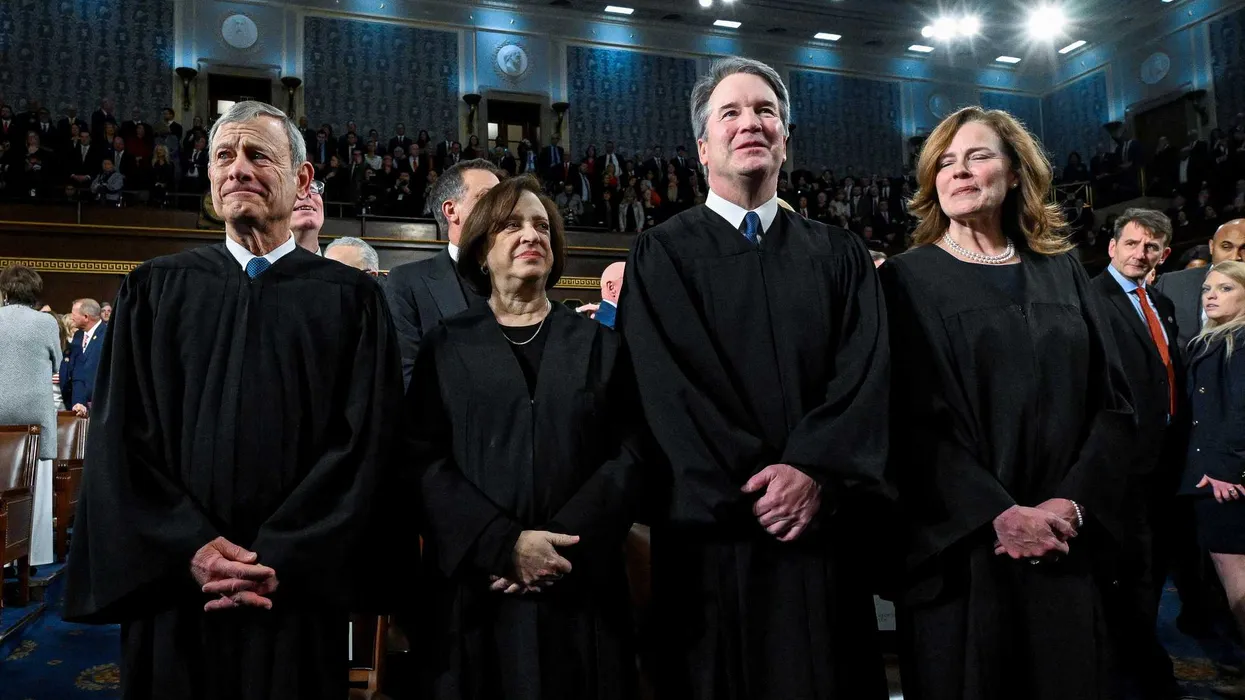
Although the Supreme Court is theoretically an apolitical institution, over the course of President Donald Trump's second term its politicization has become blatant, according to a new analysis published by Slate. The evolution of Justice Neil Gorsuch, the outlet argues, highlights the increasingly far-right character of the nation's highest court.
Slate Executive Editor Susan Matthews contends that "justices have a vested interest in telling all of us, Oh, what we're doing is law. We're just reading the law. There's no politics. There's nothing to see here." What she finds uniquely revealing about Gorsuch is that "the way he got onto the court itself is the best, most obvious demonstration that we are not 'just reading the law' here. Politics is informing every single thing that happens." Matthews was referring to the fact that Gorsuch was seated in the early days of Trump's first term only after Republicans blocked the appointment of President Obama's nominee, Merrick Garland, declining to hold hearings on Garland for most of 2016 on the grounds that the vacancy arose in an election year — a precedent that did not stop Republicans from confirming a nominee in a later election-year vacancy.
"I think Gorsuch was in fact the perfect person to take Merrick Garland's seat because he's someone who is going to stand up there, with an absolutely straight face, saying, There is nothing to see here," Matthews said. "They say that there's no politics here, but there's obviously politics here."
For a time, many observers believed that even if Gorsuch's appointment was political, his decisions flowed from his own judicial convictions. According to Matthews, that perception has now collapsed. "This term in particular shattered that illusion for me. With the trans sports cases and with the birthright citizenship case, it's hard to say that he hasn't lost his way and is following politics in a way that is so legible that there's no argument anymore."
From Bostock to the trans sports ruling
Matthews points to the 2020 case Bostock v. Clayton County, which addressed whether a person could be fired for being gay or trans, as a clear example of how Gorsuch's once-textualist reading of the Constitution has, in her view, been corrupted by MAGA politics. Textualism — the method of interpreting legal provisions according to the ordinary meaning of their words — has long been the stated foundation of conservative jurisprudence, and Gorsuch was among its most prominent practitioners. In that case, "Gorsuch established this reputation as kind of a renegade" when he took a stance against discrimination.
"Gorsuch, in a very textualist, 'Let's just read the words on the page' way, made this argument: If they're being discriminated against because it is a man who is in a relationship with a man, and if a person is being discriminated against because it is somebody whose gender identity does not align with their sex given at birth, that is very clearly discrimination," Matthews explained. "He ruled in favor of the trans and gay workers. It was a revolutionary ruling at the time."
But in July, Gorsuch sided with his fellow conservative justices in an opinion allowing states to ban trans athletes from sports. Slate contributor Mark Joseph Stern notes the contradiction: Gorsuch continues to assert that he upholds Bostock, yet at the same time has decided to "weirdly limit that reasoning to this one narrow context and come up with a different definition of discrimination." Matthews added, "I think that this perfectly aligns with the political message on the ground as well."
The birthright citizenship decision
The recent Supreme Court decision on birthright citizenship, which upheld the policy in a highly divided opinion, further deepened the critique. Birthright citizenship rests on the Fourteenth Amendment, ratified in 1868, whose citizenship clause has been understood since an 1898 Supreme Court ruling to confer citizenship on virtually all children born on U.S. soil. "I really felt that he was going to vote to strike down Donald Trump's executive order, which would have prohibited birthright citizenship for the children of undocumented immigrants who are born here, and also the children of temporary visitors who are born here," Stern said. "This was a really, really radical argument that the administration presented. It rejected well over 120 years of precedent and consistent practice by the federal government. And yet the administration lost only by a 5–4 vote on the constitutional question. Four justices would have upheld at least part of the order under the Constitution. And Gorsuch signed on to Justice Clarence Thomas' dissent."
Matthews said the case seemed tailor-made for Gorsuch to break with the administration. "It seemed like such a perfect case for him to come in and say, No, no, no, I'm going to go against Trump here, and I'm going to get all the accolades for doing so, and I'm going to get this moment of being the defender of the Constitution," she said. "That is what I was counting on… I just thought that the desire to be framed as the reasonable one would win out. It's scary it didn't and that instead he went in this direction."
Influence of senior conservative colleagues
Stern concluded by pointing to the influence of Gorsuch's senior conservative colleagues. "I think Gorsuch is highly influenced and swayed by Thomas and by Justice Samuel Alito, by his senior conservative colleagues, when they really bear down and make these historical arguments that might sound plausible if you're reading them with absolutely no background knowledge and don't do a site check but that absolutely fall apart upon any meaningful scrutiny," he said.
"This is Gorsuch the bad historian, in part, and I think he really did see a lot to like about the theory that Thomas cooked up… Quite often, white supremacists, nativists, people who didn't want the citizenship clause to mean what it said came up with this conspiracy theory about what it really meant, and Thomas adopted that. And I think Gorsuch liked that and was like, Sure, Clarence. Makes sense to me."
