Republicans Outspend Democrats on 2026 Midterm Ads, but the Money Isn't Buying Results
Key Takeaways
- •Republicans spent $563 million on Senate advertising across nine battleground states through September compared with $375 million from Democrats, according to AdImpact figures.
- •The GOP's 26 percent advantage in broadcast spending produced only a 7 percent advantage in actual ad airings, and Democrats received more airings despite spending less in Ohio and North Carolina.
- •Federal law gives qualified candidates the lowest broadcast advertising rates during the final 60 days before a general election, a benefit super PACs have historically been unable to obtain.
- •The Supreme Court paused a federal appeals court ruling against new FCC rate rules in September, allowing outside groups to access cheaper rates for now, with a final decision likely to come after the November election.
- •Republican advertising has not improved polling in New Hampshire, where ads for John Sununu aired nearly twice as often as those for Chris Pappas, who led by five to eight points, though attack ads have pushed Troy Jackson's favorability underwater in Maine.
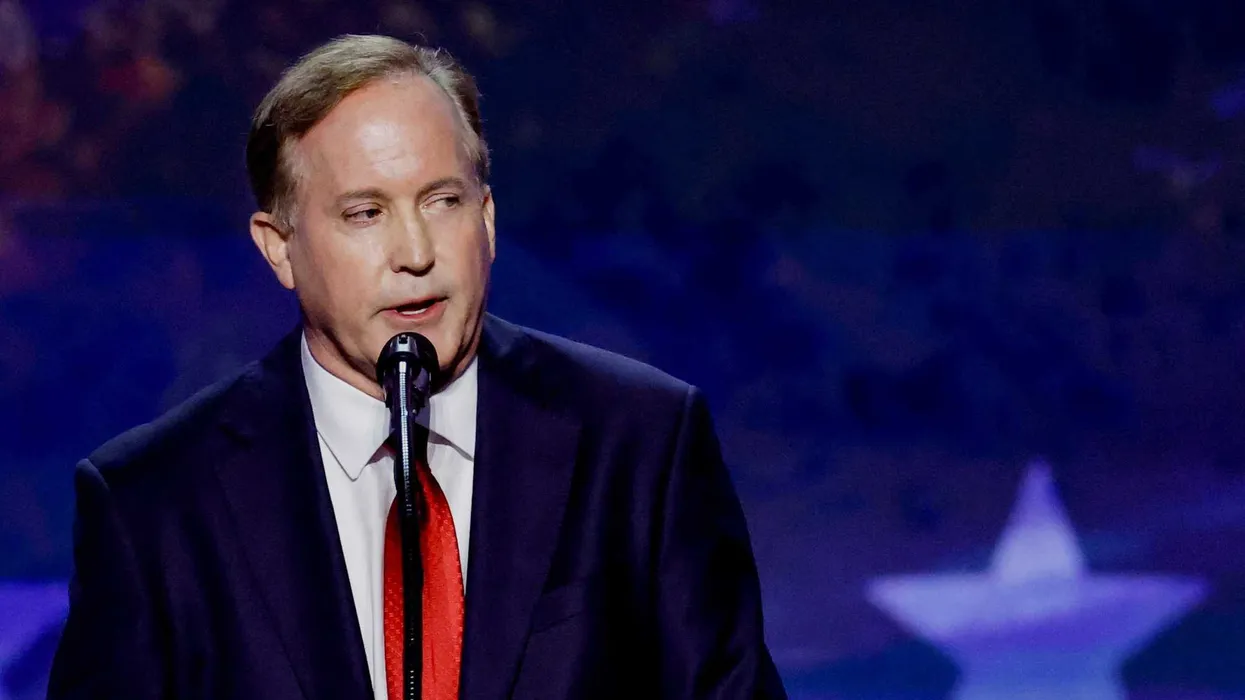
Republicans are channeling ever-larger sums through their web of political action committees (PACs) and super PACs into television ads for politicians in tight races nationwide. So far, the flood of cash is not translating into success.
Writing for The Washington Monthly on Tuesday, politics editor Bill Scher explained that although GOP campaigns and allied groups have amassed huge sums of money, Democrats have stretched their advertising dollars further because their candidates raise more funds directly and qualify for cheaper broadcast rates.
"Money is rarely the sole factor in determining election outcomes," Scher wrote. "Democrats spent more on Senate campaigns in 2024 and still lost the chamber. But if Republicans hope to hold off a Blue Wave in a midterm when their president's job approval is cratering, money is their best bet."
Scher pointed to a recent analysis from Amy Walter of The Cook Political Report, who found that as of the end of September, both parties had concluded that "attack ads against Democrats were not yet 'moving the needle.'"
In Scher's view, the GOP's biggest problem is that it is selling a bad product, so increasing the marketing budget will not fix it. "Voters don't want to buy more Republican policies that have eaten away at their bank accounts," he argued. "And when they're mad about their thinning wallets, as I wrote previously, they are not easily riled up by appeals to transphobia and Islamophobia."
The raw spending figures favor Republicans. According to AdImpact, the GOP spent $563 million on Senate advertising across nine battleground states through September, compared with Democrats' $375 million. Yet Republicans' 26 percent advantage in broadcast spending produced only a 7 percent advantage in actual ad airings. In Texas, a 44 percent spending edge yielded just 8 percent more ads on the air. In Ohio and North Carolina, Democrats received more broadcast airings despite spending less. The disparity reflects the mechanics of the buy: dollars spent without the candidate rate discount purchase less airtime, so a big spending edge can shrink once it reaches the screen.
The structural problem, Scher argued, is that Republicans are placing their money with special interest groups rather than with candidates or campaigns.
The difference comes down to who buys the ads. Federal law gives qualified candidates the lowest broadcast advertising rates during the final 60 days before a general election. Super PACs, which cannot legally coordinate with candidates, do not receive the same discount. Republicans have relied heavily on outside organizations such as President Donald Trump's MAGA, Inc., the Senate Leadership Fund and the Congressional Leadership Fund, while Democratic candidates finance more of their advertising directly.
That approach had been working for Democrats until a Supreme Court ruling on Sept. 4 — a pause that landed just as the 60-day discount window opened ahead of the Nov. 3 general election, the stretch of the calendar when the rate gap matters most. Candidates have long enjoyed the cheapest possible ad rates, treating them almost as the price of a public service announcement, while super PACs did not qualify. In March, the Federal Communications Commission (FCC) changed its policy, saying outside groups could receive the same rate.
The dispute has been fought in court over the past year. In August 2026, a federal appeals court ruled against the new FCC rules. The Supreme Court then stepped in and paused the appeals court ruling, allowing the PACs to obtain the cheaper rate. That means that by the time the Supreme Court decides on regulating campaign ad costs, the election will likely be over. Wherever the justices land, their ruling will shape how outside groups and candidates buy airtime in campaigns beyond this one.
That leaves Republicans with one remaining task: ensuring they reserved their ad time in advance.
Democrats in North Carolina, Ohio and Texas have either eliminated or mitigated the GOP money advantage. New Hampshire is another story. "The state where Republicans enjoy the biggest disparity in broadcast ad airings, New Hampshire, has yet to pay off in improved poll numbers," Scher wrote. "Ads on behalf of Republican John Sununu, a former U.S. Senator, have aired nearly twice as much as those for Democratic nominee Chris Pappas. But Pappas has held leads between five and eight points in polls sampled over the latter half of September." He added, "Perhaps because Pappas currently represents half of the state in the U.S. House, he is a familiar enough figure to be inoculated from Republican attacks." Whether Sununu's airtime edge eventually registers in polling remains one of the cycle's open questions.
Maine is where the spending appears to be working. There, Troy Jackson's "favorability scores in recent polling have been underwater after a blitz of attack ads" from Sen. Susan Collins (R-Maine). Scher noted that in Maine "61 percent of the ad spending is Republican and 61 percent of the broadcast airtime is Republican." Jackson simply does not have the campaign cash to spend at that level, and the Democratic Party is not swooping in, as the GOP does, to attack Collins.
Scher closed by citing recent reports in which Ken Paxton was recorded at a Washington, D.C., event complaining that he has never had less control over a race in his life. He said the entire campaign is being run out of Washington, including decisions about which issues to focus on. The same is not true of his opponent, James Talarico.
While Scher cautions against complacency, he argues that reports of Democrats being drowned out by GOP dollars have been overstated. The deeper story of the cycle is not the size of the war chests but who controls the buy — and with the Supreme Court's answer on ad rates still pending, the balance between candidate-funded and outside-funded advertising will remain a defining question for campaigns after 2026.

