Conservative Economists Slam Trump and GOP for Record-Breaking Reconciliation Spending
Key Takeaways
- •Republicans are attempting to use the budget reconciliation process a record four times in the current Congress, compared to the typical once-per-Congress usage by majority parties in recent years.
- •Two reconciliation bills passed since the start of Trump's second term have added approximately $4 trillion in deficits over a decade and $70 billion in new spending.
- •Some Republican fiscal conservatives, including Representatives Eric Burlison and Warren Davidson, have demanded spending offsets as a condition for their votes on the budget bills.
- •House Majority Leader Steve Scalise has indicated plans for a fourth reconciliation bill despite ongoing deficit concerns from within his own party.
- •Rampell argues that cuts to programs such as USAID, the Smithsonian, and medical research grants represent minimal savings that do not meaningfully reduce the national debt.
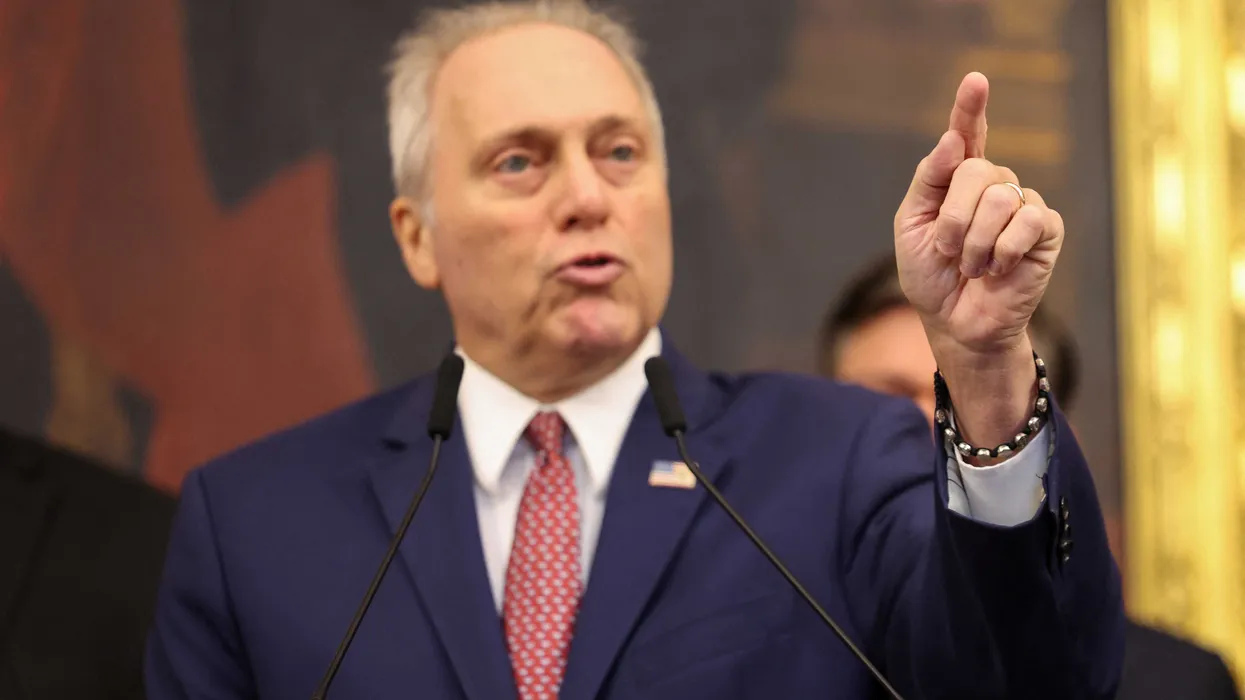
President Donald Trump's economic policies have drawn sustained criticism from conservatives, particularly over his stance on tariffs and government spending. Now, a conservative outlet has published a detailed critique accusing Trump and congressional Republicans of abandoning what many consider the cornerstone of right-wing economic philosophy: fiscal responsibility—a posture the GOP has maintained in rhetoric even as deficits have ballooned under both Republican and Democratic administrations in recent decades.
In an article published Thursday in The Bulwark, columnist Catherine Rampell took aim at the GOP's repeated reliance on the fast-track legislative process known as "reconciliation" to advance costly budget bills.
"Stop me if you've heard this one before: Republicans are on the verge of finally fixing our out-of-control budget deficits," Rampell wrote. "But first they need to get just one more unfunded spending binge out of their system—and then (they swear) they'll get around to that purge."
Rampell explained that reconciliation, once a rarely used procedural tactic allowing a budget bill to pass with only a simple-majority vote, has become a favored tool. Created under the Congressional Budget Act of 1974, reconciliation was designed as an expedited pathway for legislation bringing spending and revenue in line with budget resolutions. In recent years, the majority party has typically employed reconciliation at most once per Congress to expedite a major priority or must-pass budget measure—the 2017 Tax Cuts and Jobs Act, for instance, was passed through the same process. In the current Congress, however, Republicans are attempting to use the mechanism a record four times.
According to Rampell, Republicans have already passed two reconciliation bills since the start of Trump's second term. The first added approximately $4 trillion in deficits over a decade, while the second introduced $70 billion in new spending. These figures come against a backdrop of a national debt that has surpassed $36 trillion, with net interest payments on that debt now ranking among the largest single line items in the federal budget.
"We are today on reconciliation 3.0," Rampell said. "Still no spending cuts, or other forms of deficit reduction. And yet again, the Republican fiscal hawks in the House said they were unhappy. Some, like Rep. Eric Burlison (R-Mo.), demanded pay-fors as a condition for their votes. Rep. Warren Davidson (R-Ohio) declared the budget resolution 'DOA,' saying that there was 'no path' to passage without some sort of offsets."
Despite this pattern, House Majority Leader Steve Scalise indicated further efforts are underway. "We're right now looking at a reconciliation 4.0 to do the things that are left out of this one," Scalise promised.
Senator Bill Cassidy (R-LA) expressed reservations about the new bill, stating, "Obviously our country is having a problem with deficit spending, so it should be offset." Rampell responded skeptically, suggesting it remains to be seen "how long this professed commitment to fiscal discipline lasts."
Rampell also argued that the Trump administration and its allies have opted to slash programs serving vulnerable communities and favored by liberals—cuts that, in her assessment, do not meaningfully reduce deficits.
"But it is just a fig leaf: When you hear that Trumpers are slashing funds for the Smithsonian, Community Development Financial Institutions, USAID, medical research grants, and so on, you might think they are substantially slimming down budgets," Rampell wrote. "In reality, while these cuts will devastate the individual programs themselves, the dollars in question represent pocket change in the grand scheme of federal spending and tax-cut costs. But Trump and GOP lawmakers can still claim to be 'saving money' when questioned about their unfunded tax cuts, wars, deportation machine, and farmer bailouts."

