George Conway Says Trump Is 'Not Even Close to Reality' Anymore
Key Takeaways
- •Conway said Trump has moved beyond simple forgetfulness and is operating outside reality.
- •He cited psychologist Erich Fromm’s concept of malignant narcissism to characterize Trump’s behavior.
- •Conway said Natalie Harp helps reinforce Trump’s distorted view of reality by feeding him favorable material.
- •Trump’s recent public remarks and meandering comments have fueled continuing questions about his age and fitness for office.
- •Conway warned that the public may be becoming accustomed to conduct that would normally trigger major political consequences.
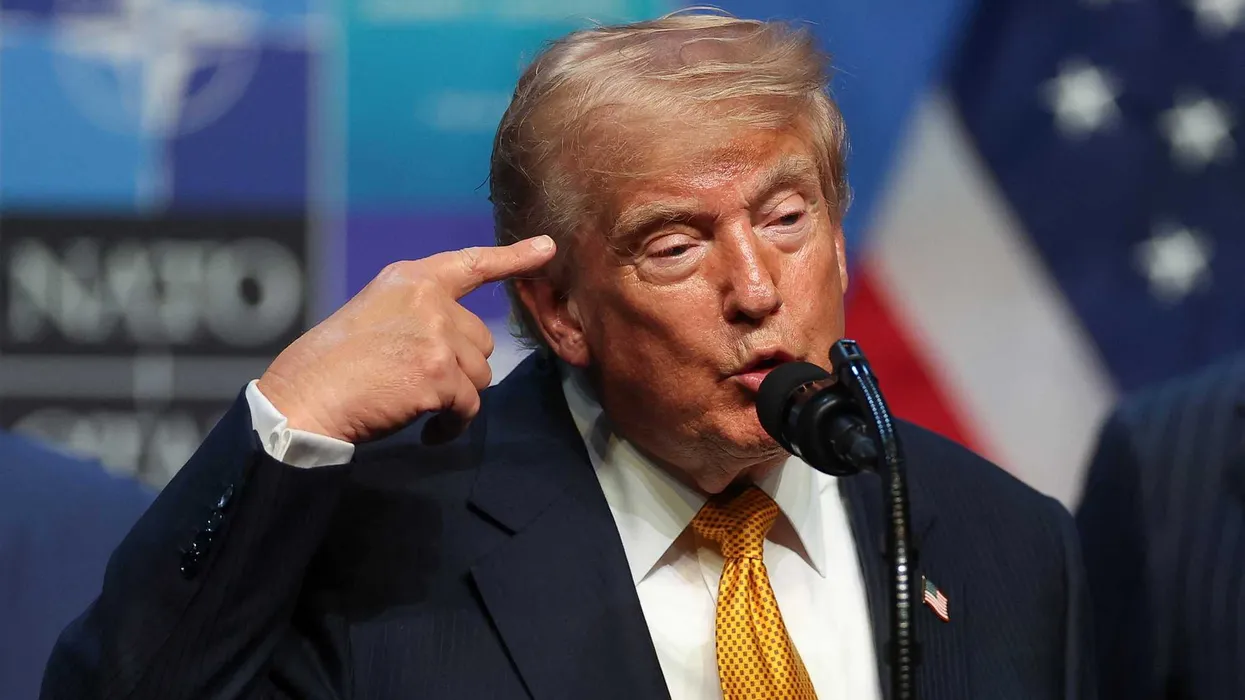
Conservative attorney and prominent Donald Trump critic George Conway — a co-founder of the anti-Trump Lincoln Project and the ex-husband of Kellyanne Conway, who served as Trump's counselor in his first term — said there is no longer any reason to suspect that President Donald Trump has a real connection to reality, arguing that the problem goes well beyond Trump sleeping through briefings and public meetings — it is a matter of psychosis.
"There's a famous psychologist named Eric Fromm, who talked about malignant narcissists like Trump. I mean, the great evil people of history were malignant narcissists. And he basically says they tip into psychosis," Conway told Bulwark podcaster Tim Miller in an interview. "They're basically psychotic because they want to believe the fantasy world in which they control everything and everything is about them. And that's where Trump has always been headed."
The reference is to Erich Fromm, the German-born psychoanalyst who fled Nazi Germany for the United States and popularized the concept of malignant narcissism in his 1964 book The Heart of Man, describing it as a severe pathology in which grandiosity fuses with aggression and destructiveness and citing figures such as Hitler and Stalin as examples. It is a theme Conway — who argued during Trump's first term, including in a 2019 essay in The Atlantic, that the president was unfit for office — has returned to repeatedly.
"And I think at this point, he's not even close to reality," Conway continued. "And that's just a scary thing. And that's the thing that a little bothers me about the Natalie Harp episode is that people are treating this as a debate about whether it's a low blow by the Democrats."
The president's ubiquitous senior aide — dubbed the "human typewriter" or, more crudely, Trump's "diaper nurse" — has repeatedly made news, most recently over what has been described as her "extraordinary" and "unhinged" relationship with the octogenarian president. Harp, a former One America News host who became one of the most constant presences around Trump in office, has been widely reported to feed him favorable news coverage and social-media posts, at times printing them out on a portable printer she carried to events. But Conway said the dynamic amounts to more than a young woman's intimate relationship with a confirmed adulterer.
"It would be better if they were just having sex because it would … be in the realm of normal human comprehension. But this is psychotic on both sides," Conway told Miller. "She worships him as some kind of deity and he sucks that up and is using her as a tool to create and maintain his own fragile reality that is being tested each and every day."
Trump's increasing use of bizarre claims and meandering public moments has done nothing to convince voters that a stable genius is occupying the White House. Trump was 78 when sworn in for his second term, the oldest of any U.S. president at inauguration, and questions about his age and fitness have followed him throughout his return to office. Speaking recently at a General Motors plant in Milford, Michigan, the president wandered into an anecdote about his father, Fred Trump, who died in 1999, that left onlookers scratching their heads.
"I had a wonderful father, right, and he was a hard worker who was in the real estate business ... He didn't want planes," Trump said. "They didn't have planes in those days, I don't think."
As the gaffes continue to pile up, Conway said his greatest fear is that the American public is growing accustomed to having a maniac with a broken mind in the White House.
"There's this kind of learned helplessness is what psychologists would call it," Conway said. "We have reached this kind of what psychologists would call a malignant normality, where we're accepting things, we're accepting like a Watergate scandal, every level scandal, every week he does something that's just incredibly — that would be paralyzing of an administration for a month, or two, or a month, or end an administration, but he, you know, it's just, it's Tuesday."
The phrase "malignant normality" was coined by psychiatrist Robert Jay Lifton, whose studies of Nazi Germany and other closed systems examined how people and societies come to accept dangerous realities as ordinary.

