Gary, Indiana's Two-Week Blackout Is a Warning for America
Key Takeaways
- •Electricity was restored to all Gary, Indiana residents after a two-week outage following a violent storm, and the governor will investigate the local utility.
- •The local utility had announced an asset reorganization to attract data center business, while some residents complained trees had not been properly trimmed.
- •The authors argue that extreme weather has become normal and that 25 years of federal data show declining grid reliability due to climate change, aging equipment, unpreparedness, and rising demand.
- •The authors warn of equity risks if wealthy customers adopt standalone systems while the public grid serves mainly those who cannot afford alternatives.
- •Fusion power development depends on a robust transmission grid, and one AI executive said grid connections can take 4 to 12 years.
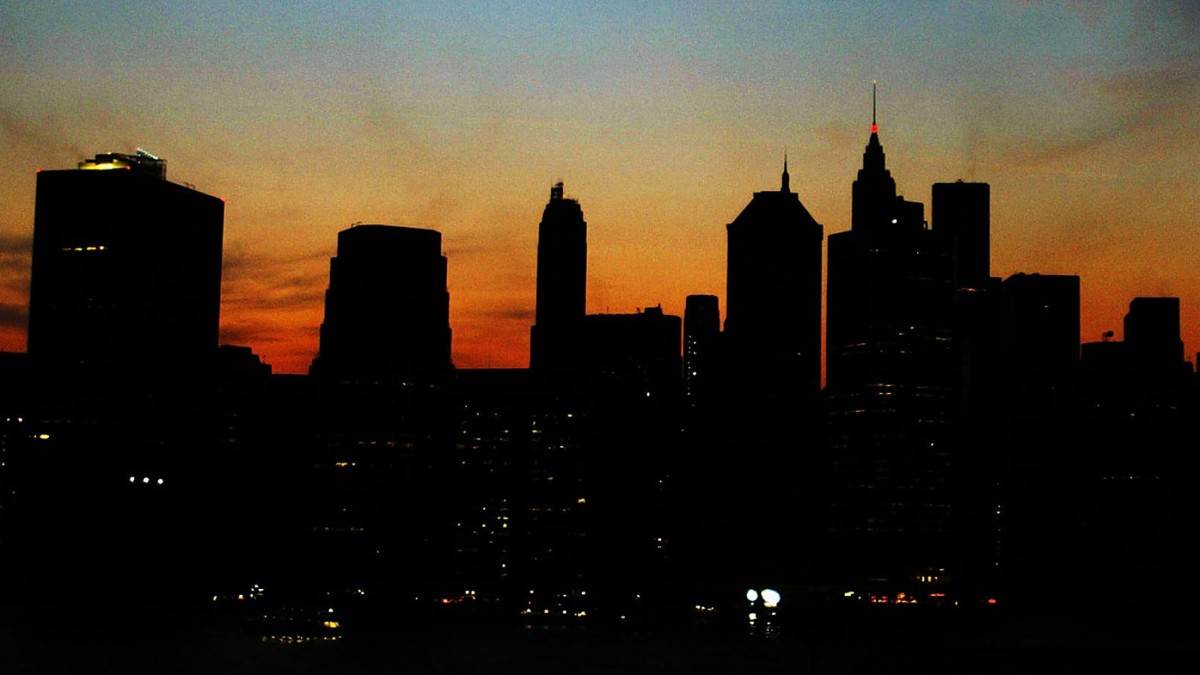
After two weeks of darkness, power has finally been restored to all residents of Gary, Indiana, an aging, low-income, lakefront industrial city within sight of Chicago. The outage did receive some national attention, with television stories showing residents wandering through hot nights, empty refrigerators standing in dark apartments, and bitter complaints. Still, it was not a story with the spectacle of an electric utility burning down an entire island, or another setting fire to Pacific Coast towns with glamorous names. Just two summer weeks without electricity. Not a big story.
A violent storm struck Gary. Trees fell. Some residents complained that the trees had not been trimmed properly. The local utility had also, at an awkward moment, announced a reorganization of assets intended to attract data center business — a notable ambition in a state that has become one of the Midwest's fastest-growing destinations for data center investment, a load category whose power demands are straining utilities across the country. Was it neglecting its core operations? The governor will investigate. So what is the big deal? It was an isolated incident caused by freakish weather — much like all the other incidents attributed to freakish weather: droughts, storms, blizzards.
The authors offer a different reading of events. Freakish weather has become normal. That is precisely what scientists predicted more than two decades ago — predictions the electricity industry, by and large, chose to ignore. Combine years of unpreparedness, a changing climate, aging equipment, and rising demand on the system, and the result is declining reliability, a trend demonstrated by the statistics of the past 25 years — including the benchmark measures of grid disturbance frequency and duration tracked by federal energy data. In other words, two weeks without power in Gary is part of a broader pattern. Related: Asia Spot LNG Prices Hit 5-Month High as Hormuz Blockage Drags On
The authors have previously argued that technology has begun to favor a scenario in which those who want — and can afford — high-quality standalone electric service (solar, batteries, propane back-up) will arrange it for themselves, while the public network becomes a provider of last resort for those who cannot afford the best. This scenario carries clear equity implications. People need electricity the way they need water, and we do not typically furnish second-rate water to households that have trouble paying the water bill. It is a dynamic with particular force in cities like Gary, where decades of population decline and industrial contraction have eroded both the tax base and the political leverage that wealthier communities bring to utility rate and service disputes.
There is, however, another implication of this scenario: one for fusion power, the unlimited energy source that — it is hoped — will bail the world out of its current energy dilemma. Fusion backers are approaching their projects the same way electric vehicle backers did: build the device and expect the market to furnish the infrastructure in a timely manner. Fusion power plants will require a robust electric grid ready to transmit their output. The grid is an interconnected system, and the invisible hand will not produce one. If it sinks into a second-rate state, it will lack the resources to support new fusion technologies. Delivery system first, power source second.
As an aside, one top AI executive said that connection to the grid can take years — perhaps 4 to 12 years depending on the situation. That comment raises the question of why the AI industry made plans without understanding the network's limitations. One would think that all that artificial intelligence would lead to a better planning process.
Finally, a nasty and cynical thought: would the outage have lasted two weeks if it had occurred in Beverly Hills, California, or Greenwich, Connecticut, or Georgetown in Washington, DC? Just something to think about.
By Leonard Hyman and William Tilles for Oilprice.com
