Florida Voters Deliver Blunt Criticism of Trump Ahead of 2026 Midterms
Key Takeaways
- •Voters in Trump-friendly Florida expressed unexpectedly strong anger over the president's falling approval, citing unfulfilled promises and rising gas, food, and airline prices.
- •Republicans must defend narrow majorities in both the House and Senate in the 2026 midterms while running on a two-term president's record, historically a difficult combination.
- •Analyst Nathan Gonzales likened 2026 to 2006, when George W. Bush's poor approval helped Democrats gain roughly 30 House seats and six Senate seats.
- •Former GOP strategist Rick Wilson contended Republicans face a worse situation now, estimating that regret among Trump voters has grown from about 2 percent to 15-20 percent.
- •Florida's 2026 ballot will include statewide races such as the governor's office, making the state's shifting sentiment a key question for the midterms.
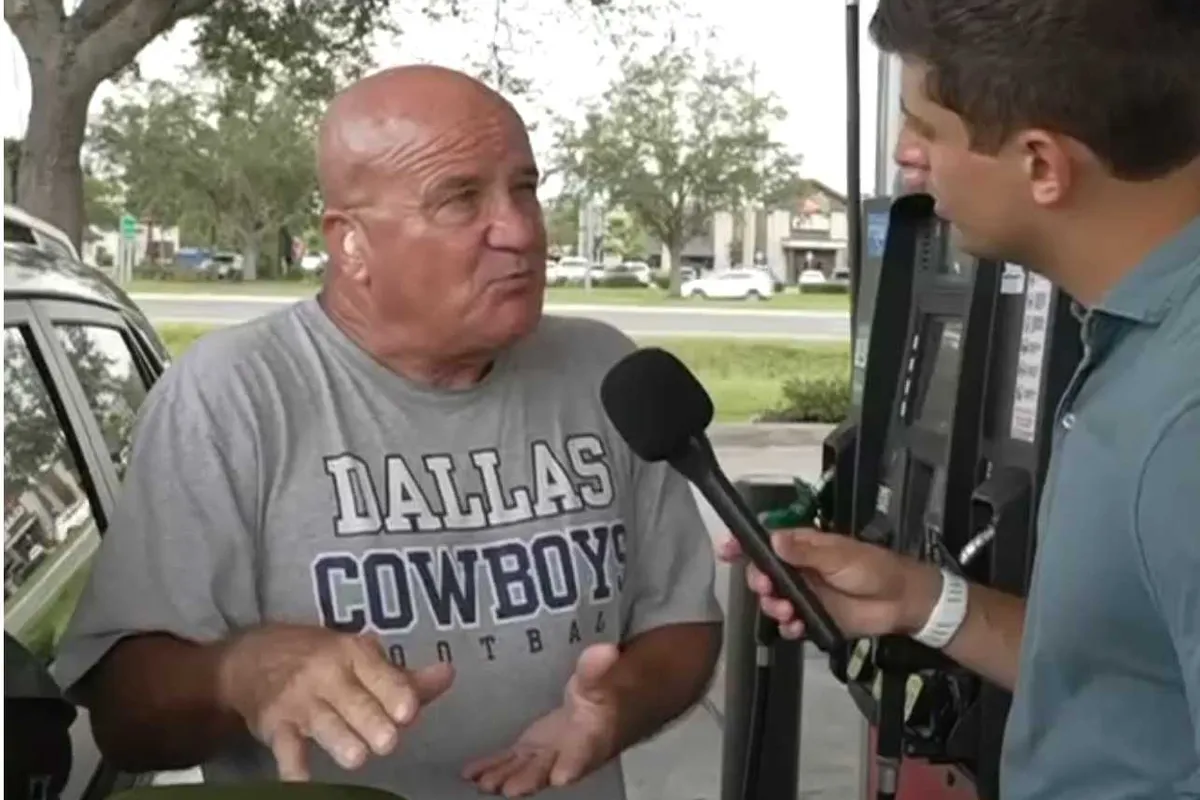
President Donald Trump's popularity has been dropping sharply, and MS NOW reporters this week found far more anger than expected among voters in Trump-friendly Florida, a state he carried comfortably in the 2024 election and where Republicans have dominated statewide politics in recent cycles.
"[Support] has fallen dramatically," said Greg Parks, a voter in Lakeland, Florida, speaking with MS NOW on the street. "Everybody in my household is a Democrat now, and they're all pulling for me to become Democrat. But it's fallen a lot." Asked why, Parks said: "we're not getting we're not seeing the promises that he said we'd get."
Asked what she would say if she could speak to Trump right now, Florida voter Brenda Lansing advised the president to "focus more on the American people," pointing to gas, food and airline prices.
"Stop making empty promises," said Angela Brown. "Do your (CENSORED) job. At the end of the day, the people need you to do your job. Don't keep making empty promises. Do what you promise."
Florida voter Kathy Graves was even more scathing, initially declining to answer because her response would not be "ladylike" before letting loose.
"I would tell him to go (CENSORED) himself," Graves said. "I would actually tell him to go (CENSORED) himself. Tell him to get his head out of his (CENSORED). Stop being a little two-year-old and grow up and be a man. I don't give a how much money he has. He's no better than anybody else."
The voter frustration comes at a consequential moment for congressional Republicans. In the 2026 midterms, the party must defend its narrow majorities in both the House and the Senate while defending the record of a two-term president — historically a difficult combination for the party holding the White House, as the party in power has lost House seats in nearly every midterm election of the modern era.
Nathan Gonzales, editor of the nonpartisan Inside Elections, told reporter Katy Tur that 2026 is feeling a lot like 2006, when President George W. Bush faced staggeringly bad approval ratings amid a stalemate in the Middle East, higher gas prices, and heavy criticism of his administration's response to Hurricane Katrina. That year, Democrats swept both chambers of Congress, picking up roughly 30 House seats and six Senate seats.
Former GOP strategist Rick Wilson, who worked as a Republican consultant in 2006, argued that Trump and Republicans now face a much worse scenario.
"All those things that we faced then: the high gas prices, the unpopular war, the mishandling of Katrina that added up to a lot of overhead and front headwinds for Republicans. But what you didn't have was a president who was absolutely every day aggressively trying to make things worse, which is the difference now," Wilson said.
"This is why although the numbers are not enormous, they're not even a majority. They're not even close to a majority. There are republicans now who are like, 'I regret this. I got to get out of this thing.' And is the number around 15 to 20 percent? Sure. But it used to be around 2 percent of people who voted for Trump said they regretted it. So, it is a changing environment. And the harm he keeps doing is making it harder and harder for Republicans to hold majorities."
How that shifting sentiment translates at the ballot box in Florida — where statewide races, including the governor's office, will be on the 2026 ballot — remains one of the key questions heading into the midterms.
Source video: YouTube
