Financial Repression in the Age of AI: Craig Tindale on Offshoring, Hard Assets and the Race to Automate
Key Takeaways
- •Bitcoin Magazine released a new video episode titled "Financial Repression in the Age of AI," in which independent investor Craig Tindale appears with host Spencer Nichols.
- •Tindale argues that decades of offshoring have left the United States unable to produce its own defense equipment, robots, and AI hardware, which he describes as a national security crisis.
- •The episode explains financial repression as a condition in which savers earn returns held below inflation while governments carry heavy debt burdens, leaving domestic savers to bear the cost.
- •The stablecoin segment covers the GENIUS Act, the U.S. legislation signed into law in 2025 that establishes a federal regulatory framework for payment stablecoins.
- •Tindale frames artificial intelligence as a race to automate the world and build an impenetrable defense network, and the episode closes with discussion of protecting capital through gold, silver, copper, and bitcoin.
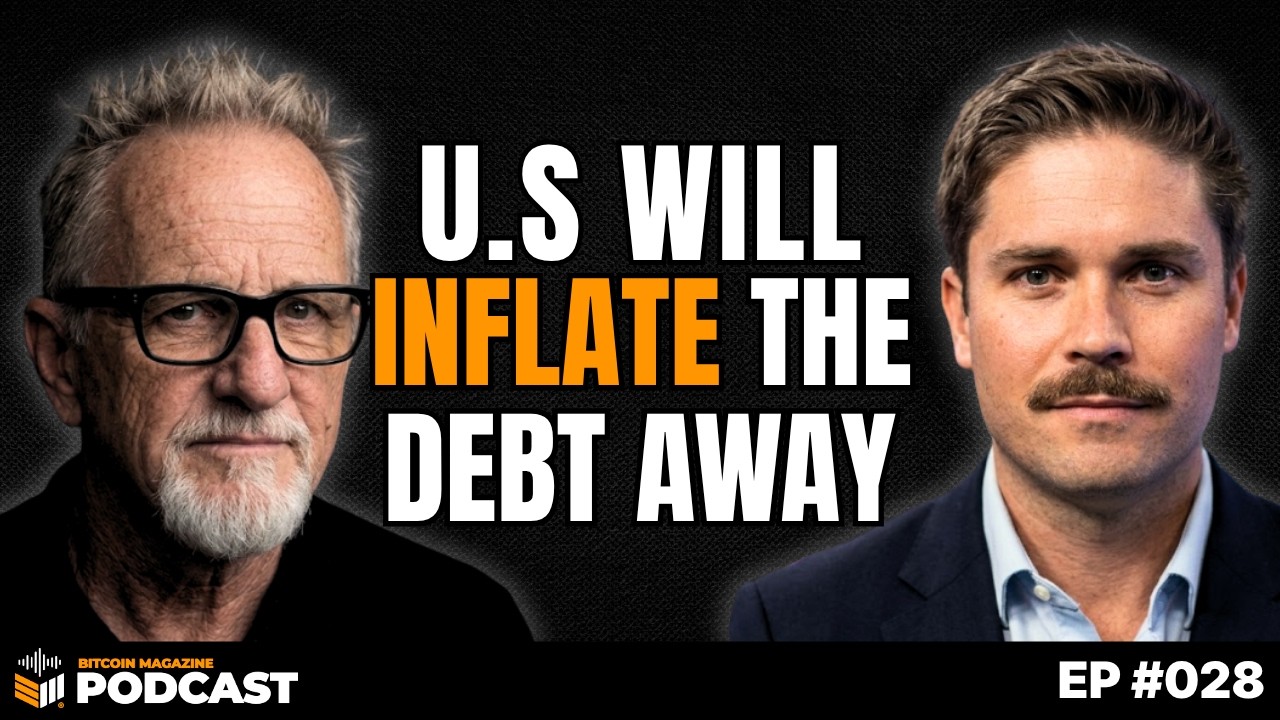
Bitcoin Magazine has released a new video episode, "Financial Repression in the Age of AI," featuring independent investor Craig Tindale in conversation with host Spencer Nichols.
Tindale argues that the United States can no longer manufacture its own defense equipment, robots, or AI hardware, a situation he describes as a national security crisis. Drawing on the ideas of Alexander Hamilton, the first U.S. Treasury secretary whose 1791 Report on Manufactures argued for building domestic industry, and Dwight Eisenhower, whose 1961 farewell address warned of a military-industrial complex, he explains why decades of offshoring left the U.S. dependent on its rivals for critical metals. He also lays out why he views artificial intelligence as a race to automate the world and to build an impenetrable defense network.
The episode's title borrows an economics term: financial repression broadly describes conditions in which savers earn returns held below inflation while governments carry heavy debt burdens, a dynamic the "Who Pays?" chapter takes up directly. In the same spirit, the Operation Twist segment references the Federal Reserve's 1961 program of buying long-term bonds while selling short-term debt to press down long-term interest rates.
The episode is organized into the following chapters:
- 0:00 – Craig Tindale: Financial Repression in the Age of Superintelligence
- 2:17 – Why Yields Are Rising Everywhere and Countries Don't Go Broke
- 5:22 – Operation Twist and a New Treasury–Fed Accord
- 8:40 – Hong Kong's Gold Vault and Why Nations Need Hard Assets
- 10:44 – Who Pays? Why Domestic Savers Bear the Cost of Financial Repression
- 14:39 – Stablecoins, the GENIUS Act and a Fragmenting Multipolar World
- 19:53 – Protectionism, Hamilton and the Case for Reindustrializing America
- 27:27 – AI as a Weapon: Automation, Code and State Capitalism
- 32:35 – Protecting Capital: Gold, Silver, Copper, Bitcoin and Diversification
- 37:20 – Resilience, Self-Sufficiency and the Fourth Turning
For readers following the stablecoin segment, the GENIUS Act is the U.S. legislation signed into law in 2025 that establishes a federal regulatory framework for payment stablecoins. The closing chapter's "Fourth Turning" refers to the term from Strauss–Howe generational theory for a recurring era of crisis in which institutions and social order are restructured.
DISCLAIMER: The views and opinions expressed in this show are those of the participants and do not necessarily reflect the official policy or position of BTC Inc., Bitcoin Magazine, or any affiliated entities. This content is provided for informational and educational purposes only and should not be construed as investment, legal, tax, or accounting advice. Nothing contained in this show constitutes a solicitation, recommendation, endorsement, or offer to buy or sell any securities or financial instruments. Viewers should consult their own advisors before making financial or business decisions.
This post, Financial Repression in the Age of AI, first appeared on Bitcoin Magazine and is written by Mark Mason.

