Federal Reserve Holds Interest Rates Steady at 3.50%–3.75%, Maintains Wait-and-See Stance
Key Takeaways
- •The Federal Reserve left the federal funds target range unchanged at 3.50% to 3.75%.
- •The FOMC said the U.S. economy continues to grow at a solid pace, with employment and business investment holding up.
- •Inflation remains above the Federal Reserve’s 2% long-term target, keeping price stability at the center of policy decisions.
- •Three voting members supported a 25-basis-point rate increase, showing disagreement within the committee.
- •Financial markets had anticipated the hold and are now watching future economic reports for signs of the Fed’s next step.
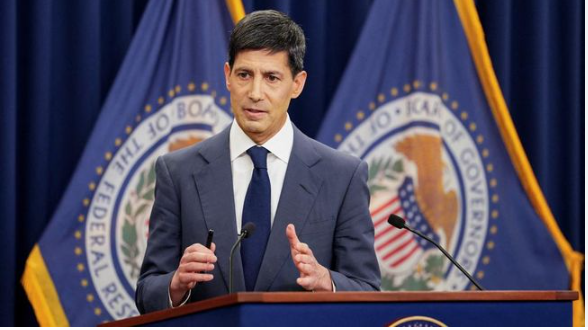
Federal Reserve Holds Interest Rates Steady at 3.50%–3.75%, Maintains Wait-and-See Stance
The Federal Reserve has left its benchmark interest rate unchanged, opting neither to cut nor raise borrowing costs in its latest monetary policy decision. The widely anticipated move reflects the U.S. central bank's cautious approach as policymakers continue to evaluate inflation trends, labor market strength, and broader economic conditions before making any significant adjustments to monetary policy.
The decision keeps the federal funds target range at 3.50% to 3.75%, a level reached after the most aggressive tightening cycle in decades. The current range reflects cumulative increases from the near-zero rates that prevailed during the pandemic-era easing, signaling that officials believe current policy remains appropriate despite persistent inflation pressures and ongoing uncertainty surrounding the global economy. While financial markets had largely expected the Fed to hold rates steady, investors were closely watching the accompanying statement and comments from policymakers for clues about the direction of future policy.
The announcement quickly became one of the most closely followed economic developments of the day, drawing attention across global financial markets. It also gained wider visibility after being highlighted by Cointelegraph's official X account, though the Federal Reserve's official policy statement remains the primary source for the decision.
Fed Maintains a Wait-and-See Approach
The Federal Open Market Committee (FOMC) voted to leave interest rates unchanged after evaluating recent economic indicators. Policymakers acknowledged that the U.S. economy continues to expand at a solid pace, supported by resilient employment, steady business investment, and continued productivity growth. At the same time, officials emphasized that inflation remains above the Federal Reserve's long-term objective of 2%, requiring continued vigilance.
The hold reflects the tension within the Fed's dual mandate to achieve both price stability and maximum sustainable employment. Holding rates steady allows policymakers additional time to assess incoming economic data before deciding whether further tightening or eventual easing will be necessary.
Inflation Remains the Central Focus
Inflation continues to be the primary challenge facing the Federal Reserve. Although price pressures have moderated from previous peaks, officials indicated that inflation remains elevated due in part to ongoing supply-side disruptions, including higher energy costs and geopolitical uncertainty. These factors have complicated the Fed's efforts to bring inflation back toward its long-term target.
The central bank has repeatedly stressed that future policy decisions will depend on incoming economic data rather than a predetermined schedule, reinforcing what markets have widely interpreted as a "higher for longer" posture.
Labor Market Continues Supporting the Economy
Employment conditions remain relatively strong. The Federal Reserve noted that job creation has broadly kept pace with labor force growth while the unemployment rate has remained stable. A resilient labor market has provided policymakers with greater flexibility to keep interest rates unchanged without immediate concern about a significant slowdown in economic activity.
Strong employment also supports consumer spending, which remains one of the largest contributors to U.S. economic growth.
Three Officials Favored a Rate Increase
Although the committee ultimately voted to leave rates unchanged, the decision was not unanimous. Three voting members favored a 25-basis-point rate increase, arguing that inflation risks remain elevated and that tighter policy may still be necessary to restore price stability. Their dissent highlighted differing views within the central bank regarding the appropriate pace of monetary policy.
The split vote underscores the difficult balancing act facing policymakers as they attempt to control inflation without unnecessarily slowing the economy.
Financial Markets React
Financial markets responded cautiously to the Fed's announcement. Because investors had widely anticipated no change in interest rates, attention quickly shifted toward the central bank's policy statement and future guidance. Treasury yields, equity markets, the U.S. dollar, commodities, and cryptocurrencies all adjusted as investors reassessed expectations for future interest rate decisions.
Why Interest Rates Matter
The federal funds rate influences borrowing costs throughout the economy. Changes in interest rates affect mortgage rates, auto loans, credit cards, business financing, corporate investment, consumer spending, stock valuations, and cryptocurrency markets. When borrowing costs remain elevated, economic activity typically slows over time, helping reduce inflationary pressure.
Impact on Stock Markets
Equity investors closely monitor Federal Reserve decisions because interest rates directly affect corporate profitability and valuation models. Higher borrowing costs generally create headwinds for growth companies, particularly in technology and innovation sectors. Conversely, stable interest rates can provide markets with greater certainty, allowing investors to focus more on corporate earnings and economic fundamentals.
Cryptocurrency Markets Remain Sensitive
Digital assets have become increasingly responsive to macroeconomic developments. Bitcoin and other cryptocurrencies frequently react to changes in interest rate expectations because institutional investors now play a much larger role in the digital asset ecosystem. When borrowing costs remain high, investors often become more selective regarding risk assets.
Bond Market Signals
Bond markets continue providing important insight into investor expectations. Long-term Treasury yields remain elevated, suggesting investors continue monitoring inflation risks alongside future Federal Reserve decisions. Some analysts believe bond market movements are already tightening financial conditions without requiring immediate action from the central bank. The Fed has also been reducing its balance sheet through quantitative tightening, a process that works alongside interest rate policy to tighten financial conditions.
Data Will Drive Future Decisions
Federal Reserve officials continue emphasizing that future policy decisions will depend on economic data. Among the indicators receiving the greatest attention are inflation, employment, consumer spending, GDP growth, business investment, and financial conditions. No commitment has been made regarding the next meeting, leaving both future rate hikes and eventual rate cuts dependent on incoming information.
Investors Look Toward the Next FOMC Meeting
With rates unchanged, market participants are now focusing on upcoming inflation reports and labor market data. Stronger-than-expected inflation could strengthen the case for additional tightening, while continued progress toward price stability may eventually support discussions regarding future rate cuts. For now, policymakers appear committed to maintaining flexibility.
Global Implications
Federal Reserve decisions influence financial markets well beyond the United States. Many central banks, multinational corporations, institutional investors, and emerging markets monitor U.S. monetary policy closely because changes in American interest rates affect global capital flows, exchange rates, commodity prices, international borrowing costs, and cross-border investment. As the world's largest economy, U.S. monetary policy continues to shape financial conditions across global markets.
Looking Ahead
The Federal Reserve's latest decision reinforces its cautious approach toward balancing inflation control with economic expansion. Officials have made clear that maintaining price stability remains the priority while recognizing that unnecessary policy tightening could slow economic growth. Investors will continue analyzing each new economic report for clues regarding the Fed's next move. Until clearer evidence emerges that inflation is sustainably returning to target, policymakers are expected to remain patient.
The Federal Reserve's decision to leave interest rates unchanged reflects a careful assessment of an economy that continues to grow while inflation remains above target. Although markets broadly anticipated the outcome, investors are now focused on future economic data and whether the next policy adjustment will involve another period of steady rates, a potential increase, or the beginning of an easing cycle. For businesses, consumers, and financial markets alike, the central bank's message remains consistent: future monetary policy will depend on evidence rather than expectations.

