Federal Appeals Court Blocks Trump's $400 Million White House Ballroom Project
Key Takeaways
- •The D.C. Circuit Court of Appeals upheld a preliminary injunction against Trump's $400 million White House ballroom project in a 2-1 decision, becoming the third court to block the undertaking.
- •Trump ordered the demolition of the entire East Wing in October 2025 without congressional approval to clear the site for a planned 90,000-square-foot ballroom.
- •The court ruled that each president is a temporary tenant rather than the owner of the White House, meaning Congress must authorize any significant construction on the premises.
- •The ruling includes a 14-day stay allowing the Trump administration to petition the U.S. Supreme Court for emergency review before the injunction takes full effect.
- •The case may escalate to the Supreme Court as a major test of separation of powers and the limits of executive authority over federal property.
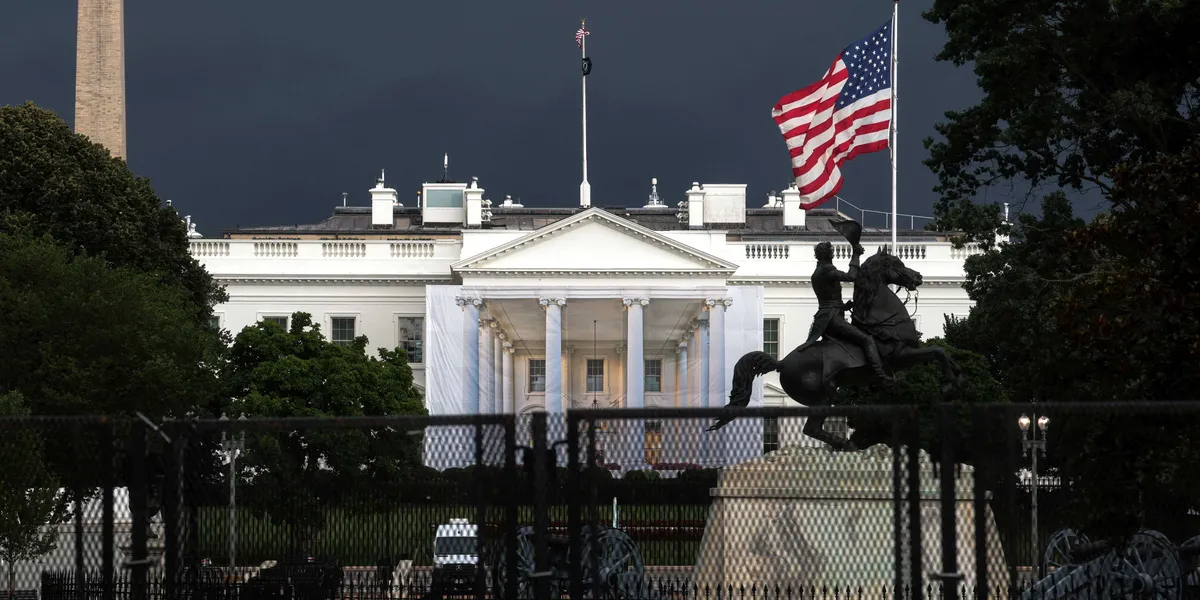
A federal appeals court has upheld a preliminary injunction blocking construction of President Donald Trump's $400 million White House ballroom project, making it the third court to halt the controversial undertaking.
In a 2-1 decision, the D.C. Circuit Court of Appeals rejected the Trump administration's argument that no court possessed the authority to stop the demolition and construction work. The court's opinion stated that "the bold assertion that the Executive can act with utter lawlessness, destroying treasured national landmarks and harming the interests of individuals, and that no court can stop it flouts our constitutional order," according to court records.
Trump ordered the demolition of the entire East Wing of the White House in October 2025 without obtaining congressional approval, clearing the site for a planned 90,000-square-foot ballroom. The White House, located at 1600 Pennsylvania Avenue NW in Washington, D.C., has served as the official residence and workplace of every U.S. president since John Adams in 1800. The building is a designated national landmark and is overseen by the National Park Service, a bureau of the Department of the Interior. Major alterations to the structure have historically required congressional authorization, as was the case with the Truman-era reconstruction completed in 1952, when Congress appropriated funds and directed the gut-renovation of the entire building after engineers found it structurally unsound.
The appellate court ruled that "each President is a temporary tenant, not the owner, of the White House," emphasizing that Congress — as the legislative branch controlling federal appropriations and property under Article I of the Constitution — must authorize any significant construction on the premises.
The court also dismissed the government's argument that the new ballroom would be concealed from public view by surrounding trees, characterizing the claim as "[p]ure fiction."
The ruling included a 14-day stay, giving the Trump administration time to petition the U.S. Supreme Court for emergency review before the injunction takes full effect. This sets up a potential high-stakes confrontation at the Supreme Court over the separation of powers and the limits of executive authority over federal property. The case arrives at a time when the Supreme Court has already been weighing multiple disputes over the scope of presidential power, including questions of executive immunity and the reach of emergency authorities.
The D.C. Circuit Court of Appeals is one of thirteen U.S. courts of appeals and is generally considered among the most influential federal appellate courts, given its jurisdiction over cases involving the federal government and administrative agencies. Decisions by the D.C. Circuit are frequently reviewed by the Supreme Court.
