September Fed Rate-Hike Odds Fall to 25% as Inflation Debate Continues
Key Takeaways
- •September rate-hike odds fell from about 60% in early August to 25% after the latest CPI reports.
- •The next major inflation data before the FOMC meeting are July PCE, August PPI, and August CPI.
- •The Cleveland Fed’s nowcasting model estimates July core PCE inflation at about 3.3% year over year.
- •The ISM manufacturing index rose to 55.6 in July, its highest reading since May 2022, and stayed above 50 for a seventh straight month.
- •Energy prices remain a key inflation driver, with gasoline up 26.7% year over year in June.
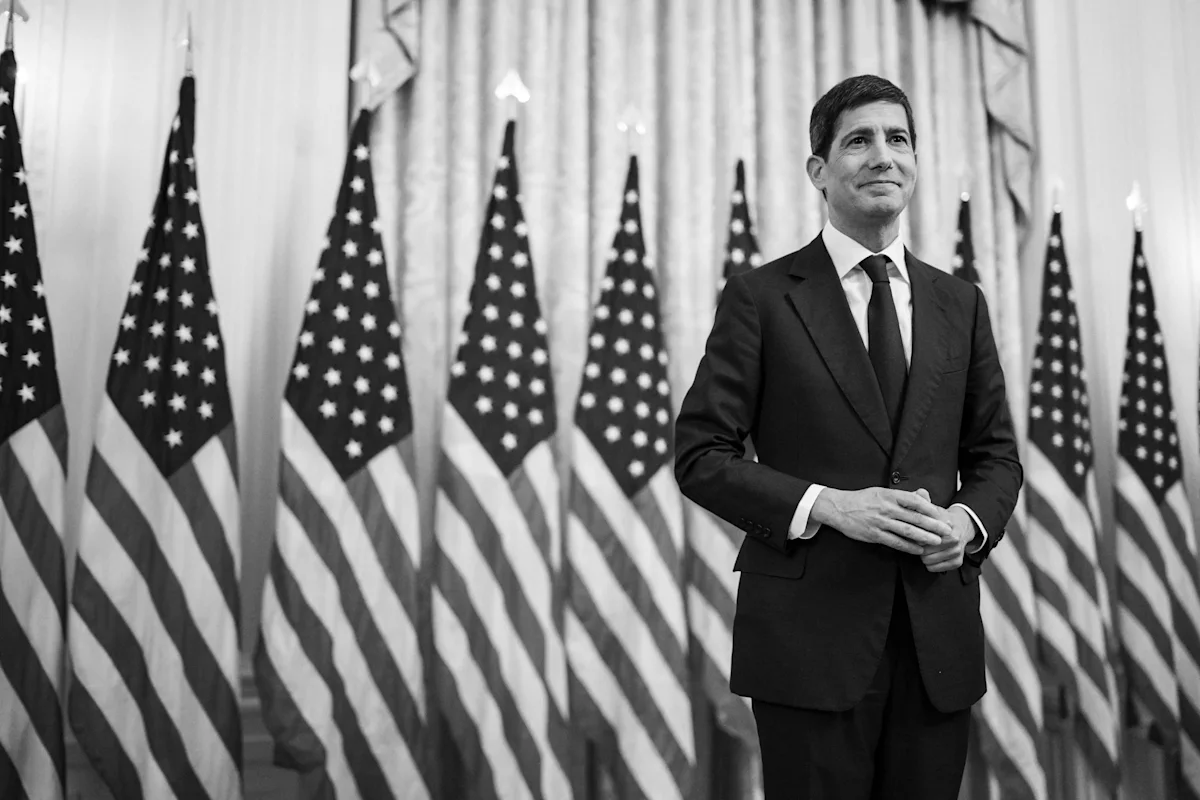
The odds of a September Federal Reserve rate hike have fallen sharply after two softer Consumer Price Index reports, but three more inflation releases will arrive before the Federal Open Market Committee meets.
Gasoline remains up 27% year over year, and the Cleveland Fed's core PCE model shows inflation running at 3.3%, still well above the Fed's 2% target. Meanwhile, the Institute for Supply Management's manufacturing index reached 55.6 in July, its highest level since May 2022, giving Kevin Warsh more room to tighten policy without immediately pushing the economy into recession.
The inflation debate has entered a new phase. During the Biden administration's inflation surge, gas pumps displayed stickers reading "I did that!" alongside images of President Biden. Now, in what critics have called the "Trumpflation" era, the joke has reversed. A $15 million campaign from the Republican-aligned group Home of the Brave features a whistling Trump emoji moving through supermarkets and gas stations and replacing price stickers with higher numbers. The politics are disputed, but the underlying economic issue is not: energy costs have risen sharply, and those increases can ripple through the broader economy.
For investors, that has shifted the focus of the Federal Reserve debate. The issue is no longer when the Fed will cut rates. Instead, the question is when Kevin Warsh will raise them. The stakes extend beyond markets: the federal funds rate acts as a benchmark that influences borrowing costs across the economy, from credit cards and auto loans to business credit.
Energy Costs Are Keeping Inflation Alive
Home of the Brave's "Sticker Shock Summer" campaign says gas prices are about 36% above their pre-Iran-war level, electricity costs are 18% higher, and tariffs create a burden of roughly $1,100 per household under the group's assumptions, according to the Yale Budget Lab, a policy research group at Yale. The campaign's current tracker puts gasoline at $4.06 a gallon, 38% above its Feb. 28 pre-war level.
The policy message may be political, but the inflation mechanism is straightforward. The Bureau of Labor Statistics reported that energy prices were 15.7% higher in June than a year earlier. Gasoline rose 26.7% over the same period. Energy costs flow into transportation, manufacturing, utilities, and eventually consumer prices. Headline inflation captures those moves directly, while the core indexes that policymakers watch most closely strip out food and energy because of their volatility — though energy still reaches core readings through the transportation and production costs embedded in other goods.
That is why the Fed's hoped-for shift from "higher for longer" to rate cuts has faded. After three Fed officials voted for a quarter-point hike in July, the case for another increase was already on the table.
Betting Markets May Be Moving Too Fast
Inflation then delivered two softer readings. June CPI fell 0.4% month over month, while annual inflation dropped to 3.5% from 4.2% in May. July followed with a 0.1% monthly increase and 3.4% annual inflation. Core CPI declined to 2.5%.
Those reports were enough to send September rate-hike bets lower. As recently as early Aug. 1, markets were pricing roughly a 60% probability of a quarter-point increase in September. After July's CPI report, that probability fell to 25%, leaving a strong majority expectation that rates will remain unchanged. Those probabilities are read from the federal funds futures market, where traders position based on where they expect the Fed to set its benchmark rate.
But market probabilities are not guarantees. Three major inflation reports remain before the September FOMC meeting: July PCE on Aug. 26, August PPI on Sept. 10, and August CPI on Sept. 11. The PCE releases carry particular weight because the Fed defines its 2% inflation target in terms of PCE inflation rather than CPI.
The Cleveland Federal Reserve's Inflation Nowcasting model, which estimates unreleased inflation data using current-month information, already estimates July core PCE inflation at about 3.3% year over year, with monthly core PCE at 0.27%. That is still far above the Fed's 2% target.
The Economy Is Not Giving the Fed Much Reason To Wait
There is also the question of growth. The economy is still resilient enough to give the Fed room to tighten further if officials choose.
The ISM manufacturing index rose to 55.6 in July, the highest reading since May 2022 and the seventh straight month above 50, the threshold separating expansion from contraction. New orders and production also expanded.
The labor market is showing weaker signs, which gives Warsh reason to proceed carefully. That caution reflects how policy works: rate increases are widely understood to affect the broader economy only after a delay. Even so, stronger growth gives the Fed more flexibility to tighten policy without immediately tipping the economy into recession.
Key Takeaway
Investors should not treat the current 25% September hike probability as destiny. Energy prices remain elevated, core inflation is still well above 2%, manufacturing is expanding, and three more inflation reports are still ahead.
If CPI and PPI reaccelerate, markets could quickly return to pricing a rate hike. For now, the 75% probability of no change should be viewed as a starting point, not a forecast, before the next inflation readings arrive and shift the odds again.

