China AI Research May Help Predict Depression Risk Before Symptoms Appear
Key Takeaways
- •An AI model trained on MRI scans of teenagers viewing emotional faces learned to distinguish brain-based differences in emotional processing associated with depression risk.
- •In follow-up assessments several years later, adolescents the AI classified as higher risk were reportedly more likely to have developed depressive symptoms.
- •A 2024 study of 2,658 children in the Adolescent Brain Cognitive Development study found that multimodal neuroimaging features could predict depression risk at a two-year follow-up.
- •A 2025 review drawing on data from more than 11,000 children in the ABCD study found that behavioral and social factors often played a larger role than MRI-derived measures in some machine-learning models.
- •Researchers cite MRI costs, individual brain variability, privacy risks, and the need for replication in larger independent populations as major barriers before AI-based depression prediction could become a routine clinical tool.
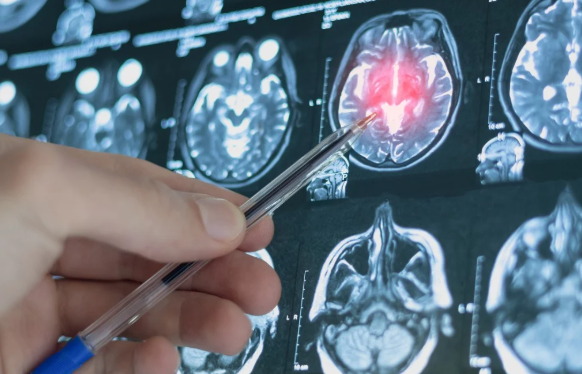
Researchers are exploring a new use for artificial intelligence that could eventually help identify people at higher risk of developing depression before noticeable symptoms emerge.
The approach combines artificial intelligence with brain imaging, allowing researchers to examine how the brain responds to different emotional signals and identify patterns associated with future depression risk.
According to information circulating in the cryptocurrency and technology community, researchers trained an AI system using brain scans from teenagers, including participants with and without depression symptoms. The participants were shown faces displaying happy, neutral and angry emotions while magnetic resonance imaging, or MRI, recorded activity across their brains.
The researchers then used the resulting brain patterns to train an artificial intelligence model designed to distinguish differences in emotional processing.
The concept is part of a rapidly developing area of neuroscience in which researchers are using machine learning to identify biological and behavioral patterns that may be associated with future mental-health conditions.
However, it is important to distinguish between predicting elevated risk and diagnosing depression. An AI system that identifies a statistical pattern cannot determine @coinbureau with certainty that an individual will develop the disorder.
How the AI Analyzed Emotional Responses
The research approach centers on how the brain responds when people process facial expressions.
Participants were presented with different emotional faces while undergoing MRI scans. The images gave researchers a detailed view of changes in brain activity as the teenagers processed positive, neutral and negative emotional information.
The underlying idea is that depression can be associated with changes in the way people process emotional information.
Previous scientific research has found that differences in brain responses to facial expressions can be associated with later depressive symptoms. One study, for example, found that activity in the amygdala when young adults viewed neutral faces was associated with increases in depressive symptoms two years later.
Researchers are now investigating whether artificial intelligence can combine these subtle patterns across multiple brain regions and use them to estimate future risk more effectively than conventional analysis.
AI Looks for Hidden Patterns
Machine learning can examine enormous quantities of data and identify relationships that may be difficult to detect through traditional statistical methods.
In the reported research, the AI learned patterns associated with differences in emotional processing. Teenagers considered more vulnerable to depression appeared to process emotional information differently, including showing a greater tendency to interpret ambiguous or negative facial expressions in a less positive way.
The system was then applied to brain scans from young people who did not currently show obvious symptoms of depression.
The purpose was not to diagnose depression at that moment. Instead, researchers wanted to determine whether the brain patterns identified by the AI could indicate a higher probability of developing symptoms later.
When participants were assessed again several years later, those who had been classified as higher risk were reportedly more likely to have developed depressive symptoms.
That type of longitudinal research is particularly important because it tests whether a biological signal observed before symptoms appear has any relationship with later mental-health outcomes.
Four-Year Prediction Could Change Early Intervention
If the reported findings are replicated in larger and independent populations, the technology could eventually have implications for early intervention.
Depression is often identified after symptoms have already become noticeable. A reliable risk-prediction system could potentially give doctors and researchers more time to monitor individuals who may be vulnerable.
The goal would not necessarily be to label someone as depressed years in advance. Instead, a future system could help identify people who might benefit from closer monitoring, preventive strategies or additional psychological support.
Scientific research is already showing that machine learning can extract useful predictive information from brain imaging.
A 2024 study using data from 2,658 children in the Adolescent Brain Cognitive Development study found that multimodal neuroimaging features could predict depression risk at a two-year follow-up, with resting-state functional connectivity performing particularly well among participants with a parental history of depression.
Other research has similarly explored the use of MRI and machine learning to predict future depression onset among adolescents.
The Technology Still Has Major Limitations
Despite the potential, researchers face significant challenges before AI-based depression prediction could become a routine medical tool.
MRI scans are expensive and require specialized equipment. Brain activity can also vary considerably between individuals, making it difficult to establish a single pattern that applies to everyone.
Researchers must also determine whether an AI model trained on one group works equally well in people from different regions, cultures, age groups and socioeconomic backgrounds.
Privacy is another major concern.
Brain scans contain highly sensitive biological information. Any system that uses artificial intelligence to assess mental-health risk would need strong safeguards to prevent misuse or inappropriate labeling.
Most importantly, an elevated risk score should never be treated as a definitive diagnosis.
Recent research demonstrates that machine learning can predict aspects of adolescent mental-health risk, but researchers continue to emphasize the need for validation and further testing before such systems can be considered reliable clinical tools.
Growing Interest in AI and Mental Health
The development reflects a broader trend in medical research as artificial intelligence becomes increasingly capable of analyzing complex biological data.
Scientists are investigating AI models that combine MRI scans, behavioral information, sleep patterns, family history and other factors to estimate mental-health risk.
A 2025 review highlighted research using data from more than 11,000 children in the ABCD study and found that machine-learning systems could identify certain future mental-health risks, although behavioral and social factors often played a larger role than MRI-derived measures in some models.
That finding underscores why researchers are increasingly moving toward multimodal models rather than relying on brain scans alone.
The report about the latest AI research has also circulated among technology and cryptocurrency audiences, including discussion from the X account @coinbureau. The broader interest reflects how quickly artificial intelligence is expanding beyond financial applications and into areas of neuroscience and healthcare.
What Comes Next
The possibility of predicting depression years before symptoms appear is scientifically intriguing, but more research is needed before the technology can be considered a reliable predictive tool.
Researchers will need to reproduce the findings using larger groups, independent datasets and longer follow-up periods. They will also need to determine how accurately the model works outside the population in which it was developed.
For now, the most important takeaway is that artificial intelligence is giving scientists new ways to study the relationship between brain activity, emotional processing and future mental-health risk.
If these approaches continue to improve, AI-assisted brain analysis could eventually become one component of earlier mental-health screening and prevention.
But the technology remains a research tool rather than a replacement for professional diagnosis. The prospect of identifying depression risk years in advance is promising, yet proving that such predictions are accurate, fair and clinically useful will require substantial additional evidence.

