Federal Reserve Halts Reserve Management Purchases, Cutting RMPs to Zero Starting August 14
Key Takeaways
- •The New York Fed will halt Reserve Management Purchases for the August 14 through September 14 period, reducing the program from $10 billion per month to zero.
- •RMPs were launched in mid-December with $40 billion in monthly Treasury bill purchases to maintain reserve adequacy around the April 15 tax deadline, a concern echoing the September 2019 repo market disruption.
- •FOMC Chair Warsh signaled the RMP reduction at his June 17 meeting by changing Implementation Notes language from directing the Fed to increase securities holdings to doing so only when appropriate.
- •The Fed plans to replace approximately $17 billion in mortgage-backed securities runoff during the same period with Treasury bills, continuing a substitution process that has cut MBS holdings by $809 billion since fall 2022.
- •The Fed's balance sheet stood at $6.76 trillion, with total assets as a share of GDP declining to 20.7 percent at the end of the second quarter despite the RMP program's contribution to balance sheet growth.
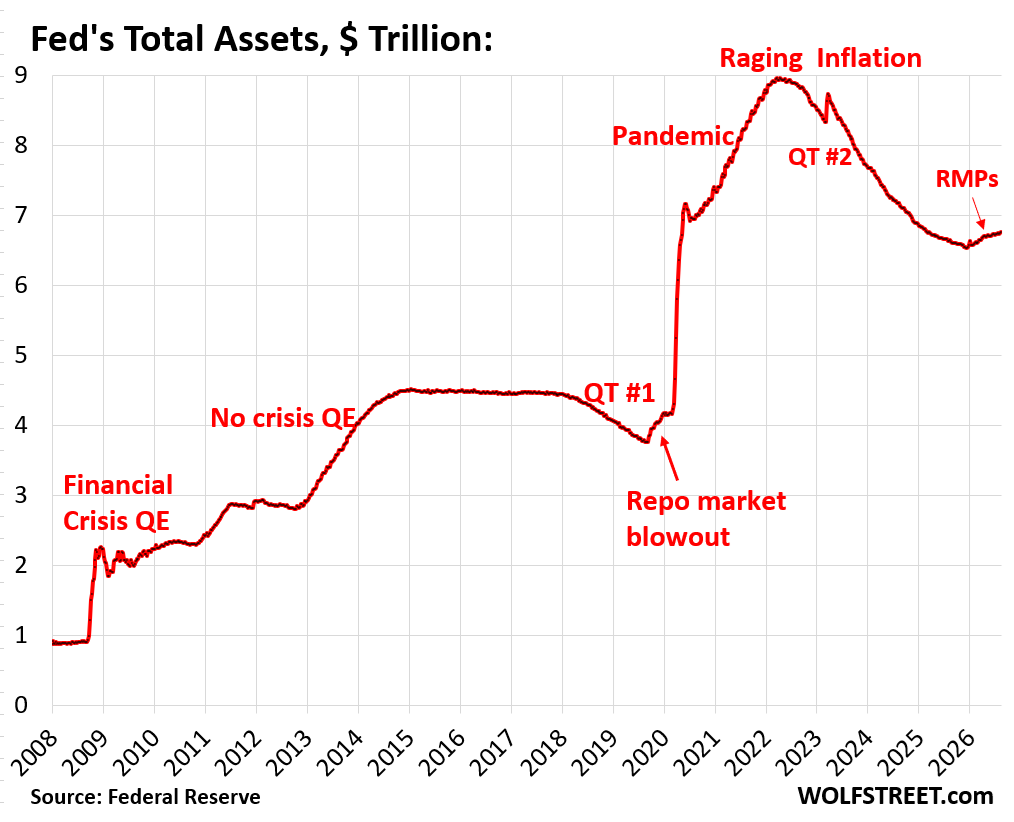
The Federal Reserve Bank of New York announced that it will halt Reserve Management Purchases (RMPs) for the period of August 14 through September 14, after having already tapered the program to $10 billion per month, including for the current period through August 13. The move marks the latest step under FOMC Chair Warsh, following signals from his first meeting on June 17.
RMPs were launched in mid-December. Under the program, the Fed purchased $40 billion of Treasury bills — securities with maturities of one year or less — during mid-month to mid-month periods. The goal was to increase reserve balances and ensure sufficient liquidity to absorb distortions tied to the April 15 tax deadline, which can cause repo market rates to become volatile. The concern over adequate reserves echoes the September 2019 episode, when repo rates spiked sharply after reserves fell below levels banks were willing to lend, prompting the Fed to intervene with overnight and term repo operations.
After April 15, the Fed tapered RMPs to $10 billion per month. They have now been reduced to zero.
The prospect of cutting RMPs to zero was among the changes introduced at Warsh's first FOMC meeting as chair on June 17. Specifically, the language in the FOMC's Implementation Notes, released alongside the FOMC statement, was modified from "Increase..." under former Chair Powell to "When appropriate, increase..." under Warsh.
The Implementation Notes under Warsh, June 17:
"When appropriate, increase the System Open Market Account holding of securities through purchases of Treasury bills and, if needed, other Treasury securities with remaining maturities of 3 years or less to maintain an ample level of reserves."
The Implementation Notes under Powell, April 29:
"Increase the System Open Market Account holdings of securities through purchases of Treasury bills and, if needed, other Treasury securities with remaining maturities of 3 years or less to maintain an ample level of reserves."
The RMP reduction may represent Warsh's first incremental move to rein in the Fed's balance sheet — arguably the least controversial option available. Monetary policy decisions require a majority vote from the 12 voting FOMC participants, and Warsh appears to face challenges building consensus for measures beyond maintaining the status quo.
The RMP program has contributed to growth in the Fed's balance sheet, which reached $6.76 trillion according to the balance sheet released today. That figure is down from a peak of approximately $9 trillion in mid-2022, when the Fed began allowing securities to roll off under its quantitative tightening program.
The New York Fed reiterated this afternoon that mortgage-backed securities (MBS) will continue to run off the balance sheet automatically and be replaced with Treasury bills. MBS leave the balance sheet primarily through passthrough principal payments as underlying mortgages are paid off or paid down. The pace of this runoff depends on conditions in the mortgage market and is difficult to forecast.
With mortgage rates having risen and refinancing volume collapsing, the flow of mortgage payoffs has slowed, reducing MBS runoff to a trickle of approximately $15 billion to $18 billion per month. The Fed no longer places caps on MBS runoff, but the runoff amount is replaced with T-bills.
The Fed estimated that MBS runoff during the August 14 through September 14 period will total approximately $17 billion, and accordingly plans to purchase $17 billion in T-bills during that same period as replacement. Through this process, the Fed is removing long-term securities from its balance sheet and substituting short-term instruments, which gradually shortens the duration profile of its holdings.
Since the fall of 2022, the Fed has reduced its MBS holdings by $809 billion, or 29%, based on the balance sheet released today. The Fed holds only government-guaranteed "agency" MBS, in which the taxpayer bears the credit risk.
Relative to GDP, the ratio of the Fed's total assets to GDP has continued to decline despite the RMPs, though the purchases slowed the pace of that decline. At the end of the second quarter, the ratio of total assets to GDP fell to 20.7%.
