Markets Await Fed Decision and Big Tech Earnings as Investors Watch for Policy Signals
Key Takeaways
- •Markets broadly expect the Federal Reserve to leave the benchmark rate unchanged within the 3.50% to 3.75% target range.
- •Investors will focus on Chair Kevin Warsh’s press conference for clues about inflation, growth, and future rate cuts.
- •A hawkish Fed message could push Treasury yields higher, strengthen the U.S. dollar, and pressure technology and cryptocurrency markets.
- •Quarterly results from two major technology companies are expected to provide an important read on the strength of AI-related spending and revenue growth.
- •Because technology shares make up a large share of the S&P 500 and Nasdaq, the earnings reports could influence the direction of broader equity markets.
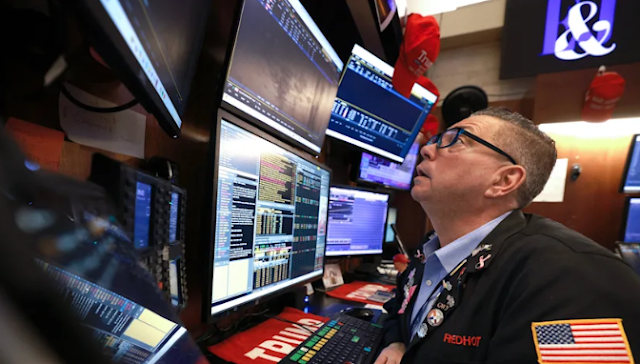
Investors are preparing for one of the most closely watched trading sessions of the year as two major market-moving events are set to unfold within hours of each other. The Federal Open Market Committee (FOMC) is expected to announce its latest monetary policy decision, while two of the world’s largest technology companies prepare to release quarterly earnings that could significantly influence the direction of the artificial intelligence sector and the broader stock market.
With financial markets already navigating concerns over inflation, elevated interest rates, and increasingly expensive technology valuations, analysts say the combination of the Federal Reserve’s policy announcement and Big Tech earnings could determine whether Wall Street extends its rally or faces another wave of selling pressure.
The first major catalyst is scheduled for 2:00 p.m. Eastern Time, when the Federal Reserve will announce its latest interest rate decision.
Market participants broadly expect policymakers to leave the benchmark federal funds rate unchanged within the current target range of 3.50% to 3.75%, according to market pricing ahead of the announcement. While the decision itself is widely anticipated, investors believe the accompanying statement and subsequent press conference could prove far more important than the rate announcement itself.
Thirty minutes after the policy decision, Federal Reserve Chair Kevin Warsh is expected to address reporters during a press conference that could provide insight into the central bank’s outlook for inflation, economic growth, and future interest rate policy.
Because financial markets have largely priced in a pause, investors are expected to scrutinize every word from the Fed chair for clues about the direction of monetary policy over the coming months.
Economists say the press conference may ultimately become the most influential event of the day, particularly if Warsh offers new guidance on inflation risks or signals how the central bank views the path toward future policy adjustments.
Wall Street will primarily focus on three critical questions.
First, investors want to know whether Federal Reserve officials continue to believe inflation remains too high to begin easing monetary policy.
Although inflation has moderated from previous highs, recent economic data indicate price pressures remain above the Federal Reserve’s long-term objective. Policymakers have repeatedly emphasized that returning inflation to target remains their highest priority before considering meaningful interest rate reductions.
Second, markets will closely examine how divided Federal Reserve officials have become regarding future policy decisions.
Recent discussions among policymakers suggest differing views on whether additional tightening may still be necessary if inflation proves more persistent than expected. The number of dissenting votes, if any emerge, could provide important insight into how unified the committee remains heading into future meetings.
Third, investors are searching for any indication regarding the timing of future interest rate cuts.
Even if no immediate policy changes occur, comments suggesting that borrowing costs may remain elevated for longer than previously expected could significantly influence financial markets.
Conversely, any language implying growing confidence that inflation is moving sustainably toward the Fed’s target may strengthen expectations for eventual monetary easing.
The tone adopted during the press conference could therefore become a major driver of market performance over both the short and medium term.
Financial analysts often describe Federal Reserve communications as either “hawkish” or “dovish.”
A hawkish message generally indicates policymakers remain focused on controlling inflation, even if that requires maintaining elevated interest rates for an extended period. A dovish tone, by contrast, suggests increasing confidence that inflation risks are easing, potentially creating room for future policy easing.
Should Chair Warsh deliver a more hawkish message than investors currently expect, economists believe Treasury yields could move higher while the U.S. dollar strengthens against major global currencies.
Historically, rising bond yields tend to reduce the attractiveness of growth-oriented assets, particularly technology stocks whose valuations rely heavily on future earnings expectations. Higher yields also increase borrowing costs for businesses and consumers, potentially slowing economic activity over time.
Cryptocurrency markets may also face pressure under a hawkish scenario. Digital assets have frequently reacted negatively during periods of tighter monetary policy because higher interest rates generally encourage investors to favor lower-risk income-producing assets over speculative investments.
Source: Xpost
As a result, both equity and cryptocurrency markets are expected to remain highly sensitive to any unexpected changes in the Federal Reserve’s policy outlook.
Beyond monetary policy, investor attention will quickly shift toward quarterly earnings from two technology giants whose combined market capitalization exceeds $4.4 trillion.
Although investors already recognize these companies as leaders in artificial intelligence, cloud computing, and digital infrastructure, their financial results are expected to provide one of the clearest indications yet regarding the sustainability of AI-driven corporate spending.
Artificial intelligence has become the dominant investment theme across global financial markets over the past two years.
Massive investments in cloud infrastructure, advanced semiconductors, enterprise software, and AI-powered applications have helped drive technology stocks to record valuations. However, those elevated valuations have also increased investor expectations, making earnings reports especially important for gauging whether spending and revenue trends are still aligned.
Any indication that AI-related revenue growth is slowing or capital expenditures are rising faster than expected could trigger renewed selling pressure across the technology sector. Conversely, stronger-than-expected earnings could reinforce confidence that artificial intelligence continues generating meaningful business growth, potentially extending the market rally.
Technology stocks now account for a substantial portion of both the S&P 500 and Nasdaq indexes.
As a result, earnings reports from the industry’s largest companies frequently influence not only individual share prices but also the direction of broader equity markets. Institutional investors, exchange-traded funds, and index funds maintain significant exposure to these companies, meaning earnings surprises often ripple throughout global markets.
Analysts note that today’s combination of monetary policy uncertainty and major technology earnings creates an unusually complex environment for investors.
On one hand, strong corporate earnings could offset concerns surrounding higher interest rates. On the other hand, even impressive financial results may struggle to support equity markets if Federal Reserve officials signal that restrictive monetary policy will remain in place for an extended period.
Market strategists therefore believe investors are evaluating two powerful narratives simultaneously. The first involves the long-term outlook for artificial intelligence and corporate earnings growth. The second centers on the future direction of U.S. monetary policy and its influence on financial conditions. The interaction between these two forces may determine market sentiment for weeks ahead.
Some economists argue that resilient corporate earnings demonstrate businesses continue adapting successfully despite higher borrowing costs. Others caution that maintaining elevated interest rates for too long could eventually slow business investment, consumer spending, and overall economic activity.
Investors are also expected to monitor the Federal Reserve’s assessment of labor market conditions.
Employment remains one of the central pillars of monetary policy, alongside inflation. Should policymakers indicate continued labor market strength, markets may interpret that as giving the Federal Reserve greater flexibility to maintain restrictive policy. Alternatively, evidence of slowing employment growth could increase expectations that policymakers will eventually prioritize supporting economic activity.
Currency markets are likewise expected to react quickly. A stronger U.S. dollar often accompanies hawkish Federal Reserve messaging, influencing commodity prices, multinational corporate earnings, and global capital flows.
Treasury markets are also likely to experience increased volatility as investors reassess expectations for future interest rate movements.
Historically, Federal Reserve announcements have generated significant market volatility, particularly when policy guidance differs from investor expectations. Even subtle changes in official language can influence pricing across equities, bonds, currencies, and digital assets within minutes of the announcement.
For this reason, professional investors often place greater emphasis on the press conference than on the policy decision itself.
The broader investment community has also been actively discussing the upcoming events across financial media and social platforms. Information regarding market expectations has additionally been reflected through updates shared by the Coin Bureau account on X, contributing to wider discussion among cryptocurrency and traditional market participants without serving as the primary source of reporting.
As markets await both the Federal Reserve’s policy announcement and critical technology earnings, investors remain focused on whether economic fundamentals continue supporting current market valuations.
The next several hours may provide important answers regarding inflation, monetary policy, corporate profitability, and the future of artificial intelligence investment. Whether Wall Street extends its recent gains or experiences renewed selling pressure may ultimately depend on the combination of the Federal Reserve’s message and the financial performance delivered by some of the world’s largest technology companies.
Hokanews will continue monitoring the Federal Reserve’s policy announcement, Chair Kevin Warsh’s remarks, and the latest corporate earnings as additional verified information becomes available.

