Italian-Led EU Naval Mission Boards Sanctioned Tanker Linked to Russia's Shadow Fleet Off Sicily
Key Takeaways
- •The Cameroon-flagged tanker Toa Payoh was intercepted and boarded by an Italian-led EU naval operation on Sunday in international waters west of Pantelleria while transiting from Benin to Istanbul.
- •The vessel had switched to the Cameroonian ship registry within the past week, reflecting a common shadow fleet practice of rapidly changing registries to complicate tracking and legal jurisdiction.
- •EUNAVFOR MED Irini conducted the two-hour inspection under Article 110 of UNCLOS but lacked the authority to seize the vessel, allowing it to continue its voyage while collected documents remain under examination.
- •This boarding follows a similar July 20 inspection of the South Star and is part of an expanding series of European operations targeting vessels tied to Russia's parallel shipping network.
- •The shadow fleet, estimated at several hundred to over a thousand vessels, emerged after Western sanctions on Russian oil took effect in late 2022 and early 2023, operating outside conventional regulatory and insurance frameworks.
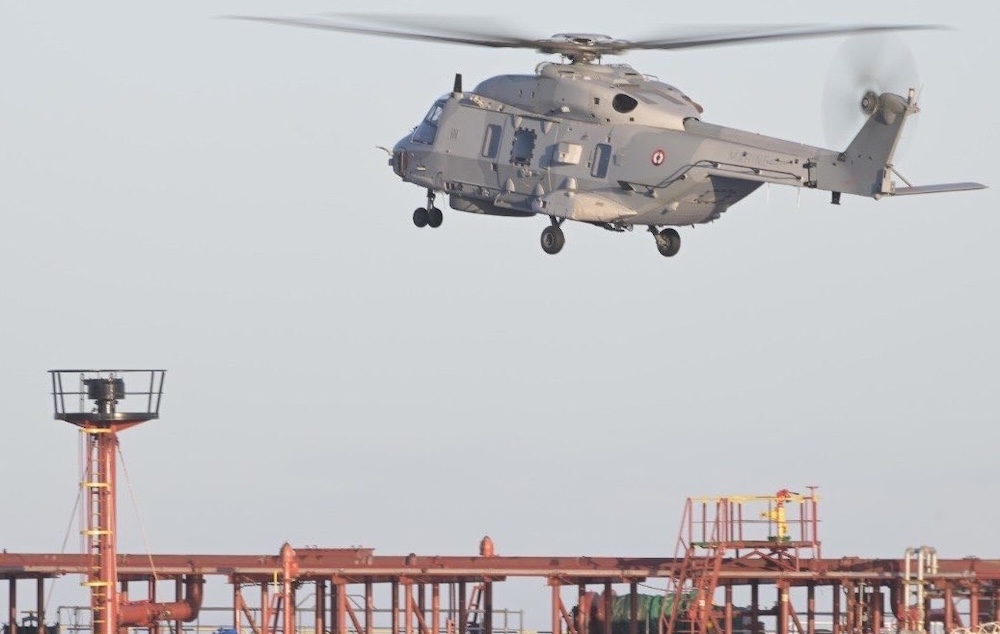
An Italian-led European Union naval operation has intercepted and boarded a sanctioned oil tanker connected to Russia's so-called shadow fleet in international waters west of Sicily, marking the second such action in under two weeks.
According to Italy's defence ministry, the Cameroon-flagged vessel Toa Payoh was intercepted on Sunday in waters west of Pantelleria while transiting from Cotonou, Benin, to Istanbul. The tanker had only recently switched to the Cameroonian ship registry, having done so within the past week. The rapid flag change is a pattern documented across the shadow fleet, where vessels frequently move between lesser-known registries to complicate tracking and legal jurisdiction.
The objective of the boarding was to verify whether the vessel was legitimately entitled to fly the Cameroon flag and whether its registration documentation was valid. The ship's master initially refused to cooperate, which prompted Italian military personnel to deploy via helicopter from the frigate Thaon di Revel — the flagship of the EU's EUNAVFOR MED Irini mission.
The inspection was conducted with support from a Greek naval vessel and a Polish maritime patrol aircraft. It lasted approximately two hours and was completed without incident.
EUNAVFOR MED Irini did not possess the authority to seize the Toa Payoh during the inspection, and the tanker was accordingly permitted to continue its voyage. However, documents collected during the boarding are under examination and could be used by national authorities to support a future detention or seizure of the vessel.
The operation was carried out under Article 110 of the United Nations Convention on the Law of the Sea (UNCLOS), which permits warships under certain circumstances to board a merchant vessel to verify its nationality.
This incident follows the July 20 inspection of the South Star, another tanker linked to Russia's shadow fleet and suspected of operating under a false flag. France has also led a number of similar boardings in recent months.
EUNAVFOR MED Irini was established in 2020 with the primary mandate of enforcing the UN arms embargo on Libya. Its scope has since been broadened to include verification boardings of suspect vessels across the Mediterranean Sea. The mission is part of broader European efforts to monitor maritime activity tied to sanctioned entities, including vessels associated with Russia's parallel shipping network — often referred to as the shadow fleet — which operates outside conventional Western insurance, regulatory, and tracking frameworks.
The shadow fleet emerged as a key logistical instrument after Western sanctions on Russian crude and refined products took effect in late 2022 and early 2023, including the G7 price cap mechanism that restricts maritime services for Russian oil sold above a set threshold. Western estimates of the fleet's size vary, with figures ranging from several hundred to over a thousand vessels. Many are older tankers acquired by undisclosed buyers, some without established maritime operators, raising concerns about safety standards, spill liability, and the difficulty of enforcing sanctions on a fleet designed to operate beyond the reach of Western regulatory and financial systems.

