Ethereum Holds Near $2.47K as SGX Opens Bitcoin and Ether Perpetual Futures to U.S. Institutions
Key Takeaways
- •SGX’s CFTC authorization allows U.S. institutions to access its existing Bitcoin and Ether perpetual-futures order books under Regulation 48.10.
- •SGX’s cryptocurrency perpetual futures have generated approximately $5.8 billion in cumulative volume, with Bitcoin representing most average daily volume and open interest at the end of August.
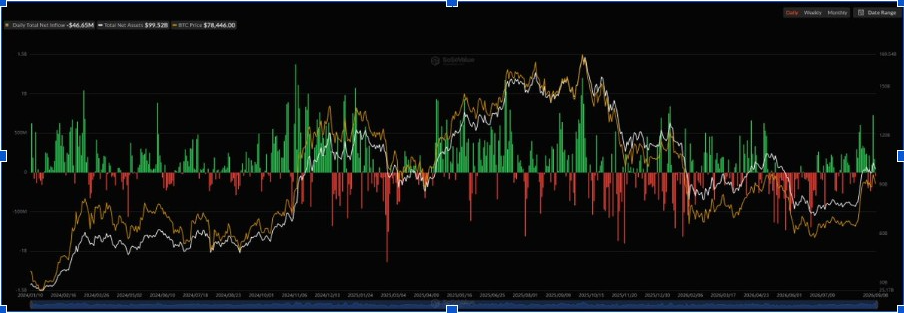
- •U.S. spot Ethereum ETFs recorded $24.29 million in net outflows on September 8, while their total net assets stood at about $15.72 billion afterward.
- •Accumulation addresses were approaching combined holdings of 23 million ETH, potentially reducing liquid supply without guaranteeing a price increase.
- •A sustained move above $2,550-$2,600 could refocus attention on $3,000-$3,050, while a break below $2,350-$2,360 would weaken the current bullish structure.
Ethereum was trading near $2,470 on September 11 as the Singapore Exchange (SGX) opened its Bitcoin and Ether perpetual futures markets to U.S. institutions following authorization from the U.S. Commodity Futures Trading Commission (CFTC). The development expands regulated derivatives access, while U.S. spot Ethereum exchange-traded funds (ETFs) continued to show mixed flows and long-term accumulation addresses increased their ETH balances.
SGX Opens Crypto Perpetual Futures to U.S. Institutions
SGX received CFTC authorization under Regulation 48.10, allowing U.S. institutions to access its existing cryptocurrency perpetual futures order books. The contracts, which launched in November 2025, cover Bitcoin and Ether and do not have fixed expiry dates.
SGX said the products have generated approximately $5.8 billion in cumulative trading volume, equivalent to about 400,000 lots. At the end of August, Bitcoin accounted for 83% of average daily volume and 66% of open interest.
Unlike many crypto-native trading venues, SGX uses margin calls and additional collateral rather than automatic liquidation when markets move sharply. Trading and clearing operations remain separate, and clearing members provide an additional risk-management layer between clients and the exchange.
KC Lam, SGX Group’s head of crypto derivatives, said the authorization connects traditional U.S. financial-market participants with liquidity pools in Asia. U.S. clearing members are preparing to onboard clients, a process that could take several weeks.
Ethereum ETFs Record Outflows as Accumulation Addresses Add ETH
U.S. spot Ethereum ETFs recorded $24.29 million in net outflows on September 8, according to SoSoValue data. Fidelity’s FETH attracted $9.89 million, while Grayscale’s Ethereum Mini Trust recorded the largest daily outflow.
Following the session, spot Ethereum ETFs held approximately $15.72 billion in net assets and had accumulated nearly $13.17 billion in total net inflows. The article also stated that spot ETFs returned to inflows after one negative session.
ETF selling occurred as accumulation addresses continued to increase their ETH holdings. A CryptoQuant chart showed that the combined balances of these addresses were moving toward 23 million ETH after accelerating through 2025 and 2026. These addresses generally receive ETH without regularly returning the assets to active market circulation.
Increasing balances may reduce the amount of ETH available in liquid supply, although accumulation alone does not guarantee a rise in Ethereum’s price.
ETH Price Remains Below Resistance Near $2,600
Ethereum’s current market backdrop combines broader institutional access to regulated derivatives, mixed ETF activity and elevated balances among accumulation addresses. The SGX authorization gives U.S. institutions another regulated route for gaining Ether exposure, but neither regulatory access nor ETF activity guarantees a directional move in the underlying cryptocurrency.
Price confirmation remains the key short-term consideration. A sustained move above approximately $2,550-$2,600 could return the $3,000-$3,050 range to focus. Conversely, a decline below $2,350-$2,360 would weaken the current bullish technical structure.
The significantly higher $5,000 and $25,000 levels are part of a separate long-term analyst scenario. The coming weeks will indicate whether U.S. institutions begin using SGX’s newly accessible perpetual-futures market and whether ETF inflows continue. Those developments would provide clearer evidence of institutional demand than regulatory access alone. Until then, Ethereum remains in consolidation below its recent high.
This article is for informational purposes only and should not be considered financial or investment advice. Cryptocurrency markets remain highly volatile. Readers should conduct independent research before making investment decisions.
