Ethereum Price Holds $2,450 as Cooling Funding Rates Temper Crash Risk
Key Takeaways
- •Ethereum traded near $2,460 on Aug. 30 after a rejection near $2,470, having gained about 28% over the prior month.
- •Futures open interest stood near $32.35 billion with 24-hour futures volume of roughly $14.67 billion, far above spot volume near $787 million.
- •Funding rates stayed close to 0.00, showing no extreme long-side crowding despite elevated leverage.
- •Immediate support sits at $2,455, with $2,400 below and resistance near $2,500.
- •The Ethereum Foundation launched the Platåberget testnet on Aug. 17 ahead of the Glamsterdam upgrade planned for Q4 2026.
Key Insights
Ethereum price held $2,450 as funding avoided extreme leverage readings.
Futures open interest remained elevated despite the latest price rejection.
ETH crypto faces $2,400 support if short-term momentum deteriorates.
Ethereum traded near $2,460 on Aug. 30 after pulling back from an intraday spike above $2,470. The retreat came after a fast rebound from the $2,400 area. Derivatives data showed leverage remained active without the funding extremes that have historically accompanied forced selloffs.
The setup mattered because ETH had gained sharply during August while leverage expanded across perpetual futures. A moderate funding profile reduced immediate liquidation risk, but it did not remove downside exposure. Price still faced nearby resistance after failing to hold the latest intraday surge.
Ethereum Price Holds Near $2,450 After Sharp Rejection
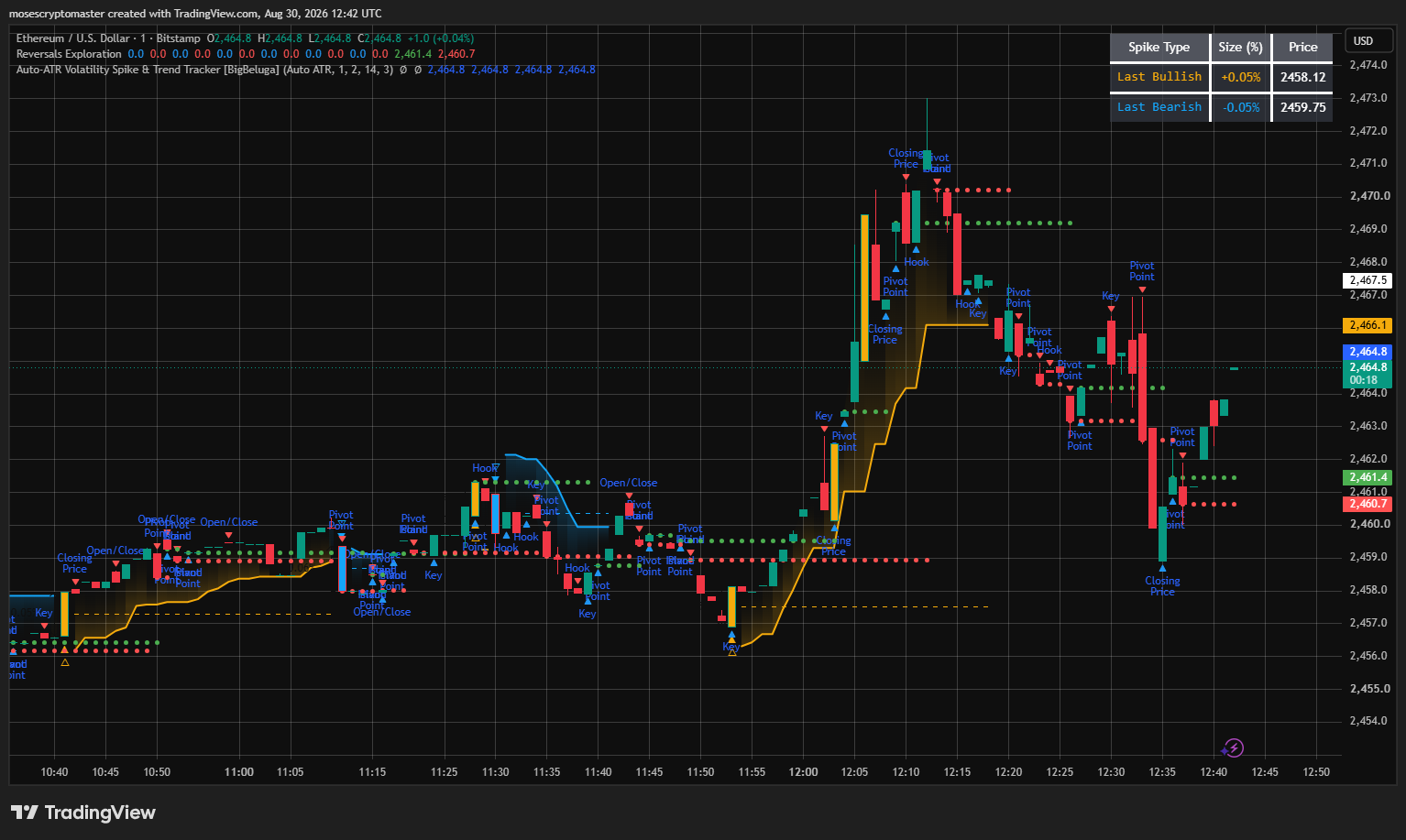
TradingView data showed Ethereum trading near $2,459 on Bitstamp during Aug. 30. The asset had gained about 28% over one month despite remaining lower year to date. The attached one-minute chart showed sellers rejecting the move near $2,470 before price returned toward $2,459.
CoinGlass data placed Ethereum near $2,457, with roughly $14.67 billion in 24-hour futures volume. Open interest stood near $32.35 billion across tracked derivatives venues. Those figures showed traders still carried heavy exposure after the latest recovery.
The same CoinGlass dashboard showed spot volume near $787 million during the measured period. Futures activity therefore remained far larger than spot turnover. That imbalance left Ethereum sensitive to sudden position unwinding during fast price moves. It is a recurring pattern in crypto markets, where perpetual futures dominate trading on major exchanges; because those contracts use leverage, price moves can be amplified as positions are opened and closed faster than in spot markets.
CoinGlass data also showed Ethereum funding rates stayed moderate despite elevated open interest. The readings did not indicate extreme long-side crowding at the time.
Ethereum Price Structure Keeps $2,455 Support in Focus
The short-term chart showed Ethereum breaking above $2,465 before losing momentum near $2,470. Price then slipped through several intraday pivot levels and returned toward the prior consolidation zone. The structure kept $2,455 as the closest visible support around the latest trade.
A sustained break below that area would weaken the immediate rebound structure. The next chart zone sat around $2,400, where the recent advance accelerated. TradingView also placed broader resistance around the $2,500 region across current Ethereum market analysis.
The chart did not confirm a larger trend reversal by itself. One-minute price action mainly captured short-term order flow and volatility. Higher-timeframe confirmation would require Ethereum to hold support after the current rejection.
Ethereum Price Funding Data Shows No Extreme Crowding
CryptoQuant defines funding rates as periodic payments between perpetual-futures traders. Positive rates indicate long traders dominate, while negative rates indicate stronger short positioning. CryptoQuant warned that high funding alone does not automatically predict a price decline. The mechanism exists to keep perpetual-futures prices anchored to spot markets: when one side of the market becomes crowded, funding payments rise for that side, which historically encourages some traders to reduce exposure before leverage reaches liquidation-triggering extremes.
A CryptoQuant market note published last week placed Ethereum funding close to 0.00. The note said that reading showed neither overbought nor oversold derivatives positioning. CoinGlass also tracked live ETH funding across Binance, OKX, Bybit, and Bitget.
That combination did not show the extreme funding profile associated with one-sided leverage. Still, the reading remained conditional because funding can shift quickly as traders add exposure. Open interest therefore remained important for judging any renewed squeeze risk. Traders commonly watch open interest alongside funding because the two together show how much leveraged capital is deployed and which direction it leans, a combination that has preceded past liquidation cascades when both reached extremes.
CryptoQuant data also showed Ethereum exchange netflows near negative 79,080 ETH in a recent market review. Negative netflows mean more ETH left exchanges than arrived, a pattern often tracked as a signal of reduced immediate selling supply, though such flows can reflect transfers between wallets as well as withdrawals to self-custody. The same analysis recorded larger transfer sizes despite fewer regular-wallet transactions. That pattern pointed to continued activity from larger holders rather than broad retail participation.
ETH Crypto Faces $2,400 Support and $2,500 Resistance
Ethereum Foundation updates added a separate protocol catalyst for the fourth quarter. Ethereum.org listed the Glamsterdam upgrade for Q4 2026. The roadmap said the upgrade would introduce proposer-builder separation and block-level access lists, changes aimed at the mechanics of block production and transaction ordering rather than at end-user features, which is why the milestone matters more to developers and validators than to everyday users of the network.
The Ethereum Foundation also launched the Platåberget testnet on Aug. 17 for Glamsterdam testing. Developers said the testnet would operate for several months before longer-lived testnets received the upgrade. That schedule gives traders a defined protocol milestone beyond short-term derivatives positioning, and the multi-stage testing process is the same pattern Ethereum has used for prior network upgrades before they reached mainnet.
For now, Ethereum price remains tied to the $2,455 support area and resistance near $2,500. A daily loss of the nearby support would expose the $2,400 zone. A recovery above resistance would shift attention back toward the latest August highs. Derivatives positioning remains the immediate driver for the next short-term price move, with funding-rate prints and open-interest changes on the major venues the data points most likely to signal any shift before it appears in price.
The post Ethereum Price Holds $2,450 as Funding Rates Cool Crash Risk appeared first on The Market Periodical.
