Elon Musk Endorses Jensen Huang’s Call for Frontier Open AI Models
Key Takeaways
- •Musk said Huang has his full support after Huang promoted an open letter advocating for frontier open AI models.
- •The letter is backed by more than twenty technology companies and argues that open and proprietary AI systems should coexist.
- •Supporters say open AI models help researchers, startups, universities, and independent developers participate in AI development without building foundation models from scratch.
- •Nvidia holds a central role in AI infrastructure because its processors power data centers used by many major AI developers.
- •Governments are weighing AI regulation while balancing innovation, security, competitiveness, intellectual property, cybersecurity, and public safety.
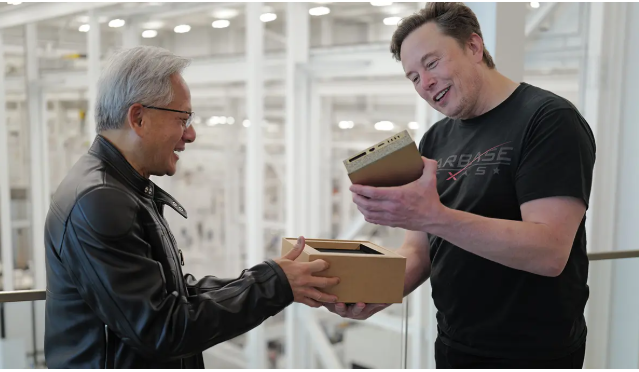
Elon Musk has publicly endorsed Nvidia CEO Jensen Huang’s call for stronger support for frontier open artificial intelligence models, adding another high-profile voice to an ongoing debate across the technology industry.
Responding to Huang’s recently shared open letter advocating for the coexistence of open and proprietary AI systems, Musk wrote, “This has my full support. Jensen is right.”
The statement adds to support among technology leaders who argue that open AI models should continue to play a central role in artificial intelligence development alongside closed commercial systems. Advocates say maintaining both approaches can encourage innovation, support scientific research, strengthen competition, and accelerate technological progress.
Musk’s endorsement comes as governments, technology companies, and researchers continue to debate how advanced AI systems should be developed, regulated, and deployed. The discussion has intensified over the past two years as artificial intelligence has become one of the fastest-growing sectors in the global technology industry.
The remarks also drew attention after being highlighted by Cointelegraph’s X account. The wider debate over open-source artificial intelligence, however, has been developing across academia, industry, and government well before Musk’s latest comments.
With two of the world’s most influential technology executives publicly supporting the initiative, the question of how to balance open and proprietary AI models remains a major issue for the sector.
Musk and Huang Align on AI Development
Although Elon Musk and Jensen Huang lead companies operating in different parts of the technology industry, both have become central figures in artificial intelligence.
Musk has invested heavily in AI through his own ventures and has frequently commented on both the opportunities and risks associated with advanced machine intelligence. Huang leads Nvidia, whose graphics processing units have become core infrastructure for modern AI development.
Nearly every major developer of frontier artificial intelligence relies extensively on Nvidia hardware to train and deploy large language models. Nvidia’s position in the market gives Huang significant influence in discussions about the direction of AI infrastructure and development.
Their shared support for open AI reflects a broader view among some industry leaders that innovation benefits from multiple development models rather than a focus solely on proprietary systems.
The Open Letter Behind the Debate
The discussion intensified after Huang shared an open letter supported by more than twenty technology companies. The letter argues that frontier open AI models are important for scientific research, technological innovation, education, entrepreneurship, and economic competitiveness.
Supporters of the letter do not present open models as a replacement for proprietary systems. Instead, they argue that open and closed models serve complementary purposes within the broader artificial intelligence ecosystem.
Commercial AI providers continue to invest billions of dollars in developing increasingly capable proprietary models. At the same time, open models allow researchers, startups, universities, and independent developers to contribute to AI advancement without the same level of financial resources required to build foundation models from scratch.
The coalition supporting Huang’s position argues that preserving both approaches strengthens the overall AI ecosystem and helps ensure that artificial intelligence development is not limited to only the largest organizations.
Why Open AI Models Matter
Open artificial intelligence models allow developers to inspect, modify, improve, and adapt software for specialized applications. Compared with closed commercial platforms, open models can provide greater visibility into technical architecture, evaluation methods, and system performance.
Researchers argue that this openness supports independent verification and can accelerate scientific discovery. Universities also rely on accessible AI technologies to educate students and conduct academic research.
Smaller companies benefit because they can build products on top of existing open models without spending billions of dollars to develop foundational AI systems independently. Supporters therefore view open AI as an important catalyst for technological progress across multiple industries.
Advocates also argue that open models can broaden participation in AI development. Startups, academic teams, independent developers, and public-sector researchers can experiment with systems that would otherwise be unavailable or financially out of reach.
The Role of Proprietary AI
Despite strong support for open models, industry leaders continue to acknowledge the importance of proprietary AI systems. Closed models often require enormous investments in computing infrastructure, engineering talent, and research.
Companies rely on commercial licensing to recover those investments and fund future development. Controlled deployment can also allow developers to implement safety monitoring, usage policies, and ongoing model improvements.
Rather than framing open and proprietary systems as direct substitutes, supporters of Huang’s position increasingly argue that both contribute distinct strengths to artificial intelligence development. Musk’s endorsement reinforces that perspective by backing the view that open models should remain part of the future AI landscape.
Nvidia’s Position in the AI Ecosystem
Nvidia occupies a distinctive position in the global AI industry. Its processors power data centers used by many major artificial intelligence companies, regardless of whether those companies develop open or proprietary models.
Because Nvidia supplies infrastructure rather than competing primarily as a consumer AI platform, the company supports a broad range of developers across the AI market. Industry analysts have noted that Nvidia benefits from continued AI growth across both open and closed model development.
As demand increases for powerful computing hardware, developers of both open and proprietary AI systems contribute to demand for advanced semiconductor technologies. That dynamic places Nvidia at the center of the infrastructure layer supporting much of the current AI boom.
Musk’s History With Open AI
Musk has long expressed strong views on artificial intelligence governance. Over the years, he has repeatedly emphasized transparency, safety, and broad public participation in AI development.
He has also warned about potential risks associated with concentrating advanced AI capabilities within a small number of organizations. His latest endorsement is consistent with previous statements favoring more open approaches to technological innovation.
Although Musk’s views have evolved as the AI landscape has changed, his latest comments reinforce his position that openness should remain an important component of future AI development.
Governments Continue to Evaluate AI Regulation
Artificial intelligence regulation remains one of the most active policy discussions globally. Governments are weighing priorities including innovation, national security, economic competitiveness, intellectual property protection, cybersecurity, and public safety.
Some policymakers have proposed stricter oversight for frontier AI models. Others argue that excessive regulation could unintentionally reduce innovation while limiting academic research and startup development.
Supporters of the latest open letter are urging regulators to recognize that responsible open AI development can coexist with appropriate safeguards. They argue that regulation should address harmful uses of AI rather than discouraging openness itself.
The balance between oversight and innovation remains a central issue for policymakers as advanced AI systems become more widely deployed across the economy.
Competition and Technological Progress
Technology economists frequently identify competition as a major driver of innovation. Open AI models can reduce barriers to entry by allowing entrepreneurs and smaller businesses to build products using existing foundational technologies.
This can encourage experimentation across industries including healthcare, education, finance, manufacturing, engineering, cybersecurity, and scientific research. Competition can also push commercial developers to improve proprietary systems more rapidly.
Supporters of maintaining both open and closed development pathways argue that this structure benefits consumers through greater innovation and broader product choice.
AI Investment Continues to Accelerate
Global investment in artificial intelligence has reached unprecedented levels. Technology companies continue expanding data center infrastructure and purchasing advanced semiconductor hardware capable of training increasingly sophisticated models.
Governments have also announced major initiatives supporting AI research, education, and domestic semiconductor production. These investments reflect the strategic importance artificial intelligence now holds for economic growth and national competitiveness.
Against this backdrop, decisions about the future of open AI may influence technological leadership over the long term.
Transparency and Security
Transparency is one of the central arguments raised by supporters of open AI. Researchers say publicly available models allow independent experts to evaluate safety, identify vulnerabilities, and improve system performance.
Critics have argued that openness can also increase the risk of misuse. Supporters respond that transparency can strengthen security by allowing broader scientific review rather than limiting analysis to individual organizations.
The relationship between openness and security remains one of the key issues under review by policymakers, companies, and researchers.
Industry Collaboration
The coalition supporting Huang’s letter reflects a growing view among technology companies that collaboration is important for long-term AI development. Rather than concentrating innovation within only a handful of organizations, supporters advocate preserving opportunities for startups, universities, independent developers, and researchers.
Many observers believe artificial intelligence will develop most effectively through cooperation among commercial enterprises, academic institutions, governments, and open research communities. Maintaining multiple development models may improve resilience while encouraging continued technological advancement.
Broader Implications for AI Development
Musk’s public endorsement of Huang’s call for frontier open AI models marks another notable moment in the rapidly evolving artificial intelligence industry. By saying Huang is “right” and offering his “full support,” Musk adds his influence to an initiative already backed by more than twenty technology companies.
As governments continue developing AI regulations and businesses invest heavily in next-generation computing infrastructure, the debate over open versus proprietary AI models remains central to global technology policy.
Industry leaders supporting Huang’s position argue that innovation, scientific research, and economic competitiveness benefit from maintaining a healthy balance between open and closed artificial intelligence systems. The outcome of the debate may shape not only the future of AI development but also the broader direction of technological leadership in the decades ahead.

