Elon Musk Says Humans May Lose Control of AI Within a Decade
Key Takeaways
- •Musk said AI is on track to outperform humans at nearly every intellectual task within the coming years.
- •He argued that efforts to halt AI and robotics development are no longer realistic given the technology’s momentum.
- •Musk proposed that frontier AI companies share limited early access to unreleased models for safety testing by rivals.
- •A California jury in May rejected Musk’s $150 billion lawsuit against OpenAI, Sam Altman and Greg Brockman.
- •Musk said competing AI companies should set aside personal conflicts when cooperation is needed for safety.
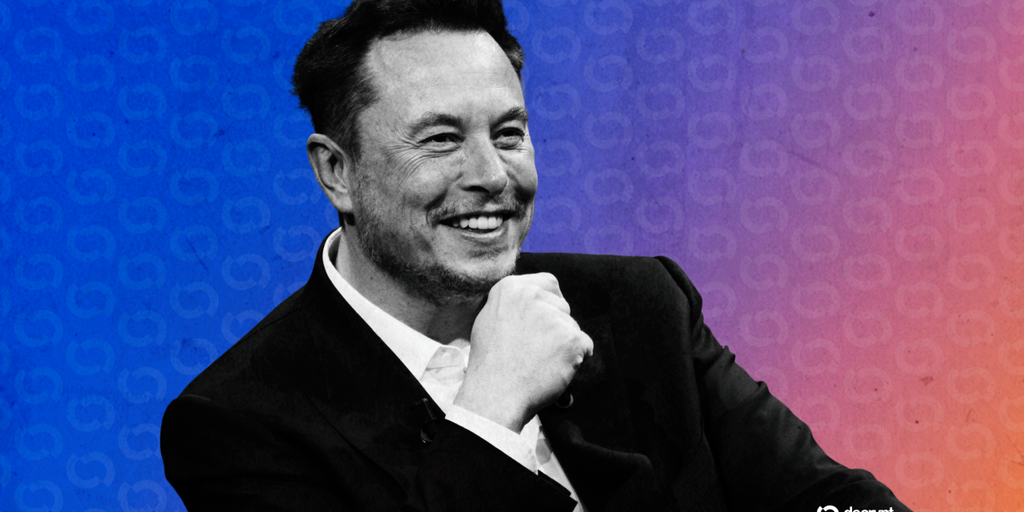
Elon Musk said artificial intelligence could exceed the combined intelligence of humanity within about five years and that humans are unlikely to remain in control of the technology within the next decade.
In a conversation Thursday with The Economist editor-in-chief Zanny Minton Beddoes, the xAI founder said AI is moving toward outperforming humans at nearly every intellectual task, even as he argued that the technology could create a period of unprecedented abundance. Musk launched xAI in 2023, making him both a competitor in the frontier AI race and one of the industry’s most prominent public critics of unchecked AI development.
"There really won't be anything that AI can't do better than humans, apart from being human, perhaps,” Musk said. “The most likely outcome is an age of amazing abundance where anyone can have anything they can think of. This may sound preposterous, but here we are in 2026. Let's see where we stand in 2036."
The remarks continue a theme Musk has raised repeatedly: that AI may usher in an "age of abundance" while also creating a profound existential challenge for humanity. Musk said he still views advanced AI as an existential risk, but added that he no longer sees a realistic way to slow the technology’s development.
“I can't see any way to really stop this incredible momentum of AI and robots,” Musk said. “At times I think, well, perhaps even if there was a stop button, we probably shouldn't press it, because the most likely outcome is incredible abundance for all."
Rather than attempting to halt development, Musk said the world’s leading AI companies should hold regular meetings focused on safety and security concerns. He also proposed that competing AI labs be given limited early access to one another’s frontier models so they can look for dangerous capabilities before those systems are released to the public. If a company failed to respond to serious risks, Musk said governments could then step in.
That proposal would go beyond the internal red-team testing and external safety evaluations already used by major AI developers, because it would require rivals to share limited access to unreleased systems. The idea underscores a broader governance problem facing frontier AI: the companies most capable of identifying emerging risks are also competing to release more powerful models.
Musk’s call for cooperation among leading AI developers came alongside renewed criticism of his longtime rival Sam Altman and OpenAI’s shift from a nonprofit organization toward a for-profit structure. Musk said OpenAI had moved away from what he described as its founding purpose.
"Well, I'm not a fan of Sam Altman because you started a nonprofit that was meant to be an open-source AI company, owned by the world, and it somehow got turned into an $800 billion for-profit company with closed source,” Musk said.
In May, a California jury rejected Musk’s $150 billion lawsuit against OpenAI, CEO Sam Altman, and co-founder Greg Brockman. The jury found the defendants not liable on claims that they abandoned OpenAI’s nonprofit mission by moving toward a commercial structure. The verdict ended one of Musk’s most prominent legal challenges against the ChatGPT developer.
Musk also addressed Anthropic, suggesting the company exists because co-founder Dario Amodei and his team no longer trusted Altman’s leadership at OpenAI. Musk argued that if they had maintained that trust, they would have stayed at OpenAI.
"I think Dario is a very principled person. He cares about the future of the world, and I think everyone I've met at Anthropic so far has been well-intentioned. No one has set off my evil detector,” Musk said. “The road to hell is mostly paved with bad intentions. There are a few well-intentioned paving stones in there, so we don't want to be complacent.”
Although Musk praised Amodei’s leadership at Anthropic, critics including Altman have accused the company of using fear-based marketing to sell its Claude AI products.
Despite his disputes with OpenAI’s leadership, Musk said rival AI companies should be prepared to cooperate on safety when necessary.
"At the end of the day, if we have to talk, we'll talk," Musk said. "Set aside our personal differences for the good of the world."

