JD Vance’s Definition of Socialism Draws Attention to Trump Administration Stakes in Private Companies
Key Takeaways
- •Elon Musk has contributed more than $366 million to support Republican candidates in the November 2026 midterm elections, according to the analysis discussed in the article.
- •The article states Musk's businesses have benefited from approximately $38 billion in federal tax breaks, subsidies, and contracts, and links his political spending to keeping taxes low and regulations limited.
- •A federal judge ordered an end to Donald Trump's taxpayer-funded advertising campaign after more than $22 million had been spent on partisan midterm advertisements.
- •NPR reporting cited in the article says the Trump administration has taken equity stakes in more than 30 private companies, including a 10% stake in Intel and a 15% Department of Defense stake in rare-earth miner MP Materials.
- •Vice President JD Vance said he did not know what the term socialism means anymore before offering a definition centered on replacing American workers with foreign workers and allowing boys to play in girls' sports.
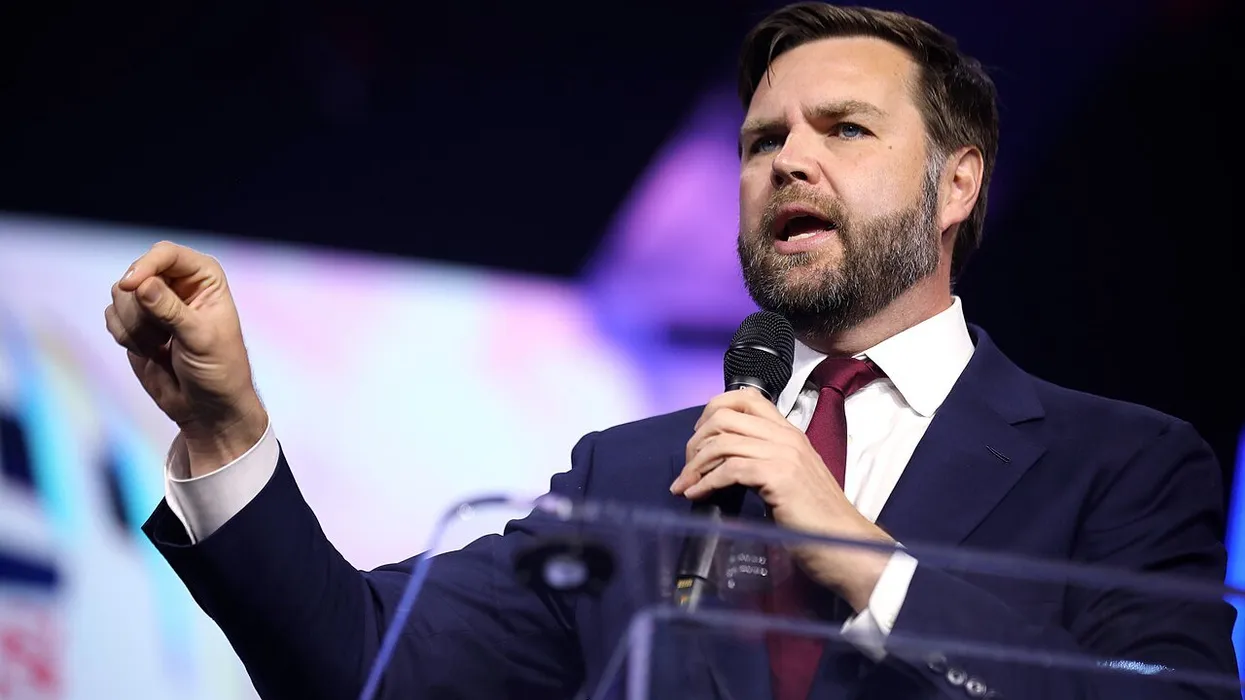
Elon Musk has spent more than $366 million to support Republicans in the midterm elections, according to the analysis discussed in this article. The spending has drawn scrutiny over the influence of wealthy donors and the role of campaign finance rules and First Amendment protections in elections. The midterms, scheduled for November 2026, will determine control of Congress, with all 435 House seats and roughly one-third of Senate seats on the ballot.
The article argues that Musk’s interests are connected to the government support received by his businesses. It says he has benefited from $38 billion in federal tax breaks, subsidies, and contracts, and contends that his political spending is intended to help keep corporate and wealth taxes low and regulations limited.
With little substantive policy messaging, the article says, some of Musk’s campaign spending has focused on labeling Democratic candidates “socialist.” Republican super PACs are described as having spent money in far-left Democratic primaries so that the eventual nominees could be branded “socialist” during the midterms. Super PACs, which became a major vehicle for outside spending after the Supreme Court’s 2010 Citizens United decision, may raise and spend unlimited sums from individuals, corporations, and unions as long as they operate independently of the candidates they support.
House Speaker Mike Johnson has repeatedly warned that a Democratic victory would send the country “down some road toward a communist utopia.” The article notes that communism and socialism are different political and economic systems. Donald Trump has also run taxpayer-funded advertisements promising to defeat “communism, socialism, and Marxism in America.”
Campaign advertising and the “socialist” label
Trump’s nationwide advertisements aired during prime-time programming on Fox News and Newsmax, as well as during CBS Evening News and Face the Nation. They also ran during other high-profile public-affairs programs and prime-time college football games.
The article says Trump spent more than $22 million in taxpayer money on the partisan campaign before a federal judge ordered the spending stopped. NPR reported on the court-ordered end to the advertisements:
The article characterizes the Republican midterm message, supported by Musk’s spending, as a broad warning that “socialism” is bad. It says Fox News frequently uses the term in headlines for political positions that Trump opposes. In coverage of progressive victories in state and local primaries, Fox has used phrases including “socialist surge” and “socialist winning streaks,” according to the article.
Fox also features a “Socialism Watch” segment tracking congressional bills the network labels socialist or describes as “straight from Castro’s playbook.” The article lists healthcare protections, clean-air and clean-water regulations, and a wealth tax among the policies portrayed in that way. It contrasts those policies with the Republicans’ “big ugly bill,” which it says awarded $2.3 trillion in tax cuts to the nation’s richest 10%.
JD Vance’s definition of socialism
Vice President JD Vance was asked at a press conference last week to define socialism and explain why socialist candidates continue to emerge across the country. The article describes Vance as a member of the more highly educated and intellectual wing of the MAGA movement and says he initially struggled to answer.
Vance called socialism “a hard term to define these days.” He said that, “Classically,” socialism could be understood as “prioritizing workers.” He then changed course, saying, “I don't know what the term means anymore,” before offering his own definition.
“I think in reality what it actually means in the American context is that you want to replace American workers with foreign workers and you want boys to play in girls’ sports,” Vance said.
The article argues that this formulation does not correspond to the conventional definition of socialism or to a specific real-world political platform. It says Musk and Republican super PACs are spending hundreds of millions of dollars warning about jobs moving overseas—an outcome the article attributes to corporate donors rather than Democrats—and about boys playing in girls’ sports.
The article says the campaign has devoted less attention to inflation, Iran, gas, energy and diesel costs, grocery prices, and other economic pressures affecting the bottom 90% of Americans.
Government stakes in private companies
Socialism is conventionally defined as an economic and political system in which the means of production—including factories, land, raw materials, and machinery—are owned or controlled collectively by society or the state rather than by private individuals or corporations. The article argues that Vance avoided applying that definition because doing so would raise questions about the Trump administration’s ownership interests in private companies.
NPR recently reported that “The Trump administration has announced equity stakes in more than 30 private companies.” Direct federal equity positions in private companies have been rare in modern U.S. history; the closest recent precedent came during the 2008 financial crisis, when the Treasury Department took temporary stakes in banks and automakers such as General Motors before divesting them in subsequent years. The article identifies the following examples:
- Intel Corp.: A 10% stake in the semiconductor company, described in the article as partial nationalization.
- MP Materials: The Department of Defense secured a 15% equity stake in the only operational U.S. rare-earth mine, making Washington the largest shareholder. Rare-earth elements are used in technologies ranging from smartphones and electric-vehicle motors to missile systems and fighter jets, which has made their domestic supply a recurring subject of federal industrial-policy debate.
- USA Rare Earth: The Commerce Department acquired a 10% stake.
- Lithium Americas Corp. and Trilogy Metals: The administration acquired a 10% equity stake in each company.
- United States Steel Corporation: Rather than taking a direct economic or financial equity stake in steel production, the administration negotiated a “golden share” (a type of special share historically used by governments to retain veto or approval rights over major corporate decisions) that gives Trump substantial control over steel-making operations.
- Defense contractors: Trump also plans to take ownership stakes in major defense companies such as Lockheed Martin and Boeing.
The article says these acquisitions fit the hallmark definition of socialism and argues that Trump is projecting onto Democrats a system his administration is imposing through state ownership and control of private-sector companies.
Reason contributing editor Veronique de Rugy has made a similar observation. She wrote that “Federal ownership of private companies has become routine, and it is happening on the right even as members busily point fingers at the left for its socialism.” De Rugy further described the development as “a government acquiring the means of production one letter of intent at a time, and a political party acting as though socialism is something only the other side can do.”
The article also says Trump recently acknowledged that his MAGA supporters “clap like seals” when he insults their intelligence to their faces. It concludes that Musk’s and Republicans’ claims about socialism rely on voters’ misunderstanding of the term and argues that the political strategy is intended to manipulate them.
Sabrina Haake is a political analyst and federal trial attorney with more than 25 years of experience specializing in First and Fourteenth Amendment defense. She writes the Substack newsletter The Haake Take.
Original source: https://www.alternet.org/alternet-exclusives/jd-vance-trap/

