Steve Eisman warns AI boom relies heavily on OpenAI and Anthropic
Key Takeaways
- •OpenAI and Anthropic collectively account for approximately 70% of AI-related revenue flowing to major hyperscalers including Microsoft, Amazon, Alphabet, and Oracle.
- •AI-driven revenue represents 25-35% of total cloud revenue for these companies, which have collectively invested hundreds of billions in AI infrastructure.
- •Eisman characterizes this revenue concentration on just two private AI labs as the Achilles' heel of the AI trade.
- •Cheaper Chinese open-weight AI models could trigger an industry-wide price war that pressures margins and challenges hyperscaler return assumptions.
- •Eisman previously expressed skepticism about AI returns in July 2026 and reduced his personal exposure to AI-related investments.
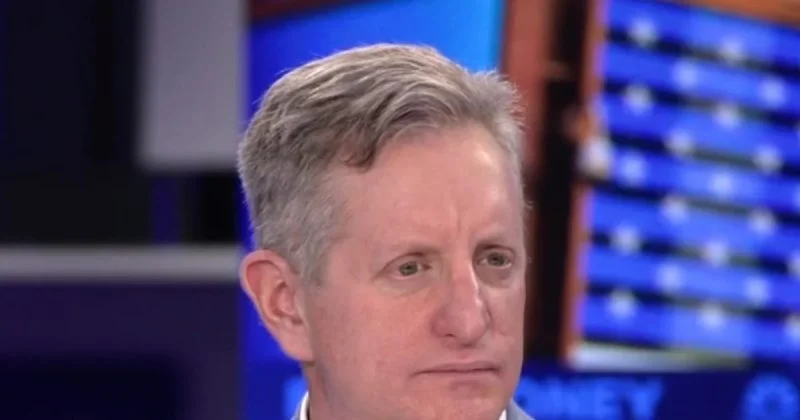
Steve Eisman, the investor immortalized in “The Big Short” for his prescient bet against subprime mortgages, has a new concern. This time it is not collateralized debt obligations, but the foundation of Big Tech’s AI revenue engine.
In an appearance on CNBC’s “Fast Money,” Eisman said OpenAI and Anthropic together account for roughly 70% of AI-related revenue flowing to major hyperscalers, including Microsoft, Amazon, Alphabet, and Oracle. In his view, that concentration is the “Achilles’ heel” of the AI trade.
Two companies, one large dependency
Eisman said that AI-driven revenue represents about 25% to 35% of these companies’ total cloud revenue. Cloud has been the growth story supporting premium valuations across the sector for years.
The dependency is concrete rather than theoretical. Microsoft has anchored its AI strategy around its partnership with OpenAI, integrating the lab’s models across its productivity software and Azure cloud platform. Amazon and Google have each made multibillion-dollar investments in Anthropic, tying parts of their AI offerings to the startup’s technology. Oracle has positioned its cloud infrastructure as a cost-effective home for AI workloads, but its growth in the segment still depends on demand driven by the same concentration of AI labs.
Microsoft, Amazon, Google, and Oracle have collectively invested hundreds of billions of dollars in AI infrastructure. The return on that spending depends heavily on the continued expansion and spending of just two private AI labs.
The China variable
Eisman also pointed to cheaper Chinese open-weight AI models as a possible source of a broader price war in the industry.
Open-weight models make their parameters publicly available for others to build on, and they have been gaining traction as alternatives to the proprietary systems developed by OpenAI and Anthropic. Chinese labs, in particular, have been aggressive in releasing competitive models at significantly lower prices.
If those models reach a level of quality that leads enterprise customers to switch, or even use them to negotiate lower prices, margins could come under pressure. The hyperscalers have justified their large capital expenditures on the assumption that AI workloads will generate strong returns over time, and a price war would challenge that assumption.
A continuing pattern of skepticism
Eisman’s remarks were not his first expression of concern about the sector. Earlier in July 2026, he warned about possible diminishing returns in AI and said he had personally reduced his exposure to AI-related investments.
His comments come amid a broader debate that has intensified throughout 2026, as technology companies continue to announce larger AI infrastructure budgets and capital expenditures rise quarter after quarter. For the sector, the central questions are how quickly enterprise AI adoption can translate into recurring revenue at scale, and whether the revenue base can broaden beyond the handful of companies that currently drive it.

