Moroccan Father Given Second Chance at Life Through Rare Dual Living-Donor Liver Transplant in Korea
Key Takeaways
- •Asan Medical Center has completed more than 9,000 liver transplants since 1992 and averages approximately 400 living-donor procedures annually, far exceeding the roughly 30 performed each year at leading Western institutions.
- •The 17-hour dual living-donor surgery required three operating rooms and roughly 30 medical professionals, with one son donating his left liver lobe and the other his right lobe.
- •Omar El Kettani's blood type was incompatible with his father's, a challenge Asan has addressed through desensitization protocols in over 1,100 blood-type-incompatible transplants.
- •A single donor could not safely provide enough liver tissue for Mohamed, who weighed nearly 135 kilograms, making the dual living-donor approach medically necessary.
- •Asan Medical Center maintains a flawless donor safety record with zero deaths following living liver donations, a statistic that helped convince the reluctant father to proceed.
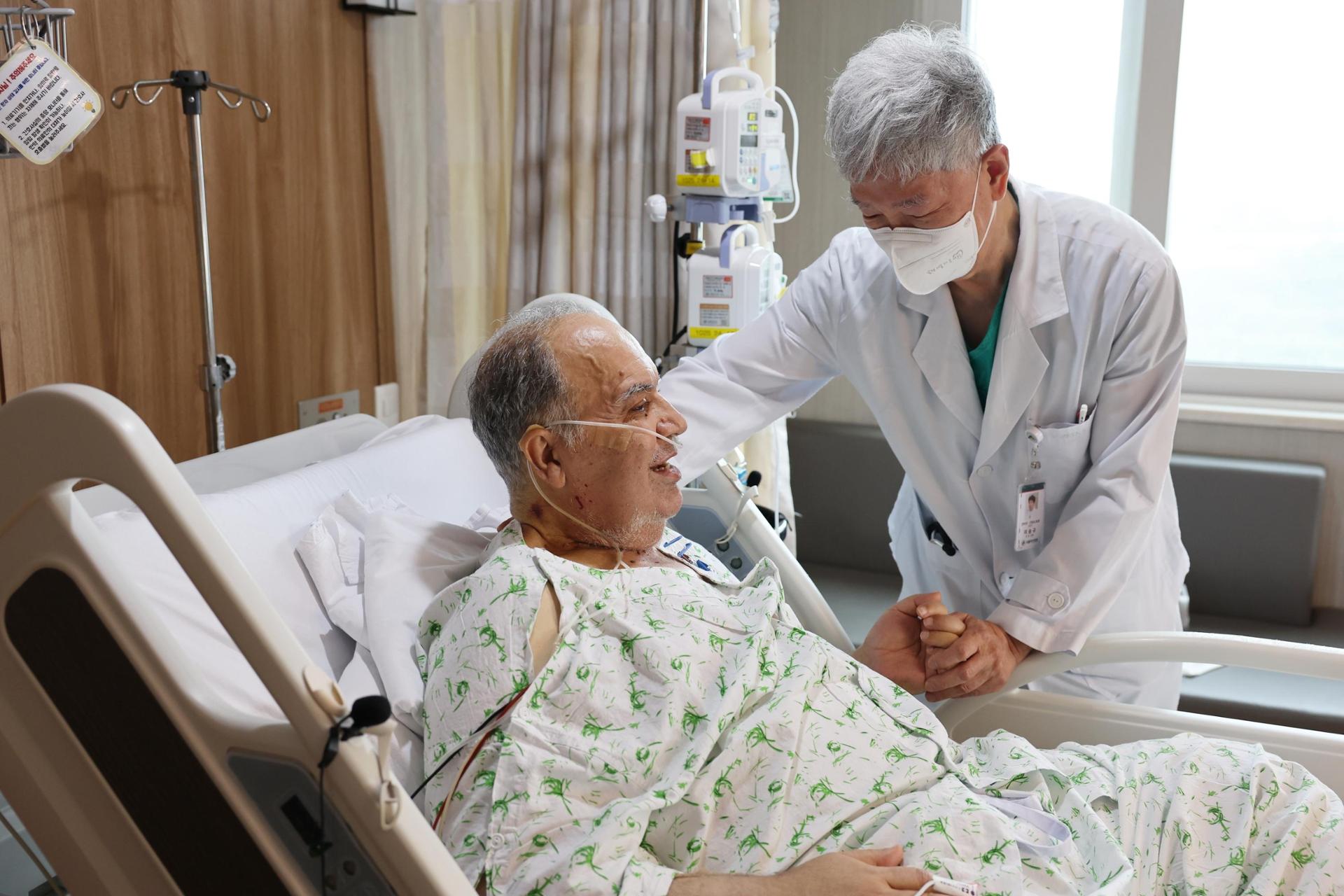
Mohamed El Kettani was running out of options. The 64-year-old Moroccan industrialist suffered from severe liver failure and an aggressive form of liver cancer that had invaded his portal vein. Tumor invasion of the portal vein is widely regarded by Western transplant protocols as a contraindication for liver transplantation, which contributed to top medical centers across Europe turning him away. French doctors concluded that a deceased-donor transplant was no longer viable and removed him from the waiting list.
Facing a terminal prognosis, his sons refused to accept the outcome. Omar El Kettani, a 30-year-old cardiac surgeon practicing in France, collaborated with his older brother Hicham, 33, to scour medical literature from leading transplant institutes worldwide. Their research pointed to an unexpected destination: Asan Medical Center in Seoul.
"Father, you have to come to Korea with us," Omar recalled telling his reluctant parent. "It is the only way you can survive."
In May, after a 10,000-kilometer journey from Morocco, three operating rooms were activated simultaneously at the Seoul hospital. Over a grueling 17-hour procedure, a surgical team extracted portions of both sons' livers and transplanted them into their father. The complex dual living-donor operation gave El Kettani a second chance at life.
South Korea has established itself as a global leader in organ transplantation, particularly in living-donor procedures. While Western medical systems depend heavily on organs from deceased donors, persistent shortages have driven Asian medical centers to develop advanced living-donor techniques. The gap has helped position Korean hospitals as destinations for patients facing cases that other systems consider inoperable.
Since performing its first liver transplant in 1992, Asan Medical Center has completed more than 9,000 procedures, averaging approximately 400 living-donor transplants each year. By comparison, leading Western institutions such as the Cleveland Clinic or major French centers perform about 30 such surgeries annually.
"The fact that this family traveled all the way from Morocco to Korea reflects the global recognition of our expertise," said Dr. Lee Sung-Gyu, an endowed-chair professor at Asan who pioneered dual living-donor liver transplants in 2000. Since then, the center has conducted 664 such two-to-one transplants — the highest number worldwide.
Mohamed's medical history was remarkably complex. Diagnosed with hepatitis C two decades ago while managing a major oil refining business in Morocco, years of chronic inflammation had left 85 percent of his liver scarred. Although antiviral therapies cured the infection, his liver function continued to deteriorate.
By late 2025, Mohamed, who holds dual French and Moroccan citizenship, sought treatment in France, where physicians detected early-stage liver cancer. Initial targeted therapies failed to arrest the disease. By February, a new 6-centimeter tumor had rapidly spread into his liver's primary blood supply.
Living donation represented his only remaining option. However, weighing nearly 135 kilograms, he required more liver tissue than a single donor could safely provide. Two donors would be necessary.
Early obstacles nearly derailed the plan. Mohamed worried about his sons' safety. His sons pointed out that Asan maintained a flawless safety record, with zero donor deaths following living liver donations. Additionally, Omar's blood type was incompatible with his father's — a challenge that Asan routinely overcomes through specialized desensitization protocols, having performed more than 1,100 blood-type-incompatible transplants.
On the morning of May 22, nearly 30 medical professionals assembled across three surgical suites. Surgeons removed Hicham's left liver lobe through a small incision measuring under 10 centimeters, while Omar's right liver lobe was extracted using minimally invasive surgery to reduce scarring.
In the primary operating suite, Lee and his colleague Moon Deok-bog meticulously removed Mohamed's diseased liver using a "no-touch" cancer technique designed to prevent malignant cells from spreading into the bloodstream. To accommodate both donated lobes within a constrained abdominal cavity, surgeons carefully repositioned the patient's right kidney and adrenal gland before securing the grafts in place.
By 2 a.m. the following day, the marathon procedure was finished.
All three men have since recovered without complications. The sons have resumed their normal activities, and Mohamed is preparing for discharge.
"I believe that medicine without compassion is nothing more than a business," the father said before leaving the hospital. "The team in Korea cared for me with genuine warmth and never gave up on saving my life."
For Omar, the experience made a profound professional impact.
"As a surgeon practicing in France, I now hope to have the opportunity to train at Asan Medical Center someday," he said. "Above all, I am just grateful that I was able to give my father his health back."
This article was published with the assistance of generative AI and edited by The Korea Times.

