From Hormuz to the Black Sea: Maritime Battlefields Shape a New World Order
Key Takeaways
- •Approximately 80% of global merchandise trade by volume is transported by sea, with roughly one-fifth of the world's daily oil consumption transiting the Strait of Hormuz alone.
- •Houthi attacks near the Bab el-Mandeb Strait have forced major carriers to reroute vessels around Africa's Cape of Good Hope, adding roughly two weeks to Asia-Europe transit times.
- •Ukraine's drone strikes on Russian vessels in the Black Sea have been described by analysts as the first maritime offensive conducted almost entirely with drones and missiles.
- •Russia's suspension of shipping through the Kerch Strait has effectively closed a vital maritime corridor used for transporting oil, grain, coal, and steel.
- •Traffic through the Strait of Hormuz is currently running at approximately half its normal flow as many ship owners avoid the waterway despite war risk insurance remaining available.
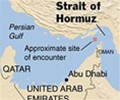
The Strait of Hormuz is rattling global trade, but it is far from the only vital maritime corridor that has become a frontline in a new era of drone and missile warfare aimed at economic lifelines.
From the Strait of Hormuz and the Red Sea to the Black Sea, attacks on commercial vessels have disrupted trade, pushed up insurance and freight costs, and compelled shipping companies to rethink routes once regarded as dependable. In the Red Sea, Houthi attacks near the Bab el-Mandeb Strait have already forced many major carriers to reroute vessels around Africa's Cape of Good Hope, adding roughly two weeks to Asia–Europe transit times and inflating fuel and charter costs.
The stakes are considerable: approximately 80% of global merchandise trade by volume moves by sea. Roughly one-fifth of the world's daily oil consumption transits the Strait of Hormuz alone, making it a singular pressure point for energy markets. Disrupting even a single major route can delay cargo, tighten supplies, and drive up prices for energy, food, and consumer goods thousands of miles away.
How Drones Are Changing Maritime Warfare
David Roche, president and global strategist at Quantum Strategy, described the situation in stark terms in a July report.
"We have a new chokepoint and a new war," Roche wrote, referring to the Sea of Azov, where Ukrainian drones have been striking Russian tankers, and the broader Black Sea.
Roche called this fighting the first maritime offensive conducted almost entirely with drones, supplemented by missiles. Such weapons give smaller military forces a cheaper way to threaten ships, ports, and other infrastructure whose disruption carries enormous economic costs. The dynamic mirrors what has played out in the Red Sea, where Iran-backed Houthi militants have used relatively low-cost drones and missiles to threaten some of the world's busiest shipping lanes.
Quantum Strategy estimates that roughly 25% of Russia's grain exports and 25% to 30% of its Black Sea oil exports could be disrupted. Russia accounts for more than a fifth of internationally traded wheat, amplifying the potential fallout for global food prices.
Yevgeniya Gaber, a senior fellow at the Atlantic Council, said Russia's decision earlier this month to suspend shipping through the Kerch Strait — which connects the Sea of Azov and the Black Sea — has effectively shut down a vital maritime corridor.
"Maritime transport through the Sea of Azov had become an increasingly important alternative to the land corridor connecting Russia with occupied Crimea," Gaber told CNBC by email.
"The economic implications are equally important," Gaber added, noting that the Sea of Azov has been used not only to transport sanctioned crude oil and petroleum products but also grain, coal, and steel.
Gaber said Ukraine's efforts to exploit Russia's maritime and economic vulnerabilities amount to "one of the most significant blows to military and commercial fleets" since World War II. Ukraine says it has degraded roughly one-third of Russia's Black Sea fleet since 2022.
Why the Panama Canal Could Be the Next Flashpoint
In the Strait of Hormuz, commercial operators are grappling with attacks and rapidly shifting signals over whether passage is safe. Governments may declare a waterway open, but shipowners make their own decisions based on the likelihood of a vessel being hit and crew members being injured or killed.
Daejin Lee, global head of research at Fertistream Freight, cautioned against viewing these disruptions in isolation.
"We often treat the Strait of Hormuz, the Black Sea, or Bab el-Mandeb as isolated events. They are not," Lee told CNBC via email. "These waterways are increasingly becoming battlegrounds within the broader transition toward a new world order."
The next threats are already materializing.
"If you're talking about the next flashpoint, I wouldn't look at the Strait of Hormuz," said Lars Jensen, CEO of Vespucci Maritime. "I would look at the Panama Canal."
The strategic passage, which has served as a shortcut for ships transiting between the Pacific and the North Atlantic for over a century, is already mired in a geopolitical dispute involving the U.S., China, and Panama over influence. The canal handles roughly 5% of global maritime trade and is a critical conduit for U.S. grain and containerized exports from Asia to the U.S. East Coast. Potential weather-related restrictions toward the end of this year and early next year could compound those tensions by reducing capacity, Jensen added.
Impact on Shipping "Bigger Than Most Realize"
For shipping companies, the challenge lies in preparing for a world where the next chokepoint can emerge before the previous one has reopened.
Kevin O'Marah, co-founder and chief research officer at supply chain intelligence firm Zero100, told CNBC that the Strait of Hormuz became the most critical theater of the U.S.-Iran war after Iran discovered that merely threatening traffic there was enough to halt it.
While none of Zero100's clients had come under attack in the strait, O'Marah said some had chosen to avoid that risk by actively managing inventories and rerouting shipments.
"It has added cost and delay for some of our clients in the energy, food, and electronics industries," he said.
"As of now, traffic through the Strait looks to be running at about half the normal flow. The recent breakdown in the ceasefire has definitely hurt the situation, but no one is surprised. Supply chain leaders, and in particular logistics specialists like Martin Brower and Maersk, are aware and have well-established protocols for dealing with the risk."
Mitigation strategies, O'Marah said, include rerouting across the Arabian Peninsula via pipeline for oil, overland into Turkey for certain commodities, and avoiding the area entirely wherever possible.
The war in the Middle East "does not look like an escalating conflict to most supply chain leaders, but it does look likely to be a long-term problem in terms of freedom of movement through the Strait of Hormuz," he added.
"We are planning on a steady state of transportation uncertainty and costs associated with reroutings, inventory buffering, and shipping surcharges."
Alain Bejjani, a Dubai-based investor, business executive, and judge on "Shark Tank Lebanon," told CNBC that shipping lanes would remain at the center of the war "because they are the conflict."
"The war has migrated from territory to logistics. A strait does not close when missiles fly; it closes when insurers stop writing cover," Bejjani said. "That makes disruption cheap to sustain and hard to price, which is exactly why it persists."
A spokesperson for insurance broker Gallagher told CNBC that war risk insurance — an add-on covering financial losses caused by war, terrorism, and civil unrest — remains available. However, they noted that "a handful but not many" ship owners or charterers are opting to transit the Strait of Hormuz.
"Given the challenging maritime security environment, rates have increased from levels that owners and charterers will be used to. The cost will vary depending on the vessel type, cargo, and routing; however, marine insurers are continuing to provide cover and helping to ensure marine commerce can continue with adequate coverage in place," the spokesperson added.
How Companies Are Responding
Bejjani told CNBC that the structural consequence of maritime warfare "is bigger than most people realize."
"The Gulf is bracketed by two straits, not one, and the region is now designing around both Hormuz and Bab el-Mandeb to the maximum extent possible," he said. "That is new. Past crises produced hedges. This one is producing an architecture: overland corridors, bypass pipelines, forward storage near the markets that matter most. It will cost heavily, take a decade, and ripple for decades more. I expect other strait-dependent regions to follow, though few with the same urgency or resources."
He warned that although shipping will retain its dominance in terms of volume, it is likely to "lose its monopoly on trust" in the business world.
"Other modes of transport will be substantially enhanced where certainty matters most, and redundancy becomes a permanent, priced feature of logistics," Bejjani said. "The strait will reopen. The assumption that it stays open for free will not return."
Source: CNBC

