Factional Infighting Puts DPK Chairman Kim Min-seok in Leadership Crisis
Key Takeaways
- •Three Supreme Council members loyal to Jung Chung-rae boycotted a party meeting in protest against Kim Min-seok's order for the ethics committee to investigate Rep. Choi Min-hee.
- •The investigation followed a recording in which Choi claimed President Lee Jae Myung opposed Yoon Suk Yeol's impeachment, a claim she later said may have been confused with Han Duck-soo's impeachment.
- •Kim apologized on Nov. 3 after acknowledging a lack of evidence for his accusation that Jung's supporters formed a secret alliance with the religious sect Shincheonji, and Jung subsequently rejected Kim's offer of talks.
- •The party remains divided over whether to immediately impeach Chief Justice Cho Hee-dae or first conduct a parliamentary investigation, with the Jung faction favoring impeachment and critics accusing Kim of indecision.
- •The Lee administration plans to raise the comprehensive real estate tax threshold for owner-occupying single-home owners from 1.2 billion won to 1.4 billion won, and while some greater Seoul lawmakers want relief extended to non-occupant owners, Kim backs the government's proposal.
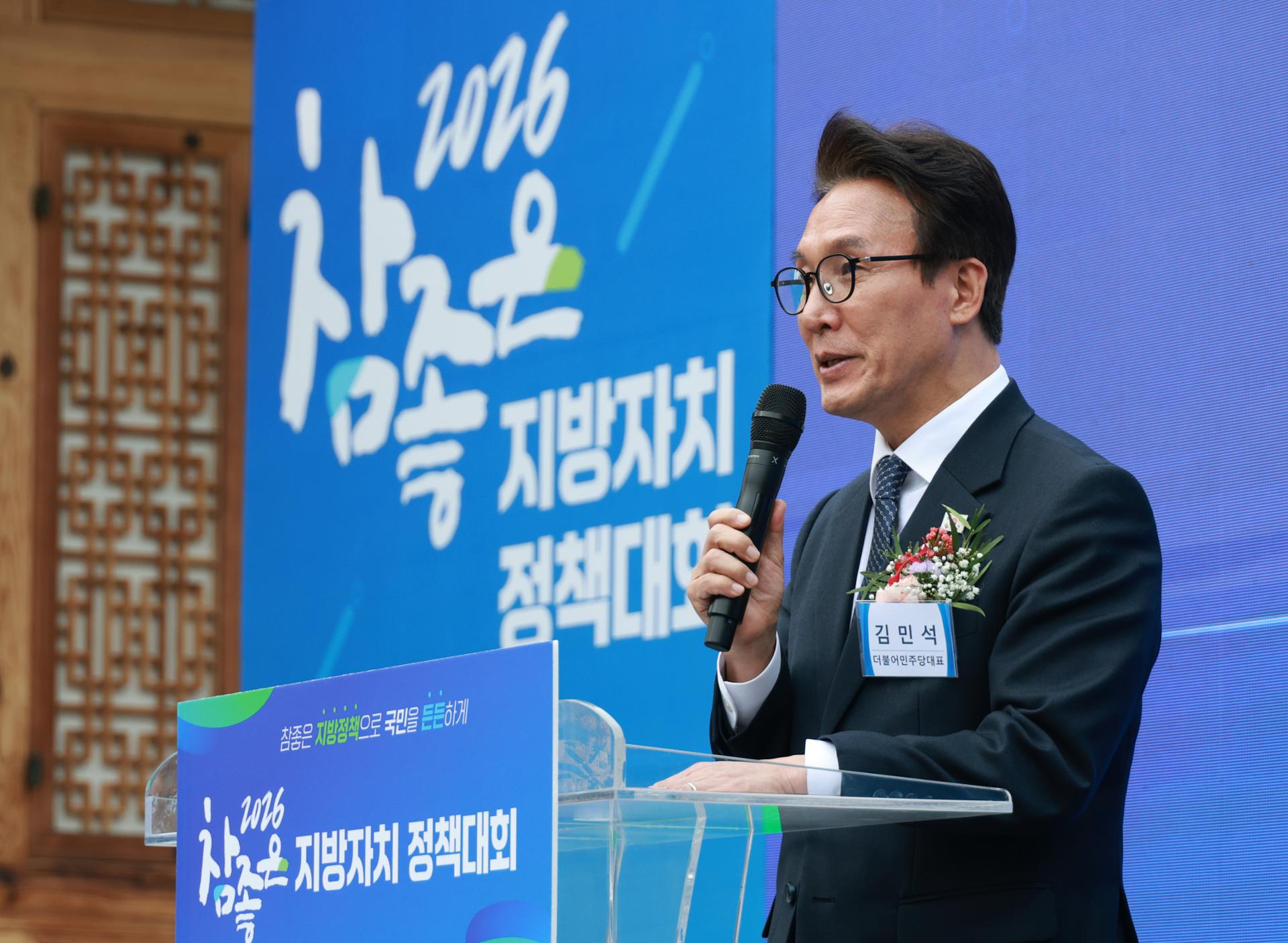
SEOUL — Ruling Democratic Party of Korea (DPK) Chairman Kim Min-seok is facing a leadership crisis barely three months into his term, as factional infighting between his supporters and loyalists to former party leader Jung Chung-rae escalates, with the rival camp boycotting party meetings and openly criticizing his leadership.
The confrontation adds to a series of disputes that have dogged Kim's tenure, ranging from his claim of a "secret alliance" between a nonmainstream religious sect and the former leader, to his order to investigate one of Jung's loyalists, and disagreements over pending issues including the chief justice's impeachment and property tax reform.
For a ruling party, the split overlays factional conflict on unresolved choices: whether to move directly to impeach Chief Justice Cho Hee-dae, and whether the government's planned tax relief should reach more single-home owners.
Loyalists boycott party meeting
On Friday, Reps. Choi Min-hee, Han Min-soo and Lee Seong-yun, all Supreme Council members and considered loyalists to Jung, boycotted a party meeting in protest against Kim's order the previous day for the party's ethics committee to investigate Choi. They instead held a press conference to call for the party's reform, criticizing Kim's leadership.
Kim and Jung competed in a bitterly contested party leadership race in August.
Kim ordered the investigation, a primary step toward disciplinary action, after the release of a recording in which Choi told party members last month that President Lee Jae Myung had opposed former President Yoon Suk Yeol's impeachment. Choi's claim contradicted Lee's public support for removing Yoon over his botched martial law declaration in December 2024, prompting Cheong Wa Dae to dismiss Choi's account as groundless.
Choi later said she may have confused the issue with the impeachment of Yoon's former Prime Minister Han Duck-soo. Her allies then launched a counterattack against Kim, with Han saying, "Kim ordered the investigation to a colleague, as if he had been waiting for her mistake, without first seeking an explanation ... It is Kim who should be under the ethics committee's investigation."
But Rep. Park Sun-won, another Supreme Council member and a supporter of Kim, urged Choi to apologize, saying, "People should apologize when they have to. If not, it is a divisive act."
Whether the ethics committee pursues the investigation — and whether Choi responds to Park's apology call — now stands as the feud's most immediate flashpoint between the camps.
Shincheonji feud deepens rift
The boycott has further strained relations between the rival camps after Kim accused Jung's supporters of forming a secret alliance with the religious sect Shincheonji. Kim apologized on Nov. 3 after acknowledging a lack of evidence, but Jung's supporters have continued demanding political accountability.
Jung rejected Kim's offer of talks on Thursday, arguing that the damage to party members and supporters could not be resolved through a private meeting between the two politicians.
His refusal leaves the two camps without an agreed channel for de-escalation.
Chief justice impeachment splits party
Kim also faces criticism for failing to set a clear course on impeaching Chief Justice Cho Hee-dae, whom ruling bloc lawmakers accuse of political bias over the Supreme Court's decision to overturn the president's acquittal in an election law case ahead of the 2025 presidential election.
The DPK remains divided over whether to pursue immediate impeachment or first conduct a parliamentary investigation, with the Jung faction seeking impeachment.
Lee Seong-yun accused Kim of wavering between the two options without following through on either. "Kim was indecisive over whether to impeach Cho or not, but suddenly came up with the parliamentary investigation option. But he is again putting off the decision on whether to pursue the option," he said.
Property tax reform exposes friction
Property tax reform has exposed another point of friction within the party. The Lee administration plans to raise the threshold for the comprehensive real estate tax, a punitive levy aimed at curbing housing speculation amid a housing shortage, from 1.2 billion won to 1.4 billion won ($1.04 million) for single-home owners who live in their property.
Some DPK lawmakers representing greater Seoul want the same tax relief extended to those who live elsewhere for work or other reasons, while Kim backs the government's proposal.
The gap remains unresolved, leaving Kim aligned with the government on a question that divides his own party.
Source: The Korea Times — Factional infighting puts DPK chief in leadership crisis

