Wood Mackenzie: Planned Domestic Inverter Manufacturing Could Satisfy U.S. Solar Demand Amid FCC Ban on Foreign Products
Key Takeaways
- •Wood Mackenzie projects that more than 100 GWAC of newly announced domestic solar inverter manufacturing capacity will begin production before 2028 if all planned expansions are completed.
- •The FCC banned new foreign inverter imports based on national security concerns related to cybersecurity vulnerabilities and reliance on overseas suppliers.
- •Chinese-made inverters held a 50% share of the U.S. inverter market in both 2024 and 2025, while over 90% of inverters deployed in U.S. commercial and large-scale solar projects were imported from China and other East Asian sources.
- •Domestic inverters are anticipated to carry higher prices than foreign imports in the near term, but cost premiums may stabilize as the Section 45X manufacturing tax credit phases out and domestic competition intensifies.
- •The FCC's current ban definition focuses on wireless communications, leaving uncertainty about whether wired utility-scale central inverters and firmware updates for already-deployed foreign inverters fall within its scope.
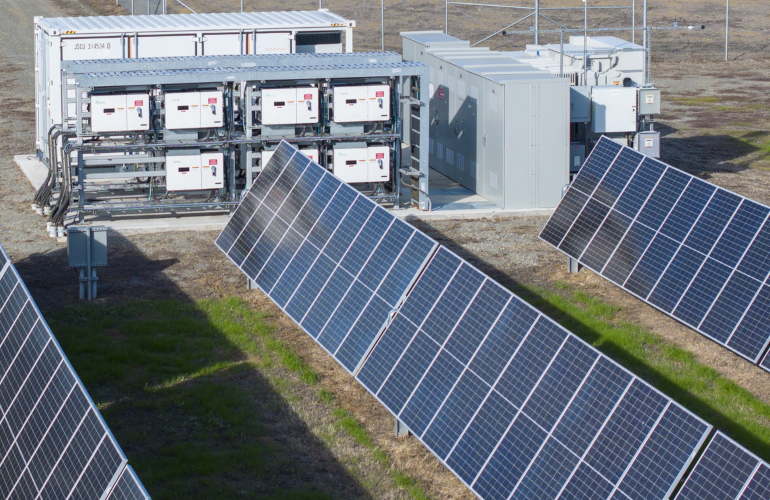
Domestic manufacturers could meet U.S. solar inverter demand if all planned manufacturing expansions are completed, according to a market analysis by Wood Mackenzie. The assessment follows the FCC's ban on new foreign inverter products, which cited national security concerns related to cybersecurity and economic dependence on overseas suppliers.
Inverters, which convert the direct current generated by solar panels into grid-compatible alternating current, are critical components across residential, commercial, and utility-scale solar installations. The ban marks one of the most aggressive U.S. supply chain interventions targeting a specific solar hardware category.
More than 100 GWAC of newly announced solar inverter manufacturing capacity is slated to begin production before 2028.
Joe Shangraw, research analyst at Wood Mackenzie, highlighted the ambiguity surrounding the ban's scope. "The FCC's intent here is clear. The U.S. government determined that the U.S.'s reliance on foreign inverters poses a national security risk, citing both cybersecurity and economic concerns. But the ban's current definition of 'power inverters', focused on wireless communications, leaves real questions about how broadly it will apply, particularly for utility-scale central inverters that operate over wired connections," Shangraw said.
"Future guidance from the FCC will be crucial to understand the full extent of this ban. Leading manufacturers are notifying clients that they believe their products will not fall under the scope of this ban, while project owners are concerned that their existing inverters could be blocked from receiving critical firmware updates," Shangraw added.
According to Wood Mackenzie's findings, more than 90% of the 200 GWAC of PV inverters deployed across U.S. commercial and large-scale solar projects were imported from China and other East Asian sources. Chinese-made inverters held a 50% share of the U.S. inverter market in both 2024 and 2025. The FCC's action aligns with a broader pattern of U.S. restrictions on Chinese-connected technology across telecommunications, grid equipment, and now solar hardware.
In the near term, the firm anticipates that domestically produced inverters will carry higher price tags than foreign imports, driven by elevated labor and manufacturing costs. However, as the Section 45X advanced manufacturing production tax credit—established under the Inflation Reduction Act—phases out and domestic inverter competition intensifies, those cost premiums may stabilize.
"The price premium for domestic inverters is a real consideration for project owners, but it provides supply chain certainty from not only this FCC ban, but from any future policy that could further restrict imports," Shangraw said. "If this proves to be a major market shift, the US is better positioned now to meet new domestic demand than ever. We forecast the domestic PV/PCS inverter manufacturing market will be able to deliver more than 100 GW ac of capacity by the end of 2027."
Industry stakeholders are now watching for the FCC's forthcoming definitional guidance, which will determine whether the ban covers only wirelessly connected inverters or extends to wired utility-scale systems, and whether firmware updates for already-deployed foreign inverters will be permitted.
The original article was published by Solar Power World, based on a news release from Wood Mackenzie. Additional background on the FCC's ban is available in Solar Power World's prior coverage.

