Steve Kamin: Dollar's Yield-Curve Sensitivity Flipped Negative After 'Liberation Day' Tariffs
Key Takeaways
- •The dollar's sensitivity to U.S. versus foreign yield-curve differentials was mainly positive until early in Trump's second term, with higher relative U.S. 10-year yields typically boosting the currency.
- •Immediately after the April 2, 2025 'Liberation Day' announcement of reciprocal tariffs, the dollar's yield sensitivity flipped negative and began fluctuating widely around a lower baseline.
- •Treasury yields have continued climbing without the dollar strengthening alongside, breaking from the historical pattern analysts use to read yield moves as signals about the interest-rate outlook.
- •Within the real interest differential framework, Kamin argues that rising yields paired with a non-appreciating dollar point to heightened risk rather than a higher path for short-horizon interest rates.
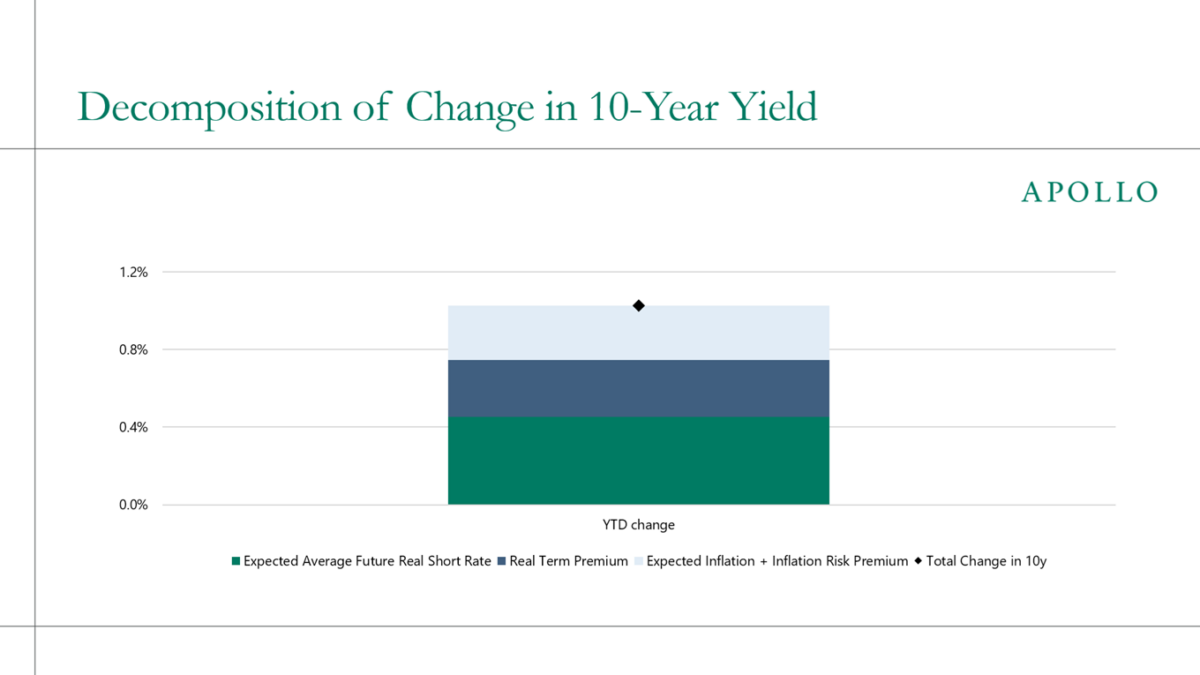
- •Torsten Slok of Apollo Global Management estimates the ten-year yield has risen about one percentage point this year, split roughly evenly between higher real short rates and real risk premium, inflation expectations, and inflation risk.
Economist Steve Kamin, a former director of the Federal Reserve Board's international finance division whose commentary is published by the American Enterprise Institute (AEI), reports a marked change in how the dollar has responded to U.S. yield movements since President Donald Trump's second term began — a shift that cuts into one of the most established relationships in currency markets.
Until early in Trump's second term, the sensitivity of the dollar to the difference between the slope of the U.S. yield curve and foreign yield curves was mainly positive, as expected: increases in U.S. 10-year yields relative to those abroad boosted the dollar. That is the pattern standard currency analysis anticipates, since higher yields relative to peers typically draw capital toward U.S. assets and support the currency.
But immediately after "Liberation Day" on April 2, 2025, when Trump shocked the world with his announcement of "reciprocal" tariffs, that sensitivity turned negative and started fluctuating widely around a lower baseline, Kamin writes. The change in the dollar's sensitivity is even more apparent when its average value over the pre-"Liberation Day" period is compared with its average during the post-"Liberation Day" period. In practical terms, Treasury yields have kept climbing without the dollar strengthening alongside — a departure from the historical script analysts use when reading yield moves as signals about the interest-rate outlook.
The full commentary, "Treasury yields keep climbing. The dollar might tell us why," is published by AEI, and an excerpt appears on Econbrowser.
Kamin frames the implication this way: if the real interest differential model — the standard framework linking currency values to inflation-adjusted rate gaps across countries — is the proper lens for thinking about a big driver of dollar movements, then rising yields and non-appreciation suggest heightened risk, rather than a higher path for short-horizon interest rates.
In support of that reading, Kamin cites figures reported by Torsten Slok, chief economist at Apollo Global Management: the change in the ten-year yield since the beginning of the year is about one percentage point, with about half of that coming from higher real short rates and the other half from the real risk premium, inflation expectations and inflation risk. That split is central to interpretation: in Kamin's framework, separating how much of a yield move reflects short-rate expectations from how much reflects risk is what determines whether climbing yields should be read as a higher-rate story or a risk story.
Source: Steve Kamin via Econbrowser; yield decomposition via Torsten Slok.

