Roberto De Zerbi Tells Tottenham Players to Commit or Leave After $319M Squad Overhaul
Key Takeaways
- •De Zerbi said players who do not support Tottenham’s long-term direction should consider leaving the club.
- •Tottenham spent £237 million, or about $319 million, on summer signings including Jan Paul van Hecke, Sandro Tonali, and Mateus Fernandes.
- •De Zerbi was appointed on March 31, 2026, as Tottenham’s third manager of the 2025-26 season and received a five-year contract.
- •Tottenham’s investment reflects a broader squad reset built around De Zerbi’s tactical preferences.
- •Potential outgoing transfers could indicate whether the club is prioritizing long-term squad alignment over short-term disruption.
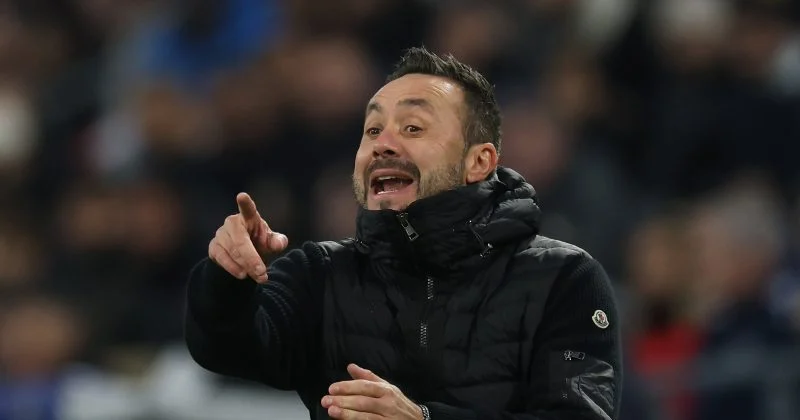
Roberto De Zerbi, appointed by Tottenham Hotspur as the club’s third manager of the 2025-26 season, has told players who are not fully committed to the project that they should leave.
Speaking during a pre-season tour stop in Australia and New Zealand, De Zerbi said there was no place in his squad for half-hearted commitment. His message was that players who do not share Tottenham’s long-term direction should consider finding another club. The timing matters because pre-season is when managers typically assess squad roles, integrate new signings, and set standards before competitive fixtures begin.
Tottenham backs De Zerbi with major spending
Tottenham’s summer transfer activity has underlined the scale of the club’s reset. The club signed Jan Paul van Hecke, Sandro Tonali, and Mateus Fernandes among other additions, reshaping the squad around De Zerbi’s tactical preferences rather than asking him to work only with an inherited roster.
The spending totaled £237 million, equivalent to about $319 million, marking a major financial commitment from the club. For ownership groups, expenditure at that level is typically tied to expectations of improved results, stronger league performance, trophies, or the commercial benefits associated with sustained relevance. It also increases the importance of clear squad planning, because high-cost recruitment can leave less room for uncertainty over which players fit the manager’s system.
Managerial change frames Tottenham’s rebuild
Tottenham’s position reflects the challenge professional sports franchises face when trying to balance short-term instability with a longer-term strategy. Before hiring De Zerbi, the club went through three managers in one season. He was appointed on March 31, 2026, and given a five-year contract.
That level of managerial turnover can be costly, disruptive, and damaging to squad morale. The length of De Zerbi’s contract indicates that Tottenham’s ownership is seeking greater continuity after a period of churn.
De Zerbi’s pre-season comments fit that context. Rather than focusing only on the immediate months ahead, he is presenting the squad as part of a longer project intended to last across the term of his contract.
Squad cohesion remains central to the project
De Zerbi’s previous work at Brighton is relevant to Tottenham’s decision to back him. At Brighton, he was credited with helping the club compete above its financial level by using tactical structure and player development rather than relying solely on spending power.
At Tottenham, he now has both a defined tactical identity and a squad rebuilt with significant investment. However, large spending does not automatically create cohesion. New signings still need time to adapt, while a squad that has experienced three managers in one season may also need stability off the pitch.
De Zerbi’s demand for full commitment appears aimed at identifying players who are not prepared to support the direction of the project. Any outgoing transfers in the coming weeks would show whether the club is willing to accept short-term squad disruption in pursuit of longer-term alignment.

