CZ to Abandon Public Crypto Wallet After Meme Coin Spam, Donating Remaining Tokens to Giggle Academy
Key Takeaways
- •CZ plans to donate the wallet's remaining tokens to Giggle Academy, his initiative offering free gamified education to underserved children, and will stop using the address once the transfer is complete.
- •A trader reportedly earned about $282,000, a 29-fold return, by buying MARSCOIN immediately after CZ's wallet burned the token, paying gas fees roughly 100 times higher than normal to speed up the transaction.
- •CZ's attempts to eliminate the unsolicited tokens by burning them only prompted further transfers and speculation, leading him to describe the wallet as almost impossible to clean out.
- •CZ stepped down as Binance CEO in November 2023 amid a roughly $4.3 billion U.S. settlement over anti-money-laundering failures and later served a four-month prison sentence, but he still holds a controlling stake in the exchange and remains highly influential.
- •The incident highlights the risks of wallet-tracking strategies, since transactions from prominent addresses may simply reflect spam removal rather than any endorsement or investment decision.
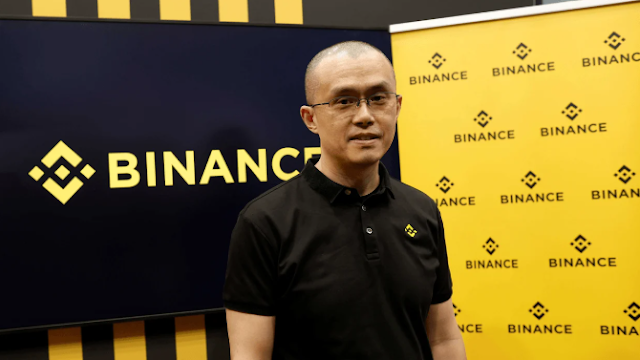
Changpeng Zhao, the former Binance chief executive widely known as CZ, says he will stop using his publicly monitored cryptocurrency wallet after unsolicited tokens repeatedly flooded the address and turned his on-chain activity into a source of speculation.
The development was highlighted by @coinbureau on X, which reported that CZ plans to abandon the wallet after describing it as “almost impossible to clean out.” The Binance founder said he intends to donate the remaining tokens to Giggle Academy before walking away from the address.
The decision illustrates an increasingly common problem for high-profile cryptocurrency wallets. Public blockchain addresses offer complete visibility into transactions, but that same transparency attracts unwanted token transfers, speculative traders, and projects seeking attention by sending tokens directly to prominent wallets.
A Public Wallet Becomes a Trading Signal
CZ’s wallet had drawn significant attention from traders monitoring its activity for potential opportunities. Because blockchain transactions are publicly visible, traders can track when tokens enter or leave a wallet and attempt to read those movements as signals of future market activity. On-chain analytics platforms and public block explorers routinely label addresses tied to well-known individuals and firms, so retail traders can follow tagged wallets using alerts and automated tools — a practice often marketed as tracking “smart money.” In CZ’s case, that attention reportedly became especially intense around unsolicited meme coins.
One trader reportedly made approximately $282,000, a 29-fold return, after observing CZ’s wallet burn a token called MARSCOIN. The trader reacted almost immediately by purchasing the token and reportedly paid gas fees roughly 100 times higher than normal to secure the transaction quickly.
The episode demonstrates how closely some traders monitor the wallets of major cryptocurrency figures, and how a seemingly ordinary blockchain transaction can trigger a speculative rush when it involves a well-known address.
Why the Wallet Attracted So Much Attention
CZ stepped down as Binance CEO in November 2023 as the exchange reached a roughly $4.3 billion settlement with U.S. authorities over anti-money-laundering compliance failures, and he later served a four-month prison sentence after pleading guilty to related federal charges. He nonetheless remains one of the most recognizable figures in the cryptocurrency industry — he still holds a controlling stake in Binance and comments on the market to millions of followers on X — and blockchain activity tied to his known addresses can attract substantial attention from traders and crypto communities.
Unlike traditional financial markets, blockchain networks let anyone observe transactions in real time. That transparency creates opportunities for on-chain analysis, but it also opens the door to traders attempting to front-run or imitate transactions associated with prominent wallets.
With meme coins, the effect can be especially dramatic. A token burn, transfer, or interaction involving a famous wallet can spread quickly across social media and trading communities, potentially causing sharp price movements. For traders watching CZ’s wallet, even a transaction involving a token he never intentionally purchased could be interpreted as a meaningful signal.
Unsolicited Meme Coins Create a Persistent Problem
The underlying issue is that blockchain wallets can receive tokens without the owner’s permission. Crypto projects sometimes send tokens to well-known wallets to generate attention. Once a token appears in the wallet of a major industry figure, the project may promote the transaction as evidence of an association with that individual, even though the recipient may have had no involvement with the project.
Unsolicited transfers of this kind are an established feature of public blockchains, where small token drops — sometimes called “dusting” — have long been used for marketing, address tracking, and phishing attempts. Wallets belonging to prominent figures tend to receive them in volume because the transfers themselves generate the attention the senders are seeking.
CZ’s experience highlights the complications this creates. He reportedly attempted to deal with the unsolicited tokens, but efforts to burn them only resulted in additional token transfers and further speculation around his wallet activity. Instead of solving the problem, each transaction attracted more attention, making the public address increasingly difficult to manage.
Token Burns Can Trigger Market Reactions
The MARSCOIN incident illustrates another unusual feature of crypto markets. When CZ’s wallet burned the token, traders interpreted the transaction as a potentially important signal, and one reportedly acted on it almost immediately, generating a substantial return.
The situation shows how blockchain activity can become a trading catalyst even when the original transaction was not intended as an endorsement or investment decision. A wallet owner may simply be trying to remove an unwanted asset while traders interpret the action as a deliberate market signal. That creates a difficult environment for high-profile crypto figures, whose on-chain actions can potentially influence markets regardless of their intentions.
Donating the Remaining Tokens
Rather than continue managing the wallet, CZ has indicated he plans to donate the remaining tokens to Giggle Academy, the education-focused initiative he launched after stepping away from Binance. He has described the project as a way to provide free, gamified education through digital platforms, with a stated focus on underserved children who lack access to traditional schooling.
Donating the assets offers a way to remove the tokens from his personal wallet while directing their value toward a broader social purpose. It also allows CZ to reduce the attention surrounding his public address. Once the remaining tokens are transferred, he plans to stop using the wallet.
The Downside of Public Blockchain Transparency
The episode highlights a broader issue facing cryptocurrency users. Blockchain transparency is one of the technology’s defining characteristics: transactions can be verified publicly without relying on a central authority, allowing researchers, investors, and analysts to track flows of digital assets across networks.
For ordinary users, that transparency can provide valuable information. For prominent individuals, however, it can become a privacy and security challenge. A publicly identified wallet can become a permanent source of information about a person’s on-chain activity, with every transfer monitored, analyzed, and discussed publicly. That makes it difficult for high-profile figures to conduct transactions without attracting attention. Wallet software commonly generates fresh addresses for new transactions partly to limit this kind of exposure, but an address that has already been publicly identified and labeled cannot easily shed its following.
Meme Coin Culture Amplifies the Problem
The rapid growth of meme coins has added another layer of complexity. Meme coins can experience extreme price movements based on social media attention, celebrity references, and perceived endorsements. A transaction from a recognized crypto wallet can therefore become a powerful marketing tool, even when the wallet owner has not requested it.
Projects can send tokens to celebrity or industry wallets and wait for traders to notice. If the transaction is later shared on social media, the token may receive a sudden wave of attention. Because creating and distributing new tokens on public networks is relatively cheap, projects have little to lose from sending them to famous wallets in bulk. This creates incentives for even more unsolicited transfers, and CZ’s experience shows how difficult it can be for a public figure to stop that cycle.
Questions for Wallet-Tracking Strategies
The incident also raises questions about the reliability of wallet-based trading strategies. Following transactions made by prominent crypto wallets can occasionally produce large profits, as the reported MARSCOIN trade demonstrates, but the strategy carries substantial risks.
A wallet may receive a token without the owner’s knowledge. A token burn may simply be an attempt to remove spam. A transfer may have no connection to a trading strategy at all. Treating every transaction as an investment signal can therefore lead to significant losses, particularly in the meme coin market, where liquidity can disappear quickly and prices can move dramatically.
A New Chapter for CZ’s On-Chain Presence
CZ’s decision to abandon his public wallet demonstrates the unusual consequences of transparency in cryptocurrency markets. The wallet became more than a storage address: it became a source of trading signals, speculation, and constant monitoring.
The reported $282,000 MARSCOIN trade illustrates the financial opportunities that can emerge from this type of on-chain surveillance, but it also shows why high-profile wallet owners may eventually decide the attention is not worth the inconvenience. By donating the remaining tokens to Giggle Academy and moving away from the address, CZ can reduce the speculation surrounding his future transactions. Because the blockchain record is public, the donation itself will be visible on-chain like every other transaction from the address, along with whether the wallet then falls dormant.
The broader lesson is that blockchain transparency can be both a powerful advantage and a significant burden. For market observers, the episode is a reminder that not every transaction involving a prominent wallet represents an endorsement or investment decision. And for crypto figures such as CZ, simply maintaining a public wallet can become a market event in itself.

