Crypto Market Turns Green Again: Three Tests That Matter Now
Key Takeaways
- •Bitcoin traded near $80,900 and found support around the $76,350 average cost basis of active investors, a level Bitfinex analysts highlighted as psychological support.
- •Comments from Fed Governor Christopher Waller reduced expectations of a September rate hike, weakening the dollar and easing Treasury yields, which supported risk assets.
- •Seven large-cap tokens from the top 15 rose more than 3% over 24 hours, with Cardano leading at +9.3% and 24-hour volume up more than 46%.
- •CoinGlass recorded roughly $207 million in short liquidations within about $282 million of total liquidations over 24 hours, alongside roughly $415 billion in open interest.
- •Open interest rose 10.4% and derivatives volume increased 10.7%, indicating fresh leveraged exposure that could accelerate losses if prices reverse.
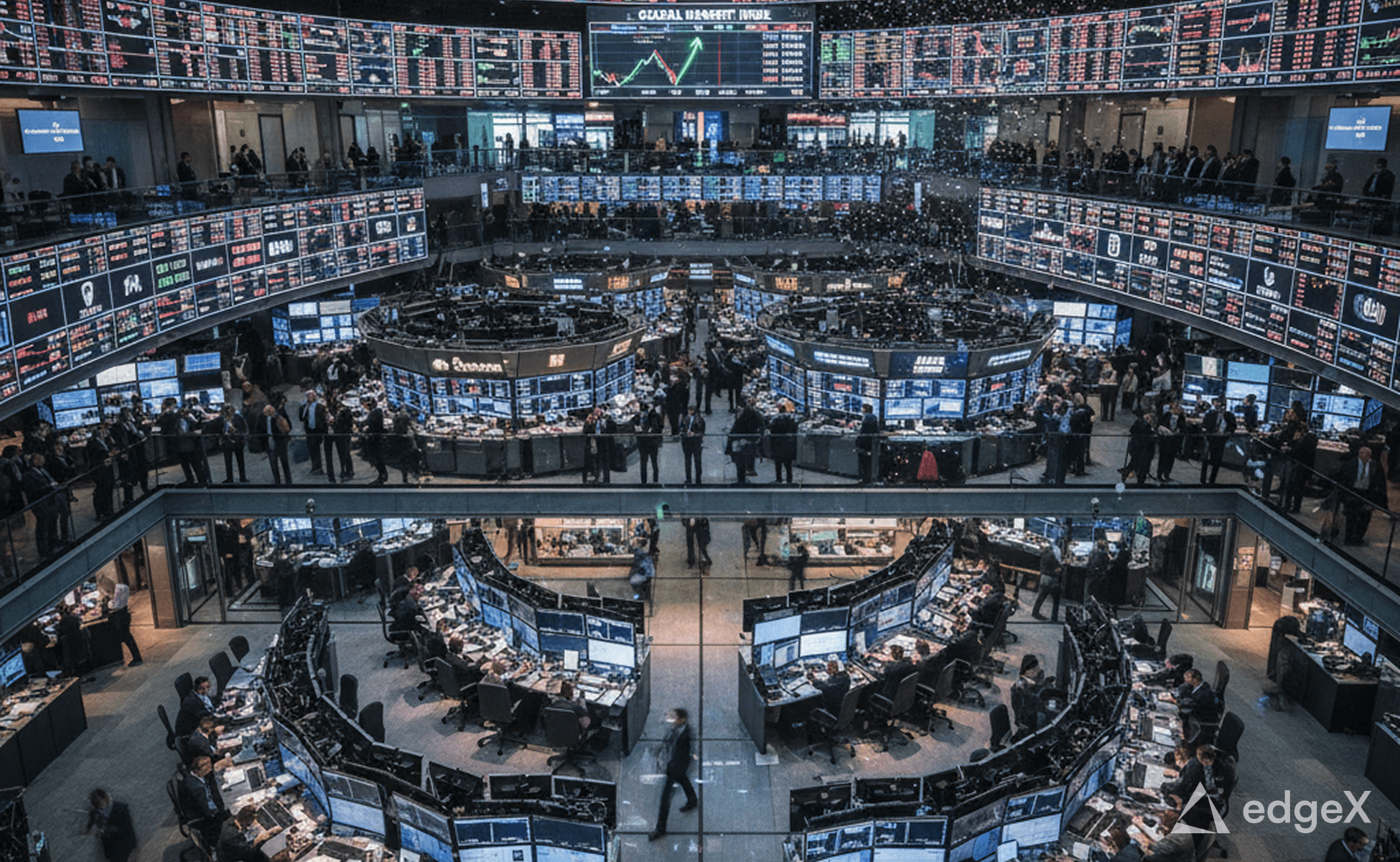
The crypto market has returned to green, and the rebound now faces three key tests: whether Bitcoin holds its August recovery floor, whether large-cap tokens continue to participate, and whether leverage supports the move rather than taking it over.
Test 1: Is Bitcoin holding the August recovery floor?
Bitcoin set the direction during August's advance. For the broader market to extend its gains, Bitcoin first needs to prove that the past week's range was consolidation rather than the start of a deeper reversal.
While trading near $80,900 at the time of writing, Bitcoin found buyers around the $76,350 average cost basis of active investors, according to Bitfinex analysts cited by CoinDesk. That level matters because it marks the point where many recent buyers shift from feeling trapped near break-even to sitting back in profit. Cost-basis levels of this kind are widely followed on-chain reference points, because they tend to coincide with clusters of investor behavior — holders in profit are historically less inclined to sell than holders underwater, which is why such zones often function as psychological support.
The macro backdrop also eased during the session. Reuters reported that comments from Federal Reserve Governor Christopher Waller reduced expectations of a September rate hike, while the dollar weakened and Treasury yields eased. Rate expectations matter for crypto because Bitcoin and other tokens have in recent years traded in line with risk assets like tech stocks, which tend to benefit when borrowing costs are expected to stay lower. That gave risk assets room to recover, even as oil prices and geopolitical risks remained elevated.
Bitcoin does not need to hit a fresh high immediately. It needs to keep attracting buyers above the zone where recent investors no longer feel forced to sell at break-even. If that floor holds, the wider market has a better chance of resuming August's move.
Test 2: Are large caps joining the move?
The second test is participation. A continuation becomes more credible when gains spread across several established crypto sectors rather than staying concentrated in Bitcoin alone.
At the time of checking, CoinMarketCap showed total crypto market capitalization up 2.8% over 24 hours, while its CMC20 index gained 3.4%. Seven large-cap tokens from the top 15 rose more than 3%:
- Cardano: +9.3%
- Zcash: +5.9%
- Dogecoin: +4.5%
- BNB: +3.9%
- Stellar: +3.5%
- Chainlink: +3.4%
- XRP: +3.3%
The list spans exchange infrastructure, payments networks, oracle services, meme assets and Layer 1 blockchains. That mix is more informative than a single Bitcoin move, because it shows traders were willing to add risk across several parts of the market.
The green board still has nuances. ADA was the strongest performer, with 24-hour volume up more than 46%, while ZEC entered the session with a separate privacy-asset narrative — gains that should not be read as pure measures of market-wide appetite. Solana, meanwhile, rose 2.6%, showing that participation improved without turning into indiscriminate buying.
Test 3: Is leverage supporting the rally or taking it over?
Short liquidations helped the move travel faster. CoinGlass's market-wide liquidation dashboard showed roughly $207 million in short liquidations over 24 hours, within about $282 million of total liquidations.
That is not a trivial amount, but it is too small on its own to explain a market-wide rise. The data also recorded roughly $415 billion in open interest and $748 billion in derivatives volume. Liquidations and open interest are different measures, yet their relative scale indicates this was not simply a giant forced-buying event.
The more important detail is what happened next: open interest rose 10.4% and derivatives volume increased 10.7%. Traders were adding fresh exposure as prices climbed. That can extend momentum, but it also makes the market more vulnerable if new demand stops arriving. Rising open interest during a rally leaves more leveraged positions that can be liquidated if prices turn, which is how moves built on leverage tend to unwind faster than they built.
What supports continuation
Bitcoin holds the $76,350 buyer-cost area, large caps keep participating, and spot demand matches the renewed appetite for risk.
What could stall the move
Open interest rises faster than real demand, Bitcoin loses support, or macro pressure returns through a stronger dollar and higher yields. The September Fed decision referenced in the session's macro reporting is the next scheduled event that could reset rate expectations.
The market has passed the first test: it is no longer green only because Bitcoin is green. The continuation case strengthens if Bitcoin keeps its buyer-cost floor, large-cap participation persists, and leverage does not rise faster than demand. If those conditions fade, the past week's range has not truly been resolved.
Prices, market-cap changes, liquidations and derivatives data are live readings that will change after publication. This article is provided for informational purposes only and does not constitute investment advice.
Source: Coindoo
