Bitcoin ETF Inflows Lead $1.1B Weekly Crypto Fund Surge Despite Subdued Trading Volume
Key Takeaways
- •U.S. crypto investment products recorded $1.1 billion in weekly inflows, marking the strongest combined intake since April.
- •Bitcoin ETFs attracted $853.5 million, with BlackRock's IBIT accounting for over 80% of the total weekly demand.
- •Ether ETF inflows reached $244.9 million, extending their positive weekly streak to five consecutive weeks.
- •Trading volumes remained near multi-year lows despite the strong inflows, suggesting participation from larger institutional players rather than retail investors.
- •Weak U.S. labor market data supported expectations for a dovish Federal Reserve stance, though most crypto inflows preceded the report.
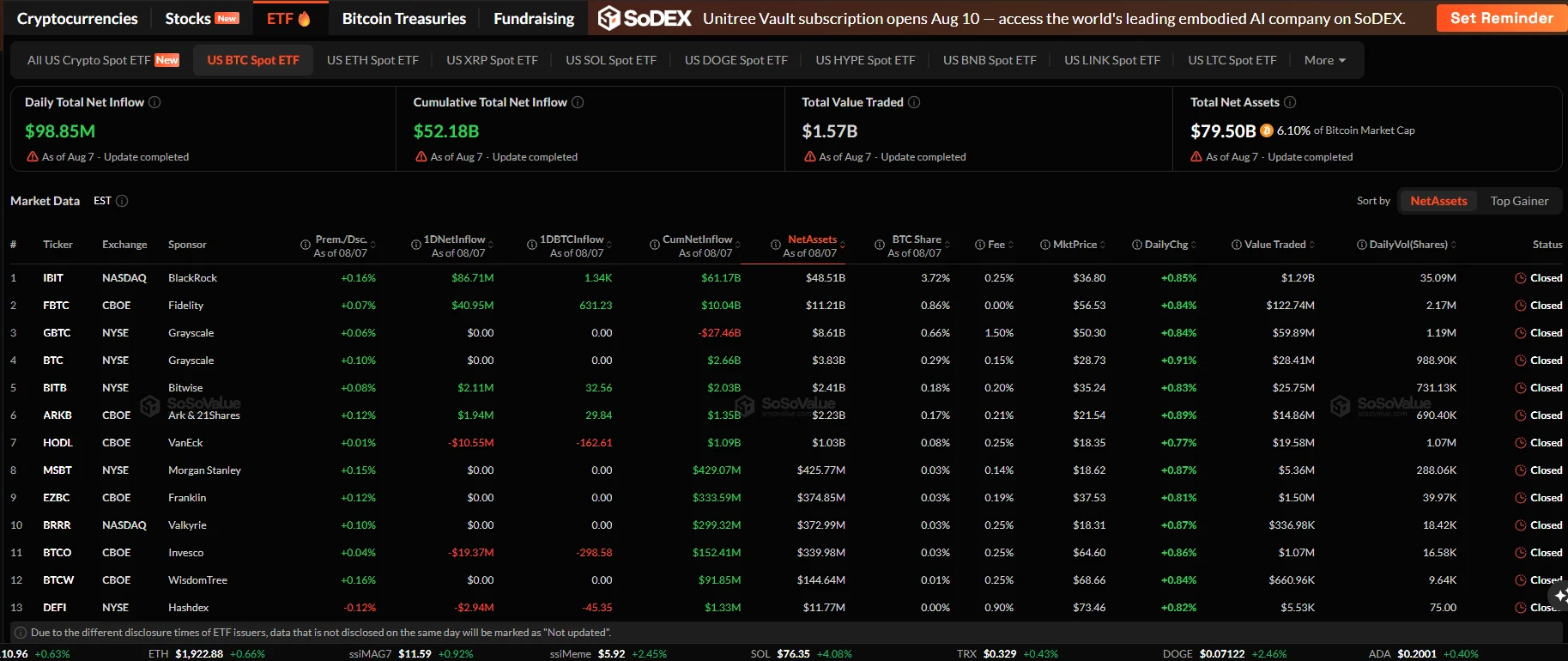
U.S. crypto investment products recorded their strongest combined weekly intake since April, led by Bitcoin ETF inflows that drove a $1.1 billion surge in total inflows. Spot Bitcoin products attracted approximately $853.5 million across five consecutive positive sessions, while Ether funds added roughly $244.9 million during the same period.
The inflows arrived even as weekly trading activity remained near multi-year lows. That divergence—robust net additions alongside shrinking turnover—suggests capital is being deployed by a smaller number of larger, strategically positioned participants rather than broad retail engagement. BlackRock's IBIT captured the lion's share of Bitcoin demand, while Fidelity's FBTC ranked second. Bitcoin traded near $65,000 after recovering from early-August weakness, though resistance remains clustered between $65,250 and $67,523.
Bitcoin ETF Inflows Accelerate as IBIT Dominates Weekly Buying
Bitcoin ETF inflows reached approximately $853.5 million last week, the strongest result since mid-April. The funds recorded net additions across all five trading sessions. Wednesday led with $244.4 million, followed by Tuesday at $211.5 million. Thursday added $128.7 million, while Friday contributed another $98.9 million.
BlackRock's IBIT absorbed $693.7 million, accounting for more than 80% of weekly Bitcoin ETF inflows. Fidelity's FBTC added $116.4 million, representing roughly 13% of the total. Together, the two largest funds captured most of the fresh capital driving Bitcoin ETF growth. IBIT has held the largest asset base among spot Bitcoin ETFs since its launch in January 2024, and its continued dominance reflects an industry-wide trend in which assets and inflows have concentrated heavily in a handful of issuer-authorized products.
Bloomberg analyst Eric Balchunas linked part of the buying activity to the Coldcard wallet exploit. Several major funds recorded inflows every day after the vulnerability surfaced. The exploit affected certain Bitcoin cold-storage wallets, with reported thefts exceeding $111 million.
However, the timing does not fully explain broader crypto fund demand. Ether ETF inflows also posted their best week since April, and Ether holders had no exposure to the Bitcoin-only hardware wallet issue, which weakens any direct link between the exploit and institutional inflows.
Bitcoin rose approximately 3% during the week, moving above $65,300 on Friday. U.S. payrolls fell by 23,000 in July, missing forecasts for an 80,000 increase. Traders reduced expectations for a September Federal Reserve rate hike following the report. The weak labor data reinforced market expectations that the Fed would maintain or ease monetary policy, a backdrop historically associated with greater appetite for risk assets. Most Bitcoin ETF inflows arrived before Friday's labor data, with Thursday and Friday recording the weakest inflow totals of the five-session streak—indicating institutional buying was already active before the macroeconomic surprise.
Ether ETF Inflows Extend Winning Run as Trading Volumes Stay Low
Ether ETF inflows reached approximately $244.9 million for the week, extending their positive streak to five weeks—the longest 2026 weekly winning run for the products. Thursday produced the strongest daily intake at $92.2 million.
The funds held $10.74 billion in net assets by Friday, with cumulative net inflows near $11.46 billion. The difference leaves the products roughly $711 million below aggregate contributed capital on a mark-to-market basis, meaning total investor capital deployed exceeds the current market value of fund holdings—a gap driven by price declines since much of that capital was contributed.
Large Ether holders have also increased their balances. Wallets holding between 10,000 and 100,000 ETH now control approximately 19.6 million ETH, up from roughly 14 million ETH in mid-2025.
Trading volume remained subdued despite the stronger fund flows. Bitcoin ETF volume totaled approximately $8.19 billion, down 9% from the prior week—the second-lowest full trading week since October 2024. Ether ETF turnover fell about 21% to roughly $2.38 billion.
Price Levels and Technical Indicators
Bitcoin traded near $65,015, repeatedly testing the $65,000 area. The daily price remained above its 20-day and 50-day simple moving averages, which sit near $64,461 and $63,363 respectively, creating an immediate support zone.
Resistance remains visible above current levels. Bitcoin trades below its 100-day average near $68,052 and its 200-day average near $70,295. Short-term holder realized price stands near $67,523, leaving many recent buyers close to breakeven.
A four-hour close above $65,257 could expose $65,600 and then $66,000. Liquidation data shows concentrated short positions near $65,500 to $65,700. Downside liquidity sits near $63,700 and $63,000 if Bitcoin loses $64,000 support.

