CNN Poll Reveals Sharp Decline in Public Confidence Over Trump's Fitness, Corruption, and Priorities
Key Takeaways
- •A CNN poll found that nearly three-quarters of Americans believe Trump is disconnected from the daily realities most people face.
- •Two-thirds of respondents said Trump prioritizes his own personal gain over the interests of the country.
- •Fifty-seven percent of those surveyed said Trump lacks the stamina and sharpness needed to serve effectively as president.
- •Trump is reportedly losing support among his MAGA base, driven in part by the Iran war and the Jeffrey Epstein case.
- •Political theorist Alan Elrod cautioned that Trump's personal decline should not be conflated with a broader decline of Trumpism as a political movement.
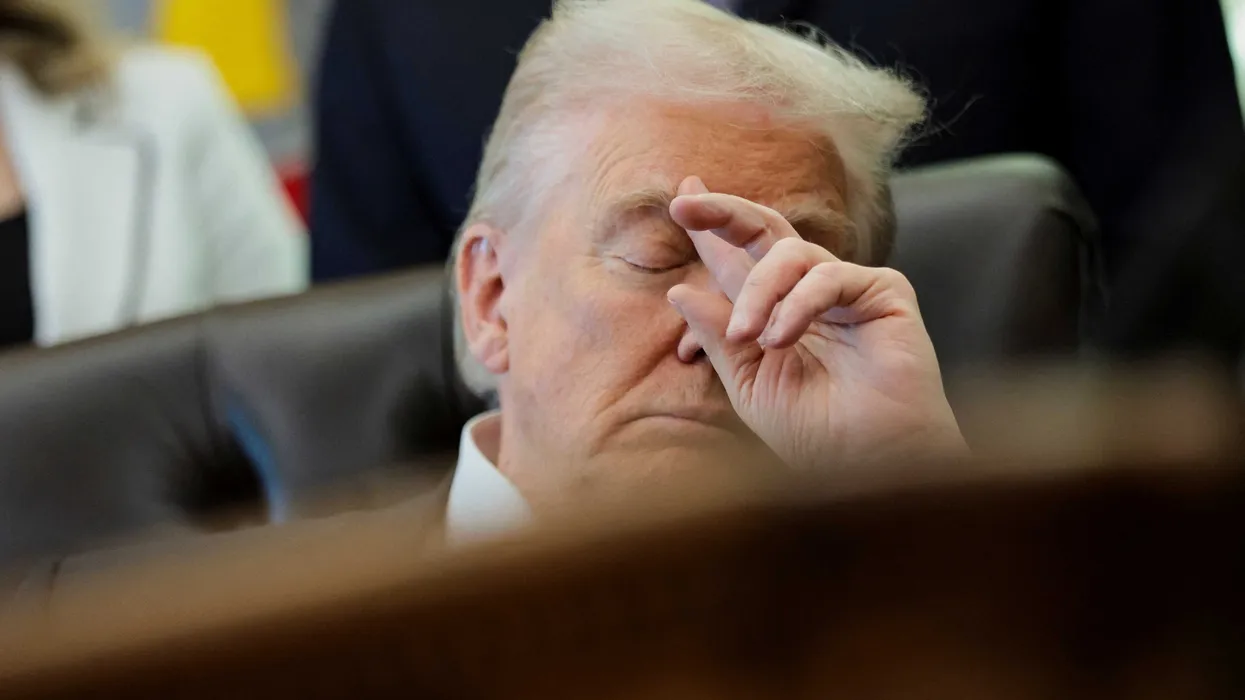
A new CNN poll released this week has documented mounting damage to the Republican Party ahead of the 2026 midterm elections that will determine control of Congress, but buried within its findings are pointed questions about President Donald Trump's personal stability, fitness, and self-dealing—issues that seldom surface in conventional polling.
Writing Thursday in The New Republic, columnist Greg Sargent noted that most surveys confine themselves to approval ratings and policy preferences rather than probing whether a president is mentally and physically equipped for office. This poll broke from that pattern, asking respondents about Trump's well-being, connectedness to ordinary Americans, sharpness, and other personal qualities.
Sargent has labeled the phenomenon "Late Stage Trumpism."
"The 'personalist' aspects of Trumpian rule—the shaping of much of the government and even the physical capital of Washington, D.C., around one man's relentless self-dealing and self-aggrandizement—have all started imploding in on themselves, in a collapsing supernova of venality and megalomania," the veteran political commentator wrote.
Successive polls have tracked Trump's deteriorating approval numbers, and he is now reportedly losing ground even among his MAGA base—driven in part by the Iran war and the Jeffrey Epstein case.
Among the most striking findings Sargent highlighted:
- Nearly three-quarters of Americans believe Trump is out of touch with what most people face day to day.
- Two-thirds of respondents said he prioritizes himself and his own personal gain over the country.
- Nearly two-thirds said he has gone too far in advancing his own business interests.
- Fifty-seven percent said Trump lacks the "stamina and sharpness to serve effectively as president."
- Sixty-one percent expressed frustration with his Washington renovation projects, which appear to consume much of his time and energy.
Sargent observed that the polling language on the renovation question was "very benign," avoiding more specific references to actions such as tearing down the East Wing of the White House and affixing his name to government properties.
Voters, Sargent argued, clearly perceive that Trump has abandoned advocacy for their interests in favor of self-enrichment—profiting either at taxpayers' expense, through international business deals, or by inflating the value of stocks in which he holds a financial interest.
"We have seen massive collapses of support for presidents—like Richard Nixon in the midst of Watergate and Lyndon Johnson as the Vietnam War overshadowed his domestic agenda," said Corey Brettschneider, a scholar of presidential power and host of the podcast The Oath and the Office, in conversation with Sargent. "What's different here is the widespread recognition of Trump's unprecedented corruption, narcissism, and putting of personal greed over the public interest."
Trump has also reportedly intervened in the routine operations of federal departments on matters as granular as disaster relief, with accusations that he has intentionally blocked aid to Democratic-leaning states.
The president was also said to be infuriated by the embarrassing failure surrounding the Lincoln Memorial Reflecting Pool and demanded that Olympian David Hearn be jailed for a decade. However, a key witness apparently undermined the Justice Department's case by testifying that the damage predated Hearn touching the pool's coating.
Trump's effort to tie the U.S. 250th anniversary celebration—marking 250 years since the Declaration of Independence on July 4, 2026—to himself resulted in a turnout so poor that, as Sargent reported, "almost nobody came."
"None of this is to minimize the damage that Trump is doing on many critical fronts," Sargent cautioned.
Even on the Iran war, Sargent argued, Trump has been unable to repair the consequences of his own actions.
Political theorist Alan Elrod advised Sargent against over-interpreting Trump's personal decline as a broader decline of Trumpism as a movement.
"It's a crucial distinction to keep in mind," Sargent warned. "And no one should see any of this as a sign that the midterms or the 2028 presidential race will be easy. Nonetheless, if Trumpism as a personalist project is sunsetting, it's an important, noteworthy development in itself."

