Cleansed at the Almeida: Sarah Kane's Masterpiece Remains Unflinching Theatre
Key Takeaways
- •Sarah Kane's play *Cleansed*, first performed in 1998 at the Royal Court Theatre, is currently being staged at the Almeida Theatre in a production directed by Rebecca Frecknall.
- •The production contains extensive nudity and graphic violence, including scenes of torture, dismemberment, and humiliation perpetrated by a character called Tinker within a decaying psychiatric institution.
- •Rebecca Frecknall's staging is more stylised than a previous National Theatre production, where five audience members reportedly fainted and forty walked out during previews alone.
- •Despite its brutal content, the reviewer notes that *Cleansed* explores fragments of beauty and hope persisting amid extreme horror rather than functioning as a work of pure despair.
- •Kane, who died by suicide at age 28 in 1999, remains one of British theatre's most mythologised figures, and her work draws on the maximalist violence traditions of ancient Greek theatre.
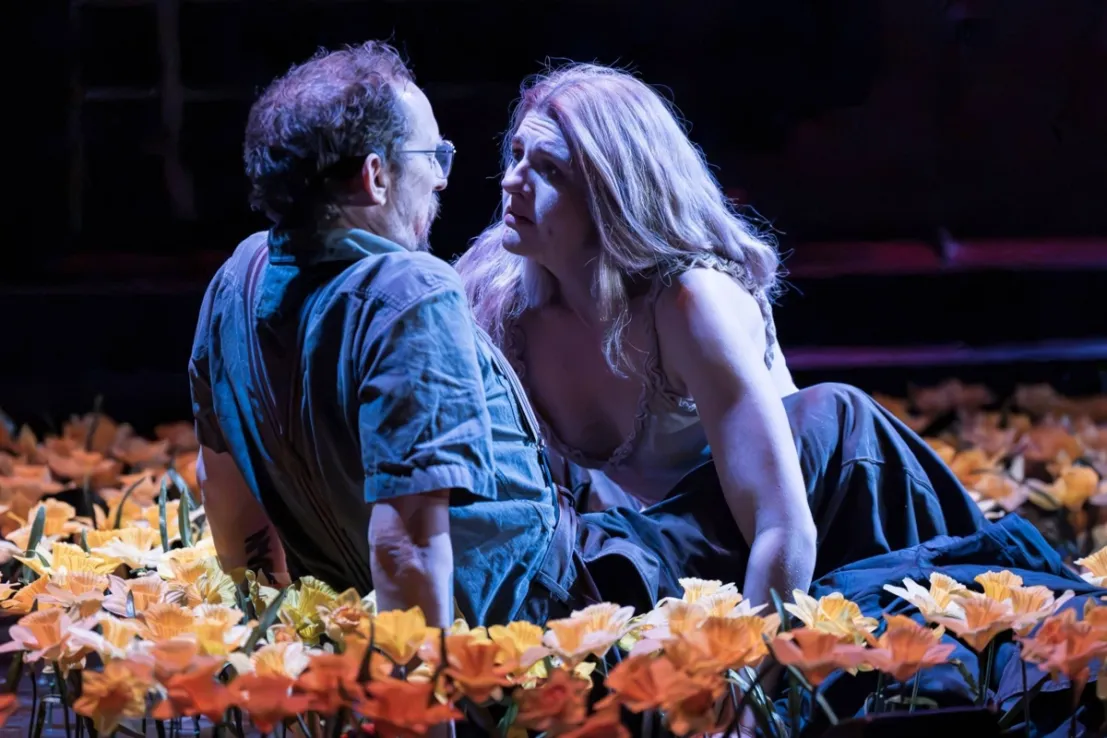
Cleansed | Almeida | ★★★★☆
There is an early signal of what awaits audiences at Cleansed: the Almeida staff tape over every attendee's phone before entry to prevent photography. The production contains extensive nudity, none of it comforting.
What is perhaps most striking about Sarah Kane's play — first performed in 1998 at the Royal Court Theatre, a year before her suicide at age 28 — is how little its intensity has diminished over the decades. Kane was a leading voice of the 1990s "in-yer-face theatre" movement, alongside writers like Mark Ravenhill and Anthony Neilson, whose work confronted audiences with visceral depictions of violence, sex, and psychological extremity. Cleansed, her third play, remains one of the most confrontational works ever staged by a major British theatre.
Set in a decaying psychiatric ward drawn from the darkest recesses of the subconscious, the space feels familiar from countless horror films and video games. It is a claustrophobic, unsettling institution where people are sent to be "cleansed" of their supposed sins.
One woman checks in after retrieving the belongings of her heroin-addicted brother — with whom she was in love — who had overdosed there previously. She encounters a gay couple subjected to a form of homosexuality deprogramming, forced to betray each other repeatedly, as well as a man named Robin, whose apparent transgression is his childlike innocence.
Presiding over them all is Tinker, a "doctor" whose methods include rape, forced eating, injections into the eye, dismemberment, elinguation — the removal of the tongue — improvised medical procedures, and severely graphic beatings. Few mainstream plays can match Cleansed for pure shock value, or for its unrelenting, almost exuberant depiction of violence, torture, and humiliation.
Brutal, But Not Hopeless
Yet Cleansed is not a work of despair. It is deeply concerned with the fragments of beauty that persist amid unimaginable horror — a flower forcing its way through the floor tiles of a psychiatric ward, or the compassionate words of a fellow survivor.
This production, directed by Rebecca Frecknall — who has established herself as one of Britain's most sought-after directors since her acclaimed Almeida staging of Tennessee Williams' Summer and Smoke in 2018 — is more stylised than the staging the reviewer attended a decade ago at the National Theatre, where five people reportedly fainted and 40 walked out during the preview performances alone. Frecknall brings genuine visual imagination: characters move in slow-motion choreography during scene transitions; stark red and orange lighting cuts through the drab greens and beiges of the institute; and The Kinks' Days is deployed to unforgettable — and possibly indelibly unsettling — effect.
This interpretation also feels less literal than other stagings. The characters read less as inmates of a sick prison and more as captives within their own minds.
The performances are exceptional. The cast pursues Kane's text into its darkest depths without hesitation. When they emerged to take their bows, there were no smiles — the material is harrowing enough to witness, let alone inhabit.
One could argue that Cleansed does nothing the ancient Greeks were not doing nearly 3,000 years ago — and Kane actively draws on Greek theatre's maximalist violence throughout her body of work, which also includes Blasted (1995) and the posthumously performed 4.48 Psychosis (2000). But witnessing such material unfold in a recognisable space, performed for recognisable people, makes it an entirely different proposition. Kane's suicide at 28 cemented her reputation as one of British theatre's most mythologised figures, and revivals of her work invariably carry the weight of that biography.
This could not, in any conceivable world, be mistaken for a fun night at the theatre. But not everything is meant to be fun, and Kane's work unquestionably provokes a response. At times, the effect is physically nauseating. At others, there is a wave of relief — mostly when it is over. You would not want to experience it every night, but once a decade or so, there is nothing quite like it.
Cleansed runs at the Almeida Theatre.

