CLARITY Act Fails to Advance in Senate After 50–49 Cloture Vote
Key Takeaways
- •A Senate cloture vote on the CLARITY Act reportedly ended 50 to 49, leaving the crypto market structure bill one vote short of the threshold needed to advance.
- •Failing cloture stops the bill from moving past debate at this stage but does not constitute a permanent rejection or a final vote on passage.
- •The CLARITY Act is designed to establish rules governing how digital assets are regulated in the United States.
- •Ahead of the vote, a draft of the bill added crypto ethics rules, while banks and 17 state attorneys general voiced objections.
- •No schedule for a follow-up vote, amendments, or continued negotiations has been confirmed, and the outcome leaves current crypto regulation unchanged.
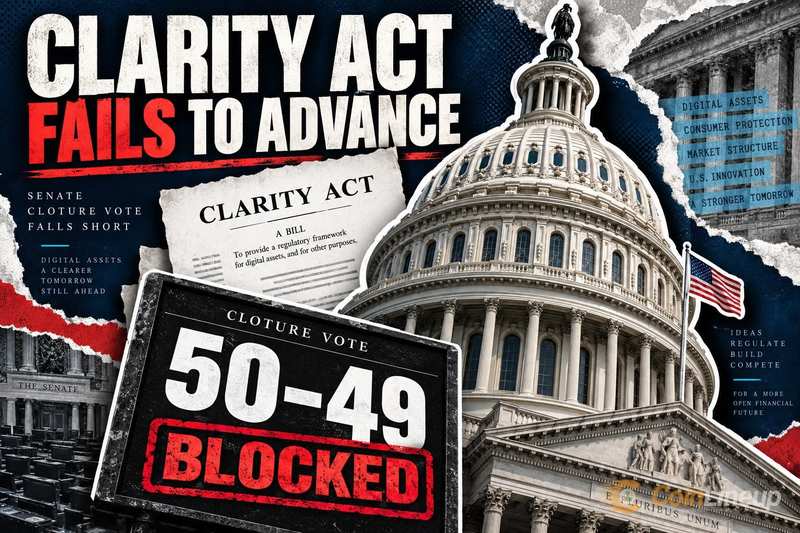
The CLARITY Act failed to advance in the U.S. Senate after a cloture vote reportedly ended 50 to 49, leaving the crypto market structure bill one vote short of the procedural threshold required to move forward.
The CLARITY Act is a crypto market structure bill that would set rules for how digital assets are regulated in the United States. Its progress in the Senate depended on cloture, the procedural step that determines whether a bill can move past debate. The measure had been expected to face this test, following earlier reporting that the CLARITY Act was heading toward a Senate cloture vote. Related coverage ahead of the session also reported that Trump accepted crypto ethics curbs ahead of the vote.
The reported tally of 50 to 49 was not enough to advance the legislation. The related House bill and its legislative history are tracked in the official congressional record on Congress.gov, and Senate roll call results are published on the Senate's official vote menu.
What the cloture result means
Cloture is a vote to end debate so that a bill can proceed to further consideration. When cloture fails, the bill does not advance at that moment; it does not mean the measure has been permanently rejected. The reported outcome indicates only that the CLARITY Act did not clear this step, which is distinct from a final vote on whether the bill becomes law.
The bill had drawn heightened attention in the run-up to the vote, with reports that a draft added crypto ethics rules and that banks and 17 state attorneys general raised objections — signs of the resistance the measure faced even before the tally was known. The specific motion, the exact threshold, and the current bill text are not confirmed in the material available.
What remains unclear about next steps
The available information does not set out a timetable for further action, and no next steps for the bill are confirmed. There is no confirmed schedule for a follow-up vote, amendments, or negotiations. Earlier coverage noted that Senate Democrats were weighing a Republican offer, but whether those talks continue after this vote is not established. Any report of a new vote or a revised deal should be confirmed before it is treated as fact.
For digital asset holders, the practical takeaway is straightforward. The vote created no new rules and removed none. It represents a procedural setback for a single bill rather than a change to how crypto is regulated today. Confirmed updates from official sources remain the most reliable basis for judging what happens next.
Disclaimer: This article is for informational purposes only and does not constitute financial or investment advice. Cryptocurrency and asset markets carry significant risk. Always do your own research before making decisions.

