Bank Policy Institute Opposes CLARITY Act Draft, Raising Doubts Over Senate Vote Count
Key Takeaways
- •The Bank Policy Institute opposes the CLARITY Act draft, arguing that its stablecoin yield and illicit finance provisions remain inadequate despite compromise language in Section 404.
- •Republican Senators John Curtis and John Cornyn reportedly share the banking industry's concerns, which would reduce Republican backing to 49 votes and require at least 11 Democratic supporters to reach the 60-vote threshold.
- •Several pro-crypto Democrats, including Senators Angela Alsobrooks and Ruben Gallego, have already announced opposition to the bill over perceived gaps in ethics and illicit finance provisions.
- •Senate Majority Leader John Thune has publicly questioned whether the legislation can pass before the August recess, with only two weeks remaining in the legislative window.
- •Market expectations for the bill's passage in 2026 briefly declined to 32 percent as tentative Senate support reportedly dropped below 50 votes.
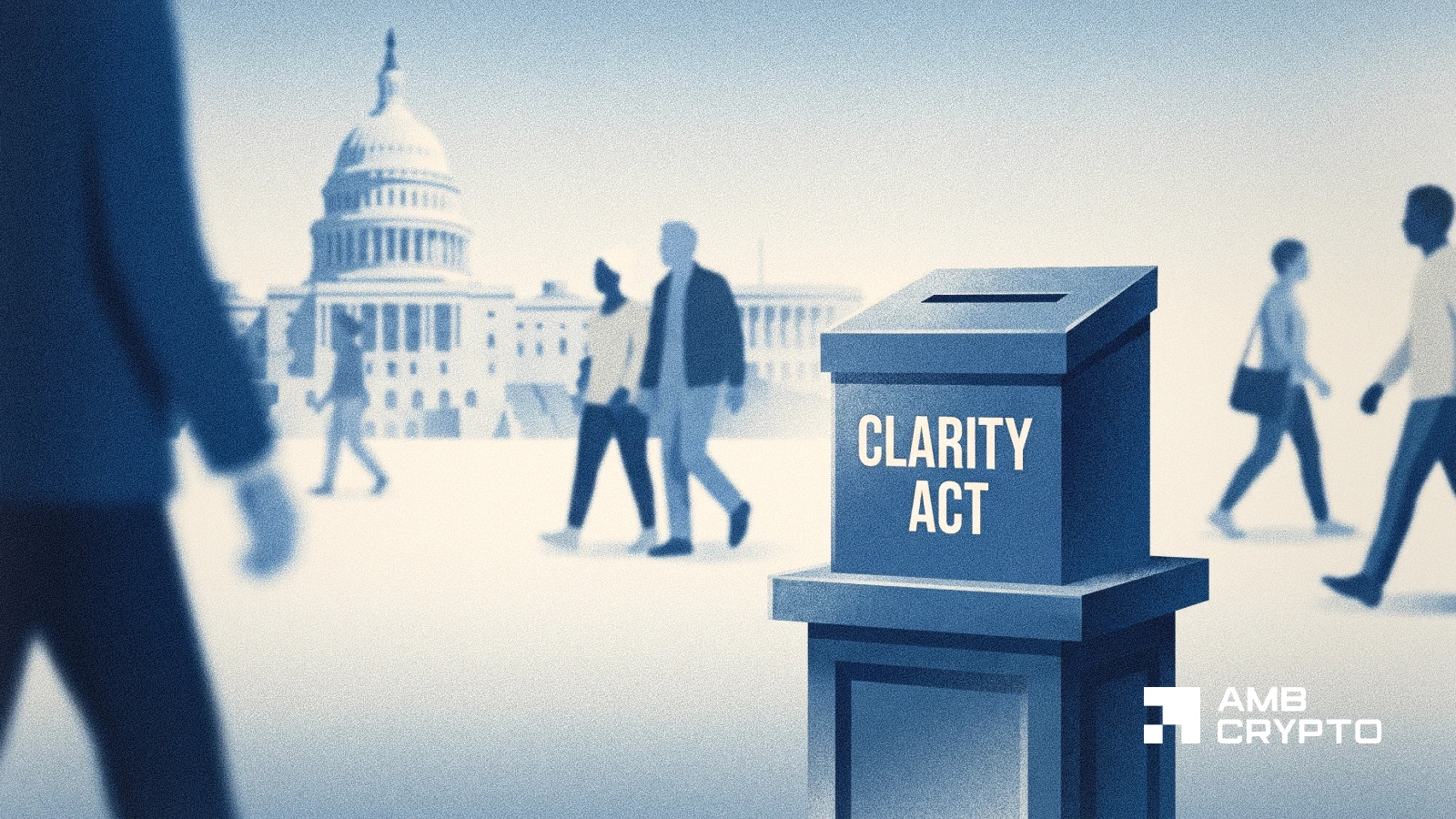
The Bank Policy Institute (BPI), a U.S. banking trade group whose members include the nation's largest banks, has come out against the newly released CLARITY Act draft, citing unresolved gaps on key issues. The CLARITY Act is landmark crypto market structure legislation that would establish a comprehensive federal framework for digital asset regulation, including clarifying the division of oversight authority between the Securities and Exchange Commission and the Commodity Futures Trading Commission.
In a statement issued on Thursday, July 23rd, the BPI said the bill still has "shortcomings" regarding stablecoin yield and illicit finance provisions, arguing that both areas need to be "strengthened."
The banking industry has consistently opposed the earlier stablecoin yield compromise, which permitted incentives based only on account activity rather than idle balances. That passive yield ban was designed to address concerns about capital flight from traditional banks—a competitive threat that has intensified as stablecoin issuers and crypto platforms increasingly offer yield-bearing products that compete with conventional bank deposits. The compromise language appears in Section 404 of the new draft. However, the banking sector had sought a total prohibition on any form of stablecoin yield or incentive.
The banking lobby has since reached out to several lawmakers, including Sen. John Curtis (R-Utah) and Sen. John Cornyn (R-Texas), who now reportedly share the industry's concerns over the crypto bill.
Senate Vote Math Grows Increasingly Challenging
The opposition from Curtis and Cornyn poses a significant challenge for Republicans and the crypto industry. Following the death of Sen. Lindsey Graham earlier this month, the Republican caucus stood at 53 members. Additionally, Sen. Mitch McConnell of Kentucky has been ill for over a month, reducing the effective headcount to 51.
If both Curtis and Cornyn withhold their support, Republican backing would fall to 49, meaning 11 Senate Democrats would need to back the bill to reach the 60-vote threshold required to overcome a legislative filibuster on major legislation. However, several pro-crypto Democrats, including Sen. Angela Alsobrooks and Sen. Ruben Gallego, have already come out against the legislation, citing inadequate provisions on ethics and illicit finance among other concerns.
This dynamic makes the 60-vote target increasingly difficult to achieve absent a deal that wins over all key holdouts.
Tight Timeline and Leadership Skepticism
Compounding the challenge, only two weeks remain before the Senate breaks for its August recess. Numerous analysts have cautioned that if the bill is not passed by August, its prospects effectively collapse.
Senate Majority Leader John Thune has openly expressed doubt about the bill's chances before the recess:
"I don't think we'll be able to get them done. I would like to get at least Clarity started. We'll see where the votes are."
In response, White House Chief Crypto Advisor Patrick Witt urged Thune to schedule the vote without waiting for Democratic support:
"You'd be waiting forever (for Democrats). Nobody thought that we could actually produce an ethics provision that had real teeth, and that included the President."
Witt maintains that the new ethics provision adequately addresses Democrats' concerns.
Market expectations for the bill's passage in 2026 briefly fell to 32% on Friday. Whether those odds improve over the next two weeks remains uncertain. Tentative Senate backing for the crypto bill has reportedly dropped below 50, and Majority Leader Thune has publicly doubted the CLARITY Act's chances of passage before the August recess.

