Circle and Tether Urge Revision of MiCA Stablecoin Reserve Rules
Key Takeaways
- •Circle and Tether, normally intense rivals, have found common ground in lobbying European regulators to revise MiCA's requirement that significant stablecoin issuers hold part of their reserves in regulated bank deposits.
- •The issuers contend that concentrating reserves in bank accounts increases risk, as a bank failure could impair their ability to redeem stablecoins on demand.
- •MiCA's stablecoin provisions have been in application since mid-2024, placing dollar-pegged tokens such as USDT and USDC in the e-money token category with added reserve and supervisory requirements for significant issuers.
- •If regulators maintain the rules, issuers operating in Europe must restructure reserves, limit operations, or exit the market, and exchanges such as OKX are already adjusting offerings through USDT-to-USDC conversion routes.
- •European regulators have not signaled whether they will revise the reserve provisions, leaving the market access of the two largest stablecoin issuers uncertain as MiCA's rules are enforced over the coming months.
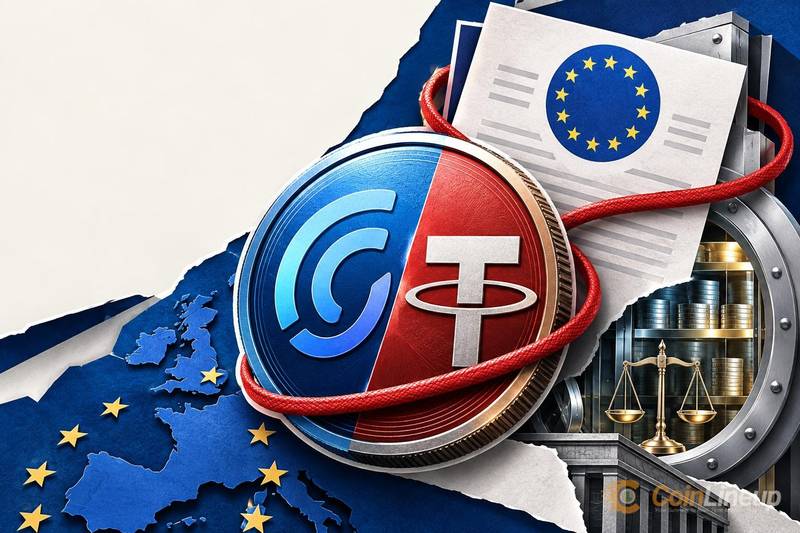
Circle and Tether, the world's two largest stablecoin issuers, are pushing back against a central pillar of Europe's crypto rulebook. Both companies are urging regulators to revise how the Markets in Crypto-Assets Regulation (MiCA) handles reserve requirements for stablecoins.
According to reporting by CryptoSlate, the two firms — normally intense rivals — have found rare common ground in opposing MiCA's bank-focused reserve rules. Each views the provision as a shared problem rather than a point of competitive differentiation. Tether's USDT and Circle's USDC are the two most widely used dollar-pegged stablecoins.
What MiCA Requires, and Why Issuers Object
MiCA, the European Union's framework for regulating crypto assets, includes rules that require issuers of significant stablecoins to hold a portion of their reserves in regulated bank deposits. The stated goal is consumer protection: ensuring issuers can honor redemptions when users request their funds back. MiCA's stablecoin provisions have been applying since mid-2024. Dollar-pegged tokens such as USDT and USDC fall under the regulation's e-money token category, and issuers of tokens deemed significant — a designation based on metrics such as holder numbers and transaction volumes — face an added layer of reserve and supervisory requirements.
The issuers' concern is that placing large portions of reserves in bank accounts concentrates risk rather than spreading it. If a bank holding those reserves were to fail, the stablecoin issuer — and, by extension, its users — could face serious problems. Redemption mechanics lie at the heart of the dispute: an issuer must be able to swap every stablecoin token for its underlying currency on demand.
The European Securities and Markets Authority (ESMA) has published guidelines under MiCA that establish the framework for how these requirements are applied in practice across EU member states. Because issuing e-money tokens in the EU requires authorization from a national regulator, the shape of these rules directly determines which issuers can enter or remain in the European market. Circle and Tether want the requirements revised before they create compliance bottlenecks or barriers to market access.
What a Rule Change Could Mean for the European Market
If regulators accept the issuers' argument, the result could be greater flexibility in how stablecoin reserves are structured — potentially allowing a larger share to be held in government bonds or other low-risk instruments instead of bank deposits. That would bring European rules closer to the way both Circle and Tether currently manage their global reserves.
If regulators hold firm, issuers operating in Europe face a choice: restructure reserves to meet MiCA's specific requirements, limit their European operations, or exit the market. OKX's decision to open a USDT-to-USDC conversion route in Europe as MiCA rules tightened shows that exchanges are already adjusting their product offerings in response to regulatory pressure.
The outcome of this lobbying effort is not yet decided. Circle and Tether are advocating for change, but European regulators have not signaled whether they intend to revise the reserve provisions. For anyone holding or considering stablecoins in Europe, the key question is whether the two largest issuers can access the market on terms they find viable. That question will likely be answered as MiCA's stablecoin provisions are fully enforced and tested over the coming months.
Disclaimer: This article is for informational purposes only and does not constitute financial or investment advice. Cryptocurrency and digital asset markets carry significant risk. Always do your own research before decisions.

