China’s Leading Steelmakers Seen as Resilient Despite Weaker Output and Trade
Key Takeaways
- •China’s crude steel production fell 3.1% year on year in the first seven months of 2026, while exports declined 4.4%.
- •Fitch said the largest rated Chinese steel issuers are unlikely to see their credit profiles materially weakened by current market conditions.
- •State-owned producers such as China Baowu and HBIS are better positioned than smaller peers because they have greater scale and more exposure to manufacturing-related steel demand.
- •Construction steel remains under pressure from weak property demand, while products tied to automotive and broader manufacturing demand have been more resilient.
- •Fitch expects China’s steel output to continue falling at a low-single-digit pace in 2027, with the mix shifting further toward manufacturing-related products.
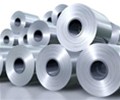
China’s steel producers are operating in an environment of lower output, softer exports and some margin pressure, but Fitch Ratings said those conditions are unlikely to materially weaken the credit profiles of the largest Fitch-rated issuers.
Large state-owned producers such as China Baowu Steel Group (A/Stable) and HBIS Group (BBB+/Stable) are better positioned than smaller peers because of their scale, market position and greater exposure to manufacturing-related steel products, which are outperforming construction steel.
China’s steel market is tracking Fitch’s expectations for 2026. Crude steel production fell by 3.1% year on year in 7M26, while exports declined by 4.4%. That performance was consistent with expectations at the start of the year for full-year production of 930 million-940 million tonnes. Prices have remained stable, with year-to-date averages only 1%-4% below 2025 full-year averages depending on the product.
Higher input costs have weighed on profitability, although market conditions remain stable. Performance has varied across product segments. Construction steel continues to face weak property demand, while automotive flat-steel products have proven more resilient. Steady electric-vehicle output and broader manufacturing demand are supporting high-end cold-rolled coil, galvanised sheet and high-strength steel, underscoring how China’s steel sector is becoming more dependent on industrial end demand than on property-linked volumes.
Fitch expects China’s steel output to continue falling by a low-single-digit percentage in 2027, with the production mix shifting further toward manufacturing-related products. That trend should benefit producers with strong positions in higher-value flat-steel products and partly offset persistent weakness in construction-related demand.
China’s export structure in 7M26 showed a split between weaker finished-steel exports and stronger semi-finished billet and slab shipments. Sales to traditional finished-steel destinations generally declined, while many of those markets increased imports of billet and slab instead. Fitch said this reflects a move toward local rolling and processing, driven by anti-dumping measures, domestic capacity expansion and efforts to preserve access to export markets. Growth in finished-steel exports was concentrated in a narrower group of markets with strong infrastructure demand and insufficient domestic steelmaking capacity.
Even so, the sector remains driven by domestic demand trends, as exports account for only around 12% of China’s total steel production.
Fitch expects the recent jump in billet exports to fade over the medium term as regulators tighten scrutiny of steel origin. The European Union’s new steel safeguard regime will apply a “melt and pour” rule from 1 October 2026, under which origin will be determined by where steel is first melted and cast, not where it is rolled. That change will limit the scope for Chinese billet rolled in third countries to enter as non-Chinese.
Some major southeast Asian billet-importing countries are also reviewing import policy frameworks, which could result in higher tariffs or tighter traceability requirements.
Source: Fitch Ratings
