The U.S. Power Play in Iraq That Moscow and Beijing Didn’t See Coming
Key Takeaways
- •Iraq is described as a major oil prize with 145 billion barrels of proved reserves and some of the world’s lowest lifting costs.
- •The country’s location and role in regional politics make it strategically important to the United States, Russia and China.
- •After the U.S. withdrew from the JCPOA in 2018, Russia and China expanded their oil influence in Iraq through agreements in the north and south.
- •ConocoPhillips agreed to buy a 42% stake in BP Energy Company of Kirkuk Limited, backing redevelopment of five oil fields in northern Iraq.
- •Chevron is advancing work on West Qurna 2 and Nasiriyah, with the latter recently receiving a new agreement addendum.
As Russia remains tied down by its war in Ukraine, Iran focuses on defending its territory against U.S. and Israeli attacks, and China continues to support both conflicts while avoiding any move that would trigger direct conflict with the United States, Washington is working to strengthen its position in Iraq. The renewed urgency comes after Iraqi Prime Minister Ali al-Zaidi announced last week that the country plans to raise oil production to between 8 million barrels per day (bpd) and 10 million bpd within six years, prompting the U.S. and its allies to position themselves to benefit from that expansion. What, then, has Washington been doing in recent weeks, and why?
Despite the damage recently inflicted on its oil sector by the wider conflict in the Middle East, Iraq still has four qualities that make it highly attractive to all three major powers. First, it remains one of the world’s most important oil prizes, with a conservatively estimated 145 billion barrels of proved crude oil reserves, according to the Energy Information Administration. That figure represents nearly 18% of the Middle East’s total and ranks Iraq fifth globally. It likely holds more oil than that estimate suggests, and its lifting cost of US$2-4 per barrel is among the lowest in the world, matching Iran and Saudi Arabia.
Second, Iraq occupies the geographic center of the region. It lies west of Iran, north of Saudi Arabia and Kuwait, east of Jordan and Syria, south of Turkey, and its long Mediterranean coastline offers access to other strategically important sea routes. Third, it remains a key part of the so-called ‘Shia Crescent of Power’ — the geopolitical arc stretching from Iran through Iraq, Syria, and Lebanon, where Shia communities and Iran-backed groups play major roles in regional politics, economics, and security. Fourth, Iraq has long served as the main channel through which Iran has been able to move sanctioned oil into global markets under the guise of non-sanctioned Iraqi crude, helping sustain Iran’s economy despite heavy international sanctions.
Related: Satellite Images Show Seven Tankers Loading Iraqi Crude at Once
After the United States unilaterally withdrew from the Joint Comprehensive Plan of Action (JCPOA), or the nuclear deal, in 2018, China and Russia moved quickly to exploit what they viewed as American weakness across the Middle East. In Iraq, Russia effectively gained influence over much of the country’s semi-autonomous Kurdistan Region in the north through three initiatives discussed in full in my latest book on the new global oil market order. China pursued a similar strategy in southern Iraq through two broad cooperation agreements in 2019 and 2020: the ‘Oil for Reconstruction and Investment’ arrangement, which allowed Chinese firms to invest in infrastructure projects in exchange for oil, and the similarly wide-ranging ‘Iraq-China Framework Agreement,’ also detailed in that book.
The result was that, by the start of Donald Trump’s second presidency in 2025, Russia had sway over much of northern Iraq’s oil sector, while Chinese companies managed around 34% of Iraq’s proven reserves and two-thirds of its full-capacity production. China was also assembling the separate pieces of its southern Iraq oil presence, built through dozens of low-profile ‘contract-only’ deals by relatively unknown Beijing-directed firms, into a full exploration-production-refinery-export hub. That structure threatened to leave the United States excluded from key future decisions on exploration and production.
At the beginning of Trump’s second term, Washington moved to neutralize several of these Russian and Chinese levers of influence. That effort began with sanctions that effectively pushed Russian companies out of the Kurdistan Region, as previously analyzed by OilPrice.com. The U.S. also sent sanctions warnings to Beijing over Iran and Iraq, while Western firms simultaneously secured important oil-field and infrastructure deals across northern and southern Iraq.
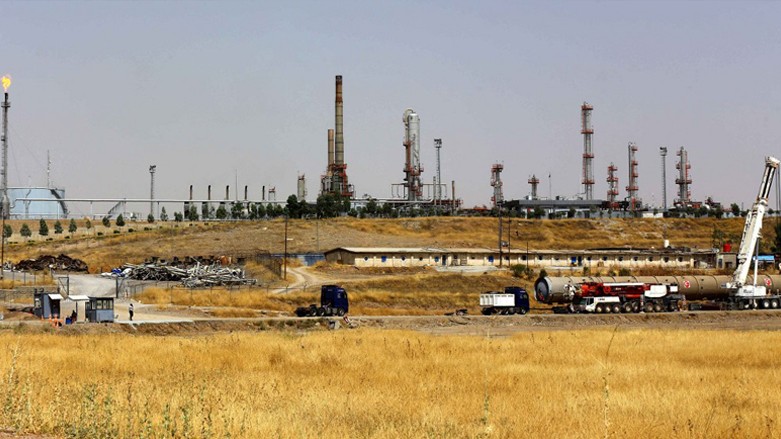
In recent weeks, two major U.S. oil and gas companies, ConocoPhillips and Chevron, have moved to consolidate that advantage. ConocoPhillips has agreed to acquire a 42% interest in BP Energy Company of Kirkuk Limited from BP, supporting redevelopment of five producing oil fields in the Kirkuk area of northern Iraq: the Baba dome of the Kirkuk field, the Avanah dome of the Kirkuk field, the Bai Hassan field, the Jambur field and the Khabbaz field.
That follows BP’s activation on 2 October last year of a US$25 billion five-pronged oil and gas megadeal, which was targeting a preliminary production level of 328,000 bpd, according to a senior source close to Iraq’s Oil Ministry who spoke exclusively to OilPrice.com at the time. Output is expected to rise to at least 450,000 bpd within the next two to three years before being reassessed for further increases in production and plateau volumes. Many of these barrels will have lifting costs at or near Iraq’s national average of US$2-4 per barrel, and the project is set to run for 25 years, after which the contract may be renewed.
Although the five fields are already estimated to hold up to 9 billion barrels of oil reserves, those figures are described as very conservative by the Iraqi source. “There’s at least another eleven or twelve billion barrels across the near surrounding area, and possibly much more,” he said recently.
The deal also carries broader geopolitical implications. Beijing and Moscow have long wanted Kurdistan absorbed into a unified Iraq governed from Baghdad, with the West pushed out of the country altogether. As a senior Kremlin official told OilPrice.com some years ago: “By keeping the West out of energy deals in Iraq, [Russia and China will see] the end of Western hegemony in the Middle East will become the decisive chapter in the West’s final demise.”
Chevron is also advancing two major projects in southern Iraq. After major sanctions imposed by the United States and Great Britain, Russia’s Lukoil withdrew from the supergiant West Qurna 2 field, creating an opening for the U.S. company. The field, located 65 kilometres northwest of Basra and holding roughly 14 billion barrels of reserves in place, had been producing around 400,000 bpd — about 9% of Iraq’s total output at the time — under Lukoil’s operation. Lukoil held a 75% stake in the field, with Iraq’s state-run North Oil Company holding the remaining interest.
The development plan for West Qurna 2 calls for production to rise to 480,000 bpd in Phase 2, followed by an additional 650,000 bpd in Phase 3, which will focus on the deeper Yamama formation. The eventual target of 1.13 million bpd may appear ambitious, though the original goal was 1.2 million bpd, but it is supported by both U.S. geologists who worked in the country during the U.S. occupation and by several international oil companies.
Chevron’s prospects in the field are also helped by synergies with other Western majors now back in operation in Iraq, as well as by Iraq’s target of producing more than 6 million bpd by 2029. Among the most important supporting projects is the Common Seawater Supply Project (CSSP), which involves transporting seawater from the Persian Gulf to oil production facilities to help maintain pressure in key reservoirs, as detailed in full in my latest book on the new global oil market order.
Chevron’s second Iraqi project is Nasiriyah, for which it recently signed an addendum to a heads of agreement letter. Located in ThiQar province in southern Iraq, development of the 4.36 billion-barrel Nasiriyah oilfield has been discussed seriously by successive Iraqi governments since it was discovered by the Iraq National Oil Company in 1975. Plans have included both standalone development and inclusion in the broader Nasiriyah Integrated Project (NIP), which also envisions construction of a 300,000-bpd refinery.
Although major plans for Nasiriyah have repeatedly stalled, last week’s signing of the agreement with Chevron suggests that a sustained and substantial development of the field may finally be underway, again supported by the parallel development of the CSSP.
By Simon Watkins for Oilprice.com
More Top Reads From Oilprice.com
