China's July 2026 Exports Rise 23% Year-Over-Year, Beating Forecasts
Key Takeaways
- •China's July exports grew 23.0% year-over-year, beating the consensus estimate of 22.2% but decelerating from the prior month's 27.0% increase.
- •Imports rose 27.5% year-over-year, narrowly missing forecasts of 27.9% and slowing significantly from June's 36.0% growth rate.
- •The trade surplus narrowed to $112.5 billion from the previous month's $125.62 billion, as import growth outpaced export growth on a year-over-year basis.
- •Strong demand for AI-related technology products helped sustain Chinese export growth despite newly implemented U.S. tariff measures.
- •Both exports and imports maintain double-digit growth rates, though the sequential deceleration indicates a possible normalization from earlier exceptional readings.
China's July 2026 Exports Rise 23% Year-Over-Year, Beating Forecasts
China released its July 2026 trade data, with exports continuing to show strong year-over-year growth despite a modest deceleration from the prior month.
Beijing's export engine held up on AI demand even as fresh U.S. tariffs took effect, with July exports beating analyst forecasts. A separate analysis is available here: Beijing's export engine holds up on AI demand despite fresh US tariffs - July exports beat forecasts.
China July 2026 Trade Data (US Dollar-Denominated)
- Exports: +23.0% y/y (consensus estimate: +22.2% y/y; prior reading: +27.0%)
- Imports: +27.5% y/y (consensus estimate: +27.9% y/y; prior reading: +36.0%)
- Trade balance: +$112.5 billion (consensus estimate: +$107.0 billion; prior: +$125.62 billion)
Key Takeaways
Exports exceeded market expectations, growing 23.0% year-over-year in July, although the pace cooled from the 27.0% annual increase recorded in the prior month.
Imports rose 27.5% year-over-year, slightly missing the consensus forecast of 27.9% and marking a notable slowdown from the previous month's 36.0% surge.
The overall trade surplus came in at $112.5 billion, surpassing the expected $107.0 billion but narrowing from the prior month's $125.62 billion surplus. The narrowing occurred because import growth outpaced export growth on a year-over-year basis, reflecting robust inbound shipments even as outbound momentum eased.
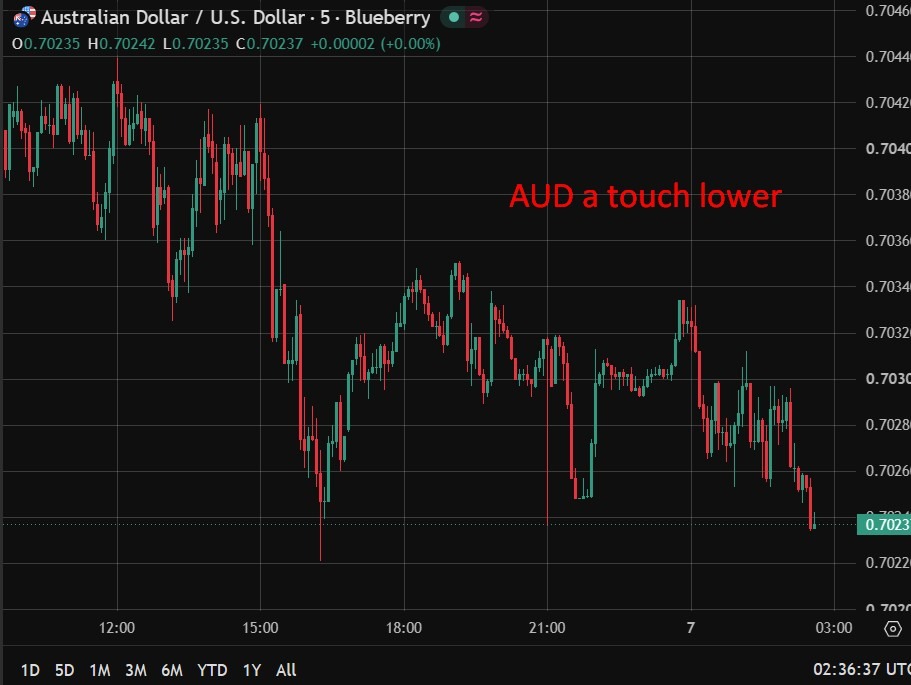
China's trade figures are closely watched by markets as a barometer of both domestic demand and global economic conditions. The country is the world's largest exporter of goods, and monthly trade data regularly moves currency markets, particularly the Australian dollar, given Australia's significant commodity trade with China.
The resilience in exports comes against a backdrop of ongoing trade tensions with the United States, including new tariff measures, while demand for technology products tied to artificial intelligence has provided support for Chinese shipments. Both exports and imports remain at elevated double-digit growth rates, suggesting that the underlying momentum in China's trade sector has not yet materially weakened, even as the sequential deceleration from June levels points to a possible normalization from the exceptionally strong readings earlier in the year. Trade analysts will be monitoring whether the cooling trend continues into the coming months and whether tariff effects become more pronounced as the measures take fuller effect.

