China Reportedly Starts Producing Homegrown DUV Chipmaking Machines
Key Takeaways
- •China is reportedly manufacturing homegrown DUV lithography machines for the first time, according to the provided article.
- •DUV lithography remains essential for producing many chips used in consumer electronics, vehicles, industrial systems, telecommunications, and AI hardware.
- •ASML continues to be the leading global supplier of advanced lithography equipment, including EUV systems and high-end DUV tools.
- •The development could gradually reduce China’s dependence on imported chipmaking equipment and strengthen its domestic semiconductor supply chain.
- •Analysts say the systems are not expected to replace the most advanced lithography technology immediately, and commercial success will depend on further refinement and deployment.
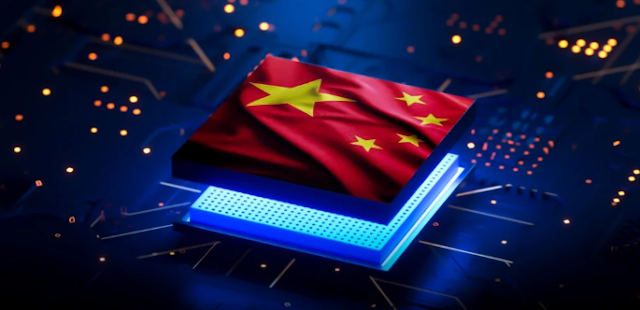
China has reportedly entered a new phase in its semiconductor development strategy by beginning production of domestically developed deep ultraviolet (DUV) lithography machines, a move that could gradually reduce the country’s dependence on imported chipmaking equipment and reshape competition in the global semiconductor industry.
The reported development marks one of China’s most significant advances in semiconductor manufacturing technology in recent years. DUV lithography systems are essential to producing a wide range of integrated circuits used in consumer electronics, automotive systems, industrial equipment, telecommunications infrastructure, and artificial intelligence hardware.
Dutch company ASML remains the world’s dominant supplier of advanced lithography equipment, but China’s reported progress signals an important milestone in Beijing’s long-term effort to strengthen domestic semiconductor capabilities amid ongoing technology restrictions and rising geopolitical competition.
The news also drew additional attention after being shared by the X account of Cointelegraph. However, the broader significance of the development continues to be assessed through official industry announcements, manufacturing data, and expert analysis of production capacity and commercial deployment.
Although China’s new DUV systems are not expected to replace the world’s most advanced lithography technologies immediately, analysts say they could significantly strengthen the country’s domestic semiconductor supply chain over the coming years.
Source: XPost
Lithography equipment is central to semiconductor manufacturing.
Every modern processor, memory chip, graphics processor, and communication chip begins production using highly specialized lithography systems that project microscopic circuit patterns onto silicon wafers.
The required precision is extraordinary. Modern semiconductor manufacturing involves creating billions of microscopic transistors within a single chip. Even small improvements in lithography technology can materially improve chip performance, lower power consumption, and increase manufacturing efficiency.
For that reason, lithography machines are widely regarded as among the most complex manufacturing systems ever built.
Deep ultraviolet lithography, commonly known as DUV, has been one of the semiconductor industry’s main manufacturing technologies for many years.
DUV machines use ultraviolet light with relatively short wavelengths to transfer intricate circuit designs onto semiconductor wafers.
Although extreme ultraviolet (EUV) technology is the newest generation of chipmaking equipment, DUV systems still produce a large share of chips used worldwide.
Many processors, automotive chips, industrial controllers, sensors, memory products, and networking components continue to rely on DUV manufacturing.
As a result, domestic production of competitive DUV systems could significantly expand China’s semiconductor manufacturing capabilities and affect a broad slice of the supply chain, not just the most advanced chip segments.
For years, ASML has held an unmatched position in the semiconductor equipment industry.
The Dutch company is widely recognized as the only commercial producer of EUV lithography systems and also remains a leading supplier of advanced DUV equipment.
Its machines are used by many of the world’s largest semiconductor manufacturers.
Because lithography equipment requires decades of engineering expertise and highly specialized supply chains, very few companies have the technological capability to compete in this segment.
China’s reported production of domestic DUV systems therefore represents an important strategic achievement, even if technological gaps remain.
Semiconductor independence has become one of China’s highest industrial priorities.
Government initiatives have encouraged investment across multiple areas, including:
- Semiconductor manufacturing
- Equipment development
- Materials science
- Electronic design automation
- Chip packaging
- Advanced manufacturing
- Research institutions
- Engineering education
- Domestic suppliers
Rather than focusing only on finished chips, China has increasingly invested across the semiconductor production chain.
Developing domestic lithography equipment addresses one of the industry’s most strategically important bottlenecks.
Recent export controls affecting advanced semiconductor technologies have accelerated domestic research and development efforts in China.
Instead of relying exclusively on foreign suppliers, Chinese companies have expanded investment in local manufacturing capabilities.
Industry experts note that restrictions often encourage greater domestic innovation by increasing incentives to develop alternative technologies.
While building globally competitive lithography systems remains extremely complex, sustained investment over multiple years has gradually strengthened China’s semiconductor ecosystem.
The reported production milestone reflects that broader industrial effort.
Although headlines often focus on cutting-edge processors made using EUV technology, DUV systems remain essential throughout the semiconductor industry.
Many commercial products still use mature manufacturing processes that do not require the most advanced lithography equipment.
- Automobiles
- Medical devices
- Industrial automation
- Consumer electronics
- Power management systems
- Telecommunications infrastructure
- Internet of Things devices
Each depends heavily on chips manufactured using DUV technologies.
For that reason, expanding domestic DUV production could substantially reduce dependence on imported manufacturing equipment while giving chipmakers more options for capacity planning across established product categories.
The emergence of additional lithography manufacturers could gradually reshape competition in the semiconductor equipment market.
Historically, extremely high technological barriers have limited meaningful competition.
If Chinese manufacturers successfully commercialize competitive DUV systems, domestic semiconductor producers may gain more flexibility when expanding manufacturing capacity.
Still, analysts emphasize that building reliable, high-volume production equipment requires years of continuous refinement, customer testing, software optimization, and engineering improvements.
Commercial success depends not only on producing machines, but also on delivering long-term reliability and service support.
Rapid growth in artificial intelligence has sharply increased global demand for semiconductors.
AI infrastructure requires processors, graphics chips, networking equipment, memory systems, storage controllers, and many supporting semiconductor components.
Meeting that demand depends on expanding manufacturing capacity across multiple technology nodes.
Domestic lithography production may therefore contribute to broader efforts to strengthen semiconductor supply chains while supporting future industrial growth.
As AI adoption accelerates worldwide, competition in semiconductor manufacturing is expected to intensify further.
Despite the reported production milestone, significant technical challenges remain.
Manufacturing advanced lithography equipment requires expertise across many engineering disciplines, including:
- Optics
- Precision mechanics
- Laser systems
- Control software
- Materials science
- Vacuum engineering
- Semiconductor process integration
- Supply chain coordination
Even incremental improvements require substantial research investment and extensive manufacturing experience.
Industry specialists therefore expect continued development before domestic systems reach broader commercial deployment.
The semiconductor industry has increasingly become a strategic component of national economic policy.
Governments around the world continue to invest in domestic chip manufacturing through industrial incentives, research funding, education initiatives, and international partnerships.
Competition now extends beyond chip production itself to include manufacturing equipment, raw materials, design software, advanced packaging, and specialized engineering expertise.
China’s reported progress in DUV production reflects this broader transformation across the global semiconductor landscape.
Rather than competing only through finished semiconductor products, countries are increasingly seeking greater control over the technologies that enable chip manufacturing itself.
China’s reported production of homegrown DUV lithography machines represents a potentially important milestone in the country’s long-term semiconductor development strategy.
Although ASML remains the global leader in advanced lithography equipment, the emergence of domestic Chinese alternatives could gradually diversify the semiconductor manufacturing ecosystem and strengthen local production capabilities.
The long-term commercial impact will depend on manufacturing quality, production scale, customer adoption, technological performance, and continued innovation.
Nevertheless, the development underscores the growing importance of semiconductor independence as nations compete to secure critical technologies supporting artificial intelligence, advanced computing, telecommunications, automotive manufacturing, and future digital infrastructure.
As global investment in semiconductor research continues to accelerate, competition among equipment manufacturers is expected to remain one of the defining forces shaping the next generation of global technology leadership.

